5 Min Read
Heart valve problems often progress quietly until everyday activities like walking, climbing stairs, or even getting dressed begin to feel exhausting. One such condition is aortic stenosis, where the heart’s main valve becomes narrow and restricts blood flow. For many patients, especially elderly individuals or those with medical risks, open-heart surgery may not always be the safest option. This is where the TAVI procedure has transformed cardiac care.
At Manipal Hospital Baner, Pune, advanced heart care now includes TAVI treatment, offering eligible patients a less invasive, life-changing alternative.
Synopsis
Understanding Aortic Stenosis and Why It Needs Treatment
Aortic stenosis occurs when calcium deposits build up on the aortic valve, making it stiff and narrow. As a result, the heart must work harder to pump blood to the rest of the body.
Common symptoms include:
-
Chest pain or tightness
-
Breathlessness, especially on exertion
-
Fatigue and reduced stamina
-
Dizziness or fainting episodes
If left untreated, severe aortic stenosis can lead to heart failure or sudden cardiac complications. Traditionally, open-heart valve replacement was the only solution, but not every patient could safely undergo such major surgery.
What Is the TAVI Procedure?
The TAVI procedure (Transcatheter Aortic Valve Implantation) is a minimally invasive heart valve treatment that replaces a diseased aortic valve without open-heart surgery.
During TAVI surgery, a new valve is delivered through a thin catheter, usually inserted via an artery in the groin. The replacement valve is positioned inside the damaged valve and immediately begins regulating blood flow.
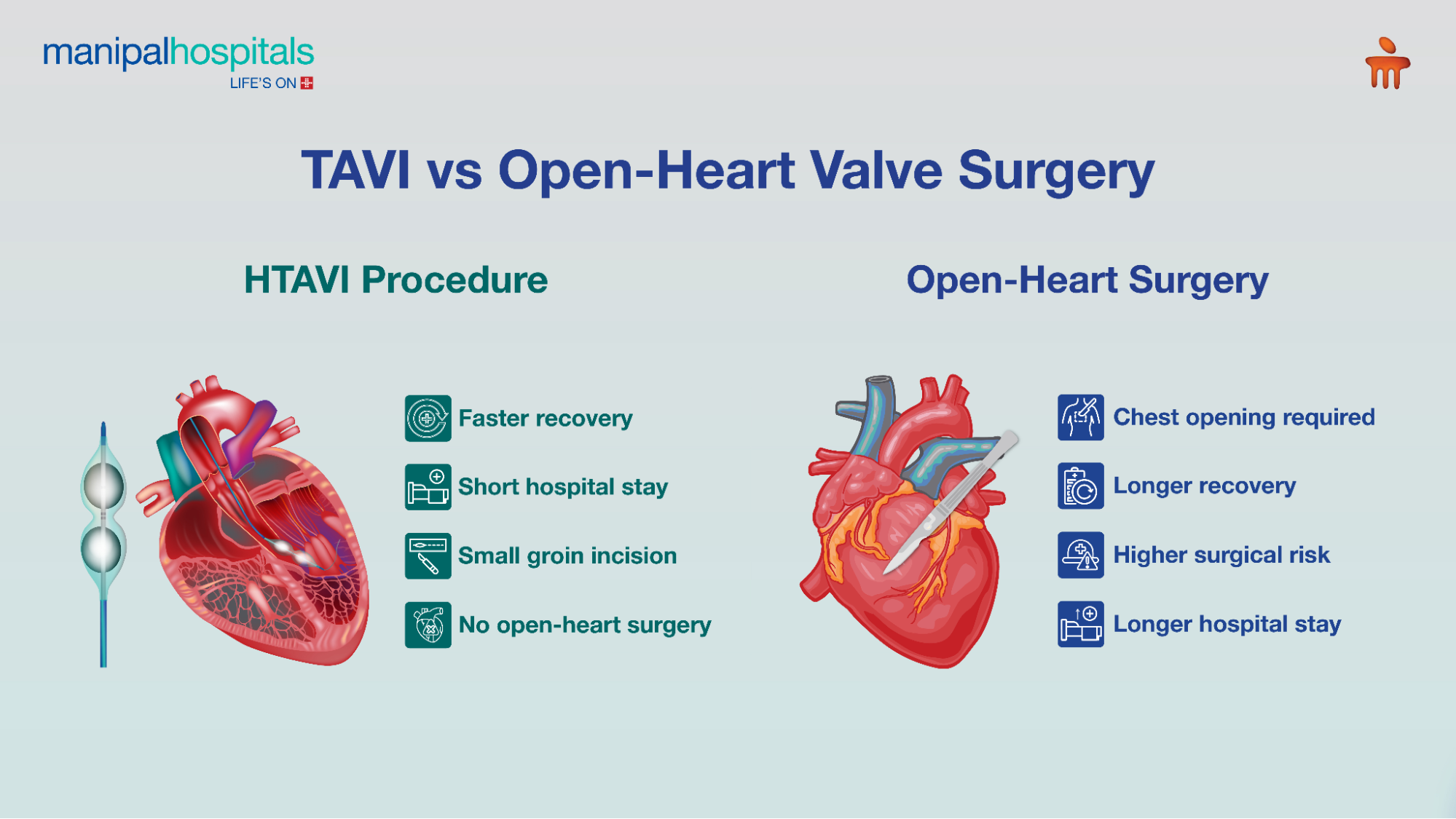
This approach significantly reduces surgical trauma, recovery time, and hospital stay, making it ideal for high-risk or elderly patients.
How Is TAVI Treatment Performed?
The TAVI procedure is carried out in a specialised cardiac cath lab by an experienced heart team, including interventional cardiologists, cardiac surgeons, and anaesthetists.
Step-by-step overview:
-
Access point created - Usually through the femoral artery (groin)
-
Catheter-guided valve delivery - The valve is guided to the heart
-
Valve placement - The new valve expands inside the old one
-
Immediate function - Blood flow improves instantly
-
Closure and recovery - No chest incision required
Most patients remain awake under mild sedation and can begin walking within a day.
TAVI vs TAVR: Is There a Difference?
Patients often ask about TAVI vs TAVR, assuming they are different procedures. In reality:
-
TAVI (Transcatheter Aortic Valve Implantation)
-
TAVR (Transcatheter Aortic Valve Replacement)
Both terms refer to the same procedure.
“TAVI” is more commonly used in Europe and India, while “TAVR” is widely used in the United States.
Who Is Eligible for TAVI Surgery?
Not every patient with aortic stenosis requires TAVI treatment. Doctors assess eligibility based on:
-
Severity of TAVI aortic stenosis
-
Age and overall health
-
Presence of diabetes, kidney disease, lung disease, or prior heart surgery
-
Surgical risk scores
-
Detailed imaging tests (Echo, CT scan)
At Manipal Hospital Baner, each case is evaluated by a multidisciplinary Heart Team to ensure safe and personalised care.
Benefits of the TAVI Procedure
The growing popularity of TAVI surgery is due to its clear advantages:
-
No open-heart surgery or large chest incision
-
Shorter hospital stay (often 3–5 days)
-
Faster recovery and return to daily activities
-
Reduced pain and complications
-
Improved quality of life and survival rates
For many patients, the improvement in breathing and energy is noticeable within days.
Recovery After TAVI Treatment
Recovery after the TAVI procedure is generally smoother and quicker than traditional valve surgery.
What patients can expect:
-
Walking within 24 hours
-
Mild groin discomfort for a few days
-
Regular follow-up and medications
-
Gradual resumption of daily activities
Cardiac rehabilitation and lifestyle changes are often advised to support long-term heart health.
Why Choose Manipal Hospital Baner, Pune for TAVI?
Manipal Hospital Baner, Pune, is equipped with advanced cardiac catheterisation labs and a dedicated heart valve programme. Patients benefit from:
-
Experienced interventional cardiologists
-
State-of-the-art imaging and valve technology
-
Comprehensive pre-procedure evaluation
-
Personalised post-TAVI care and monitoring
This integrated approach ensures both safety and long-term success of TAVI treatment.
Disclaimer
This blog is intended for educational purposes only and should not be considered a substitute for professional medical advice, diagnosis, or treatment. The suitability of the TAVI procedure varies from patient to patient.
FAQ's
Yes. For eligible patients, the TAVI procedure has proven to be highly safe and effective, with lower risks compared to open-heart surgery.
Most TAVI valves last 10–15 years or longer, depending on patient health and lifestyle.
For high-risk or elderly patients, TAVI surgery is often the preferred option due to faster recovery and fewer complications.
Patients may require blood-thinning medicines and regular heart check-ups as advised by their cardiologist.
In selected cases, yes. Eligibility depends on valve anatomy, risk factors, and long-term considerations.
Share this article on: