5 Min Read
A sudden, painful sore throat can disrupt your daily life, making it difficult to swallow, speak, or even rest comfortably. While many sore throats are caused by common viral infections and improve on their own, a bacterial infection known as strep throat requires timely medical attention. Knowing how to recognise the signs, when to seek care, and how to prevent its spread is essential for a quick and complete recovery. At Manipal Hospital Pune, our ENT (Otolaryngology) specialists focus on accurate diagnosis and personalised treatment to help patients feel better, faster.
Synopsis
Understanding Strep Throat: More Than Just a Sore Throat
Strep throat is a contagious infection of the throat and tonsils caused by Group A Streptococcus (GAS) bacteria. Although it accounts for only a portion of sore throat cases, around 20–30% in children and 5–15% in adults, correct identification is crucial. Viral sore throats typically resolve with rest and supportive care, but untreated strep throat can lead to serious complications affecting the heart, kidneys, and joints.
The reassuring news is that with early diagnosis and appropriate treatment, over 90% of patients recover quickly without long-term problems. This is why expert evaluation at a trusted centre like Manipal Hospital Pune plays a key role in preventing avoidable complications.
Recognising the Key Strep Throat Symptoms
Strep throat symptoms often begin suddenly and are usually more intense than those of a viral sore throat. One important clue is the absence of a cough, which is common in viral infections but uncommon in strep throat. Watch for the following warning signs
-
Sudden, severe sore throat: Pain often appears rapidly and worsens quickly.
-
Painful swallowing: Eating or drinking may become difficult.
-
Fever: A temperature of 101°F (38.3°C) or higher is common.
-
Red, swollen tonsils: White patches or streaks of pus may be visible.
-
Tiny red spots (petechiae): These may appear on the roof of the mouth.
-
Swollen lymph nodes: Tender glands at the front of the neck are typical.
-
Headache and body aches: General flu-like discomfort may accompany throat pain.
In children, symptoms may also include nausea, vomiting, or abdominal pain. Any combination of these signs should prompt medical evaluation.
How Is Strep Throat Diagnosed?
Because strep throat symptoms overlap with other infections, a physical examination alone is not sufficient. At Manipal Hospital Pune, doctors use reliable diagnostic tests to confirm the infection
Rapid Antigen Detection Test (RADT)
A quick throat swab detects strep antigens and provides results within minutes. It is highly specific and can correctly identify infection in up to 95% of positive cases.
Throat Culture
If the rapid test is negative but clinical suspicion remains high, a throat culture is recommended. The swab is sent to a laboratory to check for bacterial growth. Results are available within 24–48 hours and are considered the gold standard for diagnosis.
Accurate testing ensures that patients receive the right treatment, avoiding unnecessary medication when the cause is viral.
Effective Treatment and Preventing Complications
Since strep throat is a bacterial infection, it requires doctor-prescribed medication. Timely treatment offers several important benefits:
-
Shortens the duration and severity of symptoms
-
Reduces the risk of spreading infection to others
-
Prevents serious complications, such as rheumatic fever and kidney inflammation
Studies show that early medical intervention reduces the risk of rheumatic fever by more than 95%. Most patients begin to feel noticeably better within 24–48 hours of starting treatment, though completing the full course is essential for complete recovery.
Care Essentials: Do’s and Don’ts During Recovery
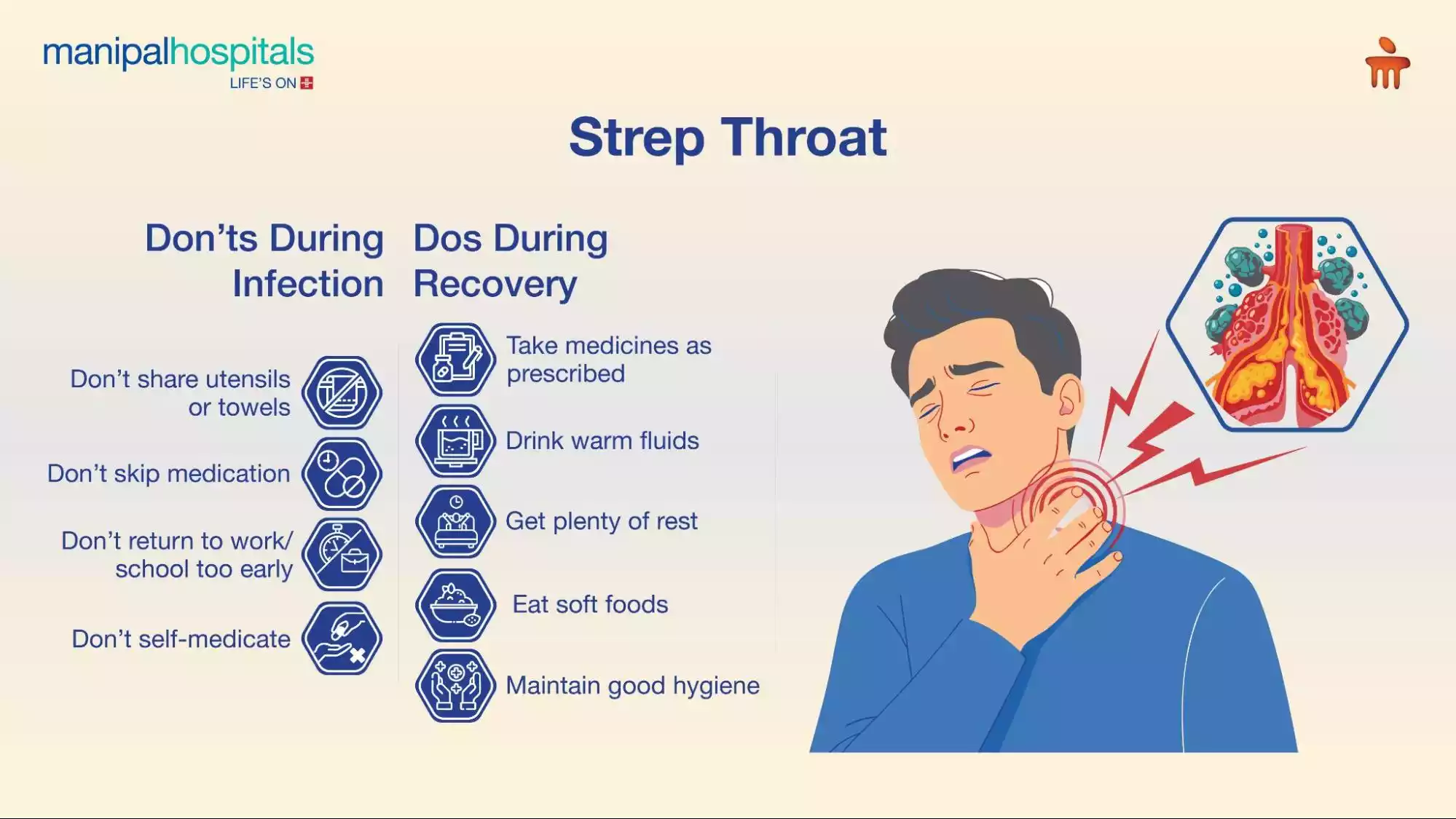
Do:
-
See a doctor promptly: Proper diagnosis ensures correct treatment.
-
Complete the full course of medication, even if symptoms improve early.
-
Stay well hydrated: Warm fluids can soothe throat discomfort.
-
Get adequate rest: Helps your immune system recover faster.
-
Choose soft foods: Soups, yoghurt, and mashed foods are easier to swallow.
Don’t:
-
Share personal items: Avoid utensils, glasses, or towels.
-
Return to work or school too early: Wait at least 24 hours after starting treatment and once the fever subsides.
-
Ignore worsening symptoms: Delays increase complication risks.
-
Self-medicate: Never take leftover or someone else’s medication.
Simple and Effective Strep Throat Prevention Tips
Preventing strep throat largely depends on good hygiene practices. Regular handwashing alone can reduce the spread of respiratory infections by over 20%.
-
Wash hands frequently: Use soap and water for at least 20 seconds.
-
Avoid sharing food or drinks, especially with someone unwell.
-
Cover coughs and sneezes: Use a tissue or your elbow.
-
Clean frequently touched surfaces: Doorknobs, switches, and remotes.
These simple steps help protect both individuals and the wider community.
When to See a Doctor at Manipal Hospital Baner, Pune
Seek medical attention if you or your child experiences:
-
A severe sore throat with fever
-
Difficulty swallowing or breathing
-
Swollen, painful neck glands
-
Symptoms that do not improve within 48 hours
Conclusion
Early diagnosis leads to faster relief and prevents complications. Book an appointment with our experienced ENT specialist at Manipal Hospitals Baner, Pune, for expert evaluation and compassionate care.
FAQ's
Yes. It spreads through respiratory droplets from coughing, sneezing, or close contact.
Without treatment, up to two or three weeks. With treatment, most people are no longer contagious after 24–48 hours.
Yes. It is more common in children, but adults, especially those in close contact with children, can be affected.
Viral sore throats often include cough and a runny nose. Strep throat causes more severe pain, fever, and swollen tonsils, usually without a cough.
Yes. There are multiple strains of Group A strep, so reinfection is possible.
Share this article on: