6 Min Read
Back pain is one of the most common health problems today, affecting nearly 8 out of 10 people at some point in their lives. For many, it starts as a mild ache after long hours of sitting, poor posture, or physical strain. For others, it may progress into chronic pain that interferes with work, sleep, and daily activities. The thought of spine surgery can be worrying, but the good news is that most back pain does not require surgery.
At Manipal Hospitals Pune, the focus is always on accurate diagnosis, conservative treatment, and patient education. Spine surgery is recommended only when it is clearly beneficial and when non-surgical options fail to provide relief. This guide will help you understand back pain, explore treatment options, and know when spine surgery may be the right choice.
Synopsis
- Understanding Back Pain and Its Causes
- When Should You See a Spine Specialist?
- Non-Surgical Treatment: The First Line of Care
- When Is Spine Surgery the Right Choice?
- Benefits of Minimally Invasive Spine Surgery:
- Common Spine Procedures:
- Myths and Facts About Spine Surgery
- Do’s and Don’ts for a Healthy Spine
- Conclusion
Understanding Back Pain and Its Causes
Back pain can be classified as:
-
Acute back pain – lasts a few days to weeks
-
Chronic back pain – lasts more than 12 weeks
Common causes of back pain include muscle strain, poor posture, slipped or herniated discs, age-related degeneration, spinal stenosis, and injuries. In many cases, the pain improves with rest, physiotherapy, and lifestyle changes.
However, persistent pain may indicate a deeper issue involving the spinal nerves or spinal cord. Identifying the cause early plays a crucial role in successful treatment.
When Should You See a Spine Specialist?
While mild back pain often resolves on its own, certain symptoms should never be ignored. These warning signs (red flags) may suggest nerve compression or serious spinal conditions.
Seek medical attention if you experience:
-
Pain radiating down one or both legs (sciatica)
-
Numbness, tingling, or weakness in the legs or feet
-
Difficulty standing or walking for long periods
-
Loss of bladder or bowel control
-
Severe pain that does not improve with rest
-
Back pain with fever or unexplained weight loss
At Manipal Hospitals Baner, expert spine specialists in Baner, Pune, use advanced imaging and clinical evaluation to identify the root cause and create a personalised treatment plan.
Non-Surgical Treatment: The First Line of Care
Nearly 90% of back pain cases improve without surgery. At Manipal Hospitals Pune, conservative treatment is always the first approach.
Common Non-Surgical Treatments Include:
Physiotherapy and Rehabilitation
Targeted exercises strengthen core and back muscles, improve flexibility, and correct posture. Regular physiotherapy helps reduce pain and prevent recurrence.
Lifestyle Modifications
Maintaining a healthy weight, practising ergonomic sitting habits, avoiding prolonged inactivity, and staying physically active with low-impact exercises like walking or swimming.
Pain Management Therapies
Heat or ice therapy, medications, and posture correction techniques help control pain during recovery.
Spine Injections
Epidural or nerve root injections may be advised for persistent pain caused by inflammation, allowing better participation in physiotherapy.
Surgery is considered only if these treatments fail to provide relief after 6–12 weeks, or if neurological symptoms worsen.
When Is Spine Surgery the Right Choice?
Spine surgery is recommended when there is clear evidence of structural problems that compress nerves or destabilise the spine, and when symptoms significantly affect quality of life.
Conditions That May Require Spine Surgery:
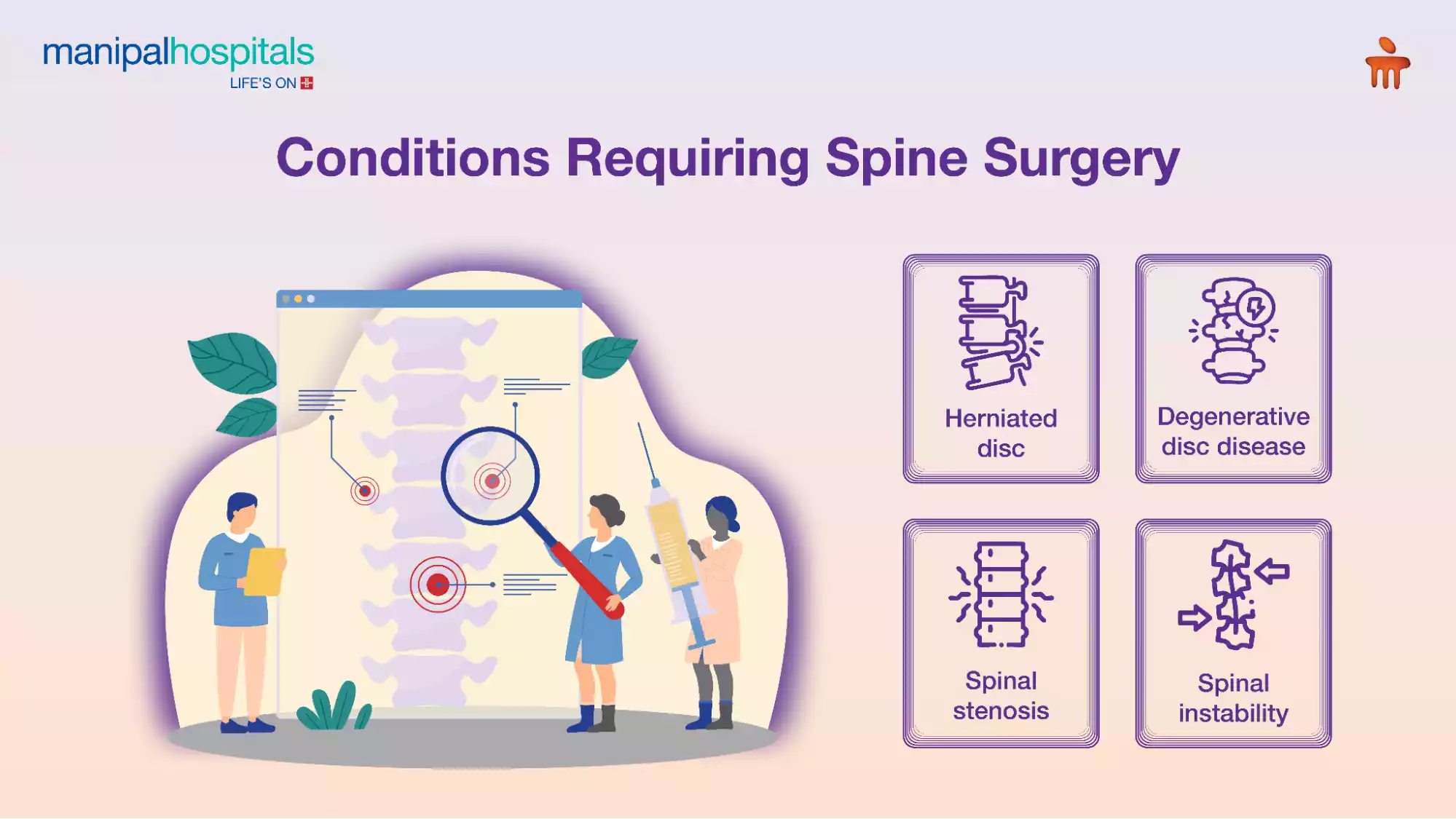
Herniated or Slipped Disc
When a disc presses on nearby nerves, causing severe leg pain, numbness, or weakness.
Spinal Stenosis
Narrowing of the spinal canal that leads to nerve compression, pain, and difficulty walking.
Degenerative Disc Disease
Advanced disc degeneration causing chronic pain and spinal instability.
Spondylolisthesis
A condition where one vertebra slips over another, leading to pain and nerve irritation.
Spinal Fractures or Trauma
Surgery may be required to stabilise the spine and prevent further nerve damage.
At Manipal Hospitals Pune, surgery is advised only after correlating symptoms with imaging findings and discussing all risks and benefits with the patient.
Advanced Spine Surgery at Manipal Hospitals Pune
With advances in medical technology, spine surgery today is safer and more effective than ever. Many procedures are performed using Minimally Invasive Spine Surgery (MISS) techniques.
Benefits of Minimally Invasive Spine Surgery:
-
Smaller incisions
-
Less muscle damage
-
Reduced blood loss
-
Less post-operative pain
-
Faster recovery and shorter hospital stay
Common Spine Procedures:
Microdiscectomy
Removal of the herniated disc portion pressing on a nerve.
-
Success rate: over 90–95% for sciatica relief.
Laminectomy
Removal of a small part of the vertebral bone to create space for compressed nerves.
Spinal Fusion
Joining two or more vertebrae to stabilise the spine and reduce painful movement.
Most patients are encouraged to walk within 24 hours after surgery, under expert supervision.
Myths and Facts About Spine Surgery
-
Myth: Spine surgery is extremely risky
-
Fact: Modern spine surgery has a strong safety record, especially with minimally invasive techniques.
-
Myth: You will be bedridden for weeks
-
Fact: Early movement and physiotherapy are encouraged to speed up recovery.
-
Myth: Spine surgery permanently limits mobility
-
Fact: The goal is pain relief and functional improvement. Most patients experience better mobility after recovery.
Do’s and Don’ts for a Healthy Spine
Do’s
-
Maintain a healthy body weight
-
Strengthen core muscles regularly
-
Sit and sleep with proper posture
-
Lift objects using your legs, not your back
Don’ts
-
Avoid prolonged sitting without breaks
-
Don’t smoke-it accelerates disc degeneration
-
Don’t twist your back while lifting
Conclusion
Book your consultation at Manipal Hospitals Pune or visit our Spine care department in Pune, Baner, today and take the first step towards a pain-free life.
FAQ's
No. At Manipal Hospital Pune, surgery is recommended only when conservative treatments fail and symptoms worsen.
Procedures like microdiscectomy have success rates above 90% for nerve-related leg pain.
Desk work may resume in 2–4 weeks, while full recovery can take 3–6 months.
Yes. It involves smaller incisions, less blood loss, and faster recovery compared to open surgery.
If your back pain lasts more than 6 weeks or is associated with leg pain, numbness, or weakness.
Share this article on: