5 Min Read
The kidneys play a vital role in keeping our body healthy. They filter waste products from the blood, regulate fluid balance, control blood pressure, and support overall metabolic functions. When a condition affects kidney development even before birth, it can naturally raise concerns for parents and patients alike. Renal agenesis is one such rare congenital condition where one or both kidneys do not develop during pregnancy.
At Manipal Hospitals Pune, our experienced nephrology team provides advanced diagnostics, expert guidance, and compassionate long-term care for individuals diagnosed with renal agenesis. Understanding this condition empowers families to take the right steps early and ensure the best possible quality of life.
This comprehensive guide explains renal agenesis in detail, covering its causes, symptoms, diagnosis, management, and everyday care essentials.
Synopsis
What Is Renal Agenesis?
Renal agenesis is a congenital condition in which a baby is born without one kidney or, in rare cases, without both kidneys. It occurs during early foetal development when the structures responsible for forming the kidneys fail to develop properly.
Types of Renal Agenesis
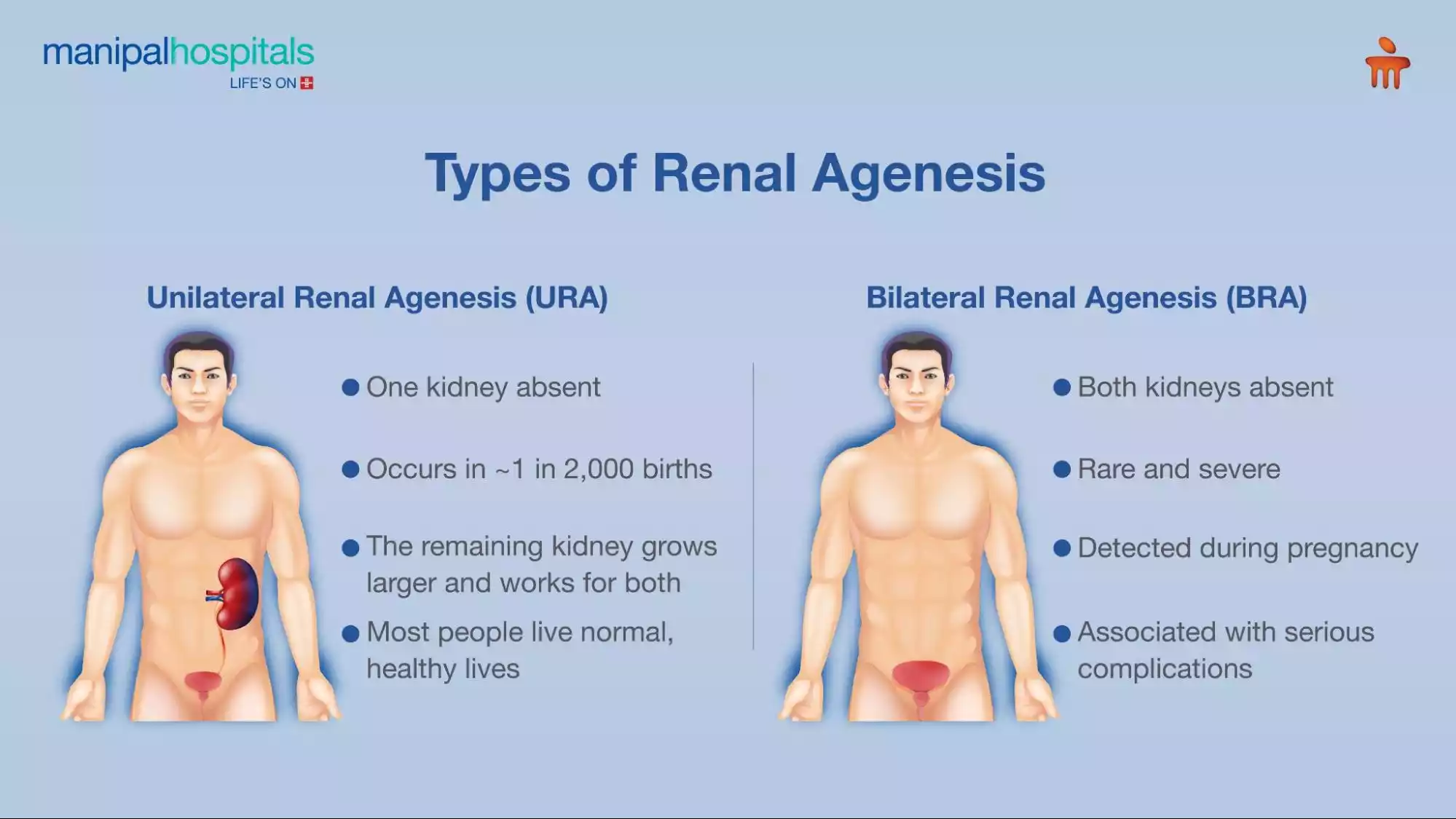
1. Unilateral Renal Agenesis (URA)
This is the more common form, where only one kidney is absent. It affects approximately 1 in 2,000 births. In most cases, the remaining kidney enlarges and compensates for the missing one, a process known as compensatory hypertrophy. With appropriate medical follow-up and a healthy lifestyle, the majority of individuals with URA live normal, active lives.
2. Bilateral Renal Agenesis (BRA)
This rare and severe form occurs when both kidneys are absent. It is usually detected during pregnancy and is often associated with serious complications, including Potter’s sequence, which affects lung development and facial features.
Early Signs and Symptoms of Renal Agenesis
The symptoms of renal agenesis depend largely on whether one or both kidneys are affected.
Symptoms of Unilateral Renal Agenesis
Many individuals with URA have no noticeable symptoms, especially during childhood. The condition is often discovered incidentally during imaging tests done for other reasons. When symptoms do appear, they may include:
-
Protein in the urine (proteinuria)
-
Swelling of the feet, hands, or ankles
-
A gradual reduction in kidney function later in life
Symptoms of Bilateral Renal Agenesis
BRA is usually identified during prenatal scans. Common findings include:
-
Very low amniotic fluid levels (oligohydramnios)
-
Underdeveloped lungs
-
Distinctive facial features
-
Severe breathing difficulties at birth
What Causes Renal Agenesis?
Renal agenesis develops during early pregnancy and is usually caused by a combination of genetic and environmental factors. In many cases, the exact cause remains unknown.
Common risk factors include:
-
Genetic mutations affecting kidney development
-
Family history of kidney or urinary tract abnormalities
-
Maternal health conditions, such as poorly controlled diabetes
-
Exposure to harmful substances during pregnancy
How Is Renal Agenesis Diagnosed?
Early and accurate diagnosis plays a key role in effective management. At Manipal Hospital Baner, we use advanced diagnostic techniques to identify renal agenesis at different stages of life.
Prenatal Diagnosis
-
Foetal ultrasound during the second trimester (18–22 weeks)
-
Detection of absent kidneys and reduced amniotic fluid
-
Identification of associated structural abnormalities
Postnatal and Adult Diagnosis
If URA is not detected before birth, it may be diagnosed later through:
-
Renal ultrasound to confirm kidney absence and assess the remaining kidney
-
Blood tests to evaluate kidney function
-
Urine tests to detect protein or blood
-
Blood pressure monitoring
Management and Living Well with Renal Agenesis
Management of Unilateral Renal Agenesis
The outlook for URA is extremely positive. Management focuses on protecting the single functioning kidney throughout life.
Key aspects include:
-
Regular follow-ups with a nephrologist
-
Routine blood pressure monitoring
-
Periodic blood and urine tests
-
Maintaining a kidney-friendly lifestyle
At Manipal Hospitals Pune, our nephrology specialists design personalised care plans to help patients maintain optimal kidney health.
Management of Bilateral Renal Agenesis
BRA requires specialised counselling and advanced neonatal care planning. In rare cases, experimental interventions may be considered under strict medical supervision.
Care Essentials: Do’s and Don’ts for People with One Kidney
Do’s
-
Attend regular nephrology check-ups
-
Stay well hydrated
-
Follow a balanced, low-salt diet
-
Maintain a healthy weight
-
Exercise regularly with medical guidance
Don’ts
-
Avoid smoking and tobacco use
-
Do not take painkillers like NSAIDs without medical advice
-
Avoid high-contact sports unless cleared by your doctor
-
Do not ignore swelling, fatigue, or changes in urination
-
Avoid extreme diets or supplements without consultation
Conclusion
If you or your child has been diagnosed with renal agenesis, early consultation with an experienced nephrology team is essential. Manipal Hospitals Baner offers comprehensive kidney care, advanced diagnostics, and long-term monitoring to help patients live healthy, confident lives.
FAQ's
Yes. Over 95% of people with a single healthy kidney lead completely normal lives with proper monitoring and lifestyle care.
Some cases have a genetic component, but many occur randomly. Genetic counselling may be recommended if there is a family history.
There is a slightly higher risk of high blood pressure and proteinuria later in life, which can be effectively managed with regular medical care.
Usually no. A healthy, balanced diet with limited salt is sufficient unless otherwise advised by a nephrologist.
It is commonly detected through a routine ultrasound scan between 18 and 22 weeks of pregnancy.
Not necessarily. Many people discover this incidentally. The key step is baseline evaluation and ongoing monitoring with a kidney specialist.
Share this article on:


.webp "Early Signs of Acute Renal Failure")