5 Min Read
Cancer treatment has evolved dramatically over the last two decades. Today, patients no longer need to fear large surgical cuts and prolonged hospital stays in every case. Minimally Invasive Cancer Surgery has transformed the way tumours are treated, offering smaller incisions, faster recovery, and excellent oncological outcomes.
At Manipal Hospitals Baner, advanced surgical technology and experienced oncologists work together to deliver precise, safe, and patient-focused cancer care. If you are searching for minimally invasive cancer surgery in Baner, Pune, this guide will help you understand its benefits, suitability, and recovery process.
Synopsis
- What is Minimally Invasive Cancer Surgery?
- Why Choose Minimally Invasive Cancer Surgery?
- Cancers Commonly Treated with Minimally Invasive Surgery
- Who is Eligible for Minimally Invasive Cancer Surgery?
- Recovery After Minimally Invasive Cancer Surgery
- Why Choose Manipal Hospitals Baner for Cancer Surgery?
- Conclusion
What is Minimally Invasive Cancer Surgery?
Minimally invasive cancer surgery, also known as keyhole cancer surgery or laparoscopic cancer surgery, is a modern surgical approach that uses small incisions (usually 0.5–1.5 cm) instead of one large cut.
Through these tiny openings:
-
A high-definition camera (laparoscope or endoscope) is inserted
-
Specialised surgical instruments are introduced
-
The tumour is removed with high precision
The magnified view displayed on a screen allows surgeons to operate with exceptional accuracy while protecting nearby healthy tissues.
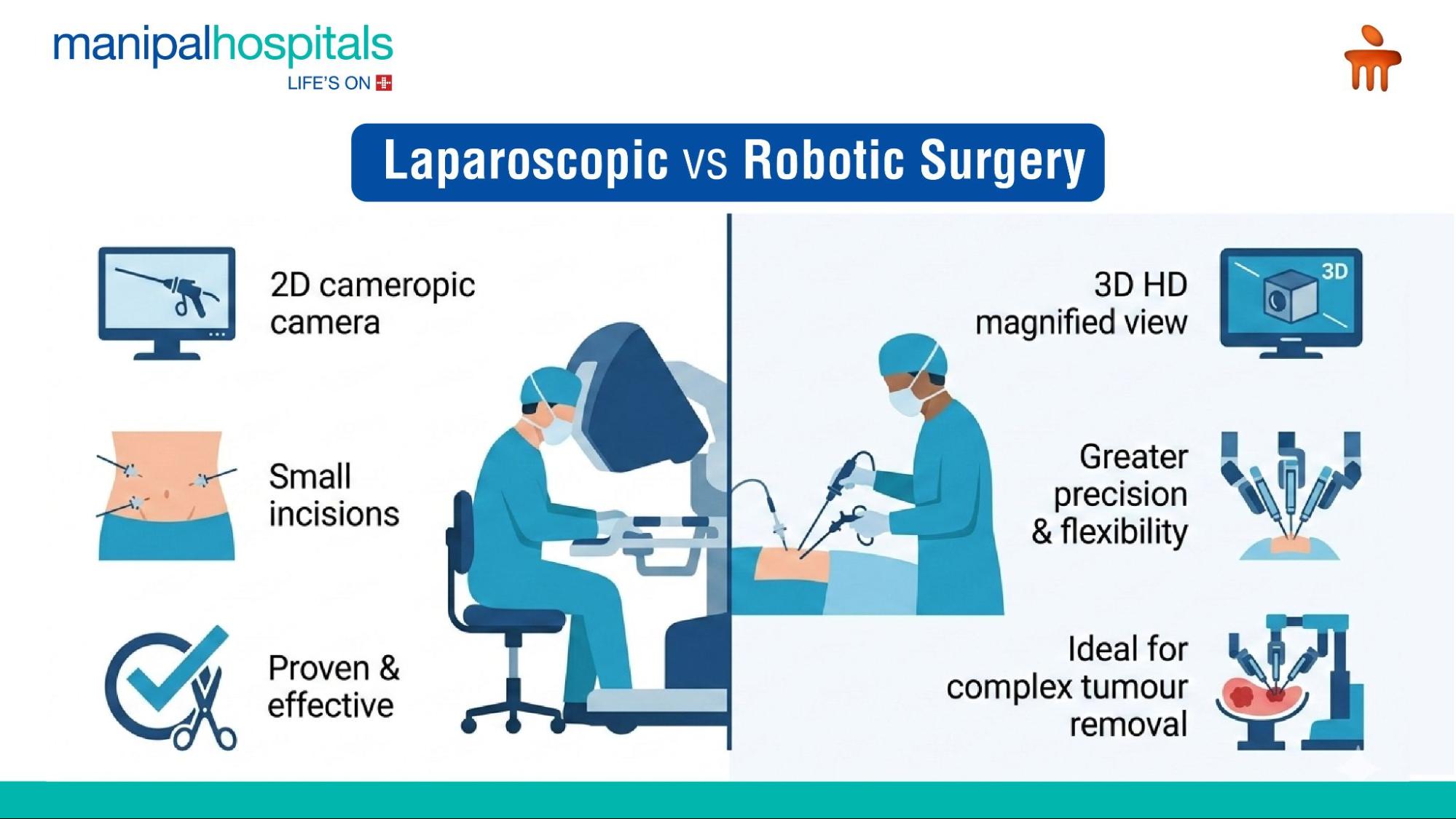
In many cases, robotic-assisted cancer surgery is also used, offering 3D visualisation and enhanced dexterity. This advanced form of minimally invasive surgery is increasingly preferred for complex procedures.
Why Choose Minimally Invasive Cancer Surgery?
The benefits of minimally invasive surgery for cancer treatment are significant. Patients undergoing this approach often experience:
1. Smaller Incisions and Less Pain
Smaller cuts mean reduced trauma to muscles and tissues. Most patients report less post-operative pain compared to traditional open surgery.
2. Faster Recovery
Recovery time is usually shorter. Many patients resume light activities within 2–4 weeks, depending on the procedure.
3. Shorter Hospital Stay
Patients undergoing minimally invasive cancer surgery in Baner,Pune often go home 1–3 days earlier than those who have open surgery.
4. Reduced Blood Loss
Precise surgical techniques reduce bleeding during the procedure.
5. Lower Risk of Infection
Smaller wounds decrease the chances of wound infections and complications.
6. Minimal Scarring
Cosmetic outcomes are significantly better, with tiny scars that fade over time.
7. Comparable Cancer Control
For selected cancers and stages, tumour removal rates and long-term outcomes are comparable to open surgery.
At Manipal Hospitals Baner, surgeons carefully assess each case to ensure the most effective and safest approach.
Cancers Commonly Treated with Minimally Invasive Surgery
Modern cancer surgery techniques are used for a wide range of cancers, including:
Colorectal Cancer
Laparoscopic removal of colon and rectal tumours is now widely practised.
Lung Cancer
Video-assisted thoracoscopic surgery (VATS) allows the removal of early-stage lung tumours through small chest incisions.
Prostate Cancer
Robotic-assisted laparoscopic prostatectomy offers excellent cancer control with improved functional outcomes.
Gynaecological Cancers
Ovarian, uterine, and cervical cancers can often be treated with minimally invasive hysterectomy and lymph node removal.
Kidney Cancer
Partial or radical nephrectomy can be performed laparoscopically to preserve kidney function when possible.
Upper Gastrointestinal Cancers
Selected early-stage stomach and oesophageal cancers may be treated using laparoscopic techniques.
If you are exploring advanced cancer treatment, discussing minimally invasive options with an experienced oncologist in Baner is essential.
Who is Eligible for Minimally Invasive Cancer Surgery?
Not all cancers or patients are suitable for minimally invasive procedures. Doctors consider:
-
Type and stage of cancer
-
Size and location of the tumour
-
Previous abdominal or chest surgeries
-
Overall health condition
The multidisciplinary oncology team at Manipal Hospital Baner evaluates every patient carefully before recommending the best surgical approach.
Recovery After Minimally Invasive Cancer Surgery
Recovery is generally smoother compared to open surgery, but proper care remains crucial.
Post-Surgery Tips:
-
Follow medication and wound care instructions strictly
-
Maintain a protein-rich, balanced diet
-
Stay hydrated
-
Begin gentle walking as advised
-
Avoid heavy lifting for several weeks
-
Attend follow-up appointments
Patients often notice improved comfort, quicker mobility, and better overall well-being during recovery.
Why Choose Manipal Hospitals Baner for Cancer Surgery?
When it comes to cancer surgery in Baner, Pune, experience and technology make a difference. At Manipal Hospital Baner, patients benefit from:
-
Experienced surgical oncologists
-
Advanced laparoscopic and robotic systems
-
Comprehensive cancer diagnostics
-
Multidisciplinary tumour board reviews
-
Personalised treatment planning
-
Dedicated post-operative care
The focus is not only on removing cancer but also on enhancing the quality of life after treatment.
Conclusion
If you or a loved one has been diagnosed with cancer, understanding all available treatment options is essential. Minimally invasive cancer surgery in Baner, Pune offers a safer, more comfortable alternative for many patients.
Consult the oncology specialists at Manipal Hospitals Baner to explore personalised treatment options and receive expert guidance for your cancer care journey.
Disclaimer: This article is for informational purposes only and does not substitute professional medical advice. Always consult a qualified healthcare provider for personalised recommendations.
FAQ's
Yes, when performed by experienced surgeons, it is safe and often associated with fewer complications.
Typically 2–5 days, depending on the type of surgery.
Scars are small and usually fade significantly over time.
Robotic surgery is a type of minimally invasive surgery that offers enhanced precision, especially for complex cases.
No. Suitability depends on cancer type, size, stage, and overall health.
Share this article on: