5 Min Read
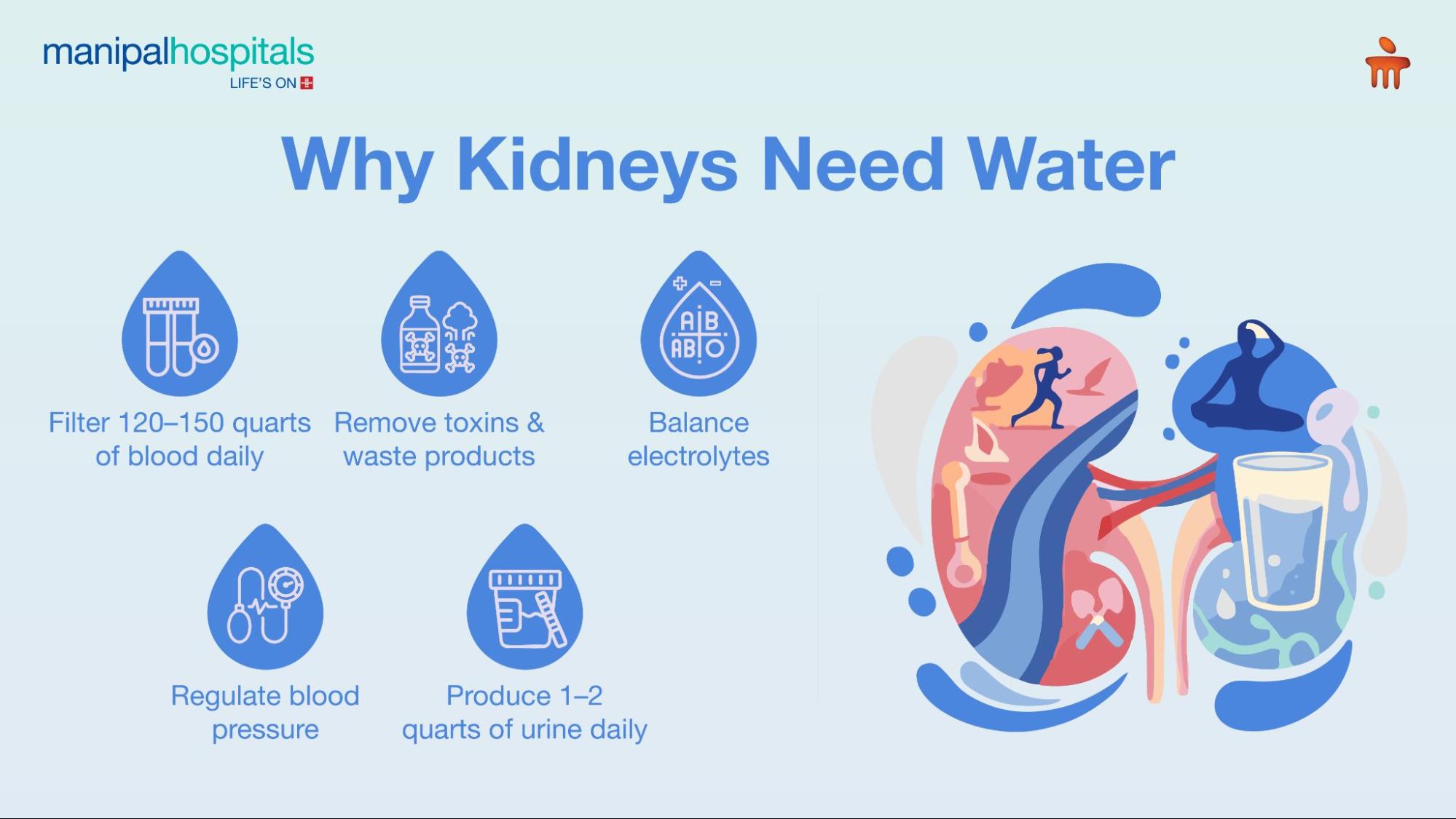
Water is often called the elixir of life and rightly so. From regulating body temperature to transporting nutrients, it plays a central role in almost every biological function. However, one of its most critical roles is supporting kidney health. Your kidneys work tirelessly every single day, filtering nearly 120–150 quarts of blood to remove toxins and excess fluids. Without adequate hydration, this complex system simply cannot function efficiently.
At Manipal Hospitals Baner, we frequently meet patients who ask a simple yet important question: How much water should I drink daily for healthy kidneys? The answer is not identical for everyone, but understanding the basics can help you protect your renal health for years to come.
Synopsis
- Why Hydration Is Essential for Healthy Kidneys
- How Much Water Should You Drink Daily for Healthy Kidneys?
- Benefits of Proper Water Intake for Kidney Health
- Factors That Influence Your Daily Water Requirement
- Signs You Are Not Drinking Enough Water
- Smart Hydration Tips for Healthy Kidneys
- Can You Drink Too Much Water?
- Why Choose Manipal Hospital Baner for Kidney Care?
- Conclusion
Why Hydration Is Essential for Healthy Kidneys
Your kidneys are more than just filters. They regulate fluid balance, maintain electrolyte levels, support blood pressure control, and remove metabolic waste products such as urea and creatinine.
For all these processes to work properly, water acts as the transport medium. When you drink enough water:
-
Waste dissolves properly.
-
Urine remains diluted.
-
Toxins are flushed out effectively.
-
Mineral buildup is prevented.
When water intake is insufficient, urine becomes concentrated. Over time, this increases the risk of kidney stones, urinary infections, and in severe cases, kidney damage.
How Much Water Should You Drink Daily for Healthy Kidneys?
The commonly quoted recommendation is 8 glasses (around 2 litres) per day. However, for optimal kidney health, many nephrologists recommend 2.5 to 3.5 litres of water daily for healthy adults, especially in warmer climates like Pune.
At Manipal Hospitals Baner, our kidney specialists often suggest adjusting intake based on:
-
Body weight
-
Physical activity
-
Climate conditions
-
Medical history
For most healthy adults living in India’s warmer regions, aiming for 10–14 glasses per day supports proper kidney function.
However, more is not always better. Individuals with advanced kidney disease, heart failure, or certain liver conditions may need fluid restriction under medical supervision.
Benefits of Proper Water Intake for Kidney Health
1. Prevents Kidney Stones
When urine is concentrated, minerals such as calcium and oxalate can crystallise and form stones. Drinking sufficient water dilutes these substances, reducing stone formation risk by nearly 50% in recurrent cases.
2. Flushes Out Toxins
Water ensures smooth elimination of metabolic waste products. Without adequate hydration, toxins may accumulate in the bloodstream.
3. Maintains Electrolyte Balance
Electrolytes such as sodium and potassium are crucial for nerve and muscle function. Proper hydration helps the kidneys maintain this delicate balance.
4. Supports Healthy Blood Pressure
Kidneys regulate blood volume and pressure. Dehydration can strain this mechanism, potentially affecting blood pressure control.
5. Reduces Risk of Urinary Tract Infections (UTIs)
Increased urine flow helps flush bacteria from the urinary tract, lowering infection risk.
Factors That Influence Your Daily Water Requirement
There is no universal answer to “how many litres of water per day.” Your needs vary depending on:
-
Climate
Hot and humid weather increases sweating, which means you need more fluids.
-
Physical Activity
If you exercise regularly or have a physically demanding job, fluid loss through sweat increases.
-
Health Conditions
Fever, vomiting, diarrhoea, pregnancy, and breastfeeding all increase hydration needs. On the other hand, certain kidney or heart conditions require fluid regulation.
-
Diet
High-sodium diets increase thirst and water requirements. Fruits and vegetables contribute to daily hydration naturally.
Signs You Are Not Drinking Enough Water
Your body provides early warning signals. Watch for:
-
Dark yellow urine
-
Dry mouth or cracked lips
-
Fatigue
-
Infrequent urination
-
Dizziness
Ideally, urine should be pale yellow. This simple observation can help you monitor hydration levels daily.
Smart Hydration Tips for Healthy Kidneys
What To Do
-
Sip water steadily throughout the day
-
Start your morning with a glass of water
-
Drink before, during, and after exercise
-
Carry a reusable water bottle
-
Include water-rich foods like cucumber, watermelon, oranges, and spinach
What To Avoid
-
Waiting until you feel extremely thirsty
-
Drinking excessive water in a short period
-
Relying mainly on sugary beverages
-
Ignoring persistent dehydration symptoms
Can You Drink Too Much Water?
Although rare, excessive water consumption in a short time can cause hyponatremia, a condition where sodium levels drop dangerously low. This is more common in endurance athletes.
Balance is key. Consistent intake throughout the day is far safer than drinking large amounts suddenly.
Do Tea and Coffee Count?
Tea and coffee contain water, but caffeine has mild diuretic effects. They contribute to fluid intake but should not replace plain water entirely. Moderation is important.
Hydration and Chronic Kidney Disease (CKD)
For individuals with Chronic Kidney Disease (CKD), fluid intake must be personalised. In the early stages, adequate hydration supports kidney function. In advanced stages, fluid restriction may be necessary.
At Manipal Hospital, our nephrologist in Baner, Pune, conducts detailed evaluations, including kidney function tests, urine analysis, and electrolyte panels, to determine the right hydration plan for each patient.
Why Choose Manipal Hospital Baner for Kidney Care?
When it comes to kidney health, early guidance and preventive care make a significant difference.
At Manipal Hospital Baner, we offer:
-
Advanced diagnostic facilities
-
Expert nephrologists and renal specialists
-
Personalised hydration counselling
-
Kidney stone prevention programmes
-
Comprehensive chronic kidney disease management
Our multidisciplinary approach ensures that patients receive customised care plans tailored to their medical history, lifestyle, and climate conditions.
Whether you are looking for preventive advice or specialised renal treatment, our team is committed to helping you maintain optimal kidney function.
Maintaining proper hydration is one of the simplest yet most powerful ways to protect your kidneys. By drinking the right amount of water daily, monitoring urine colour, and adjusting intake based on your lifestyle, you can significantly reduce your risk of kidney-related problems.
Conclusion
If you are unsure about your hydration needs or experiencing symptoms related to kidney health, consult the nephrology experts at Manipal Hospital Baner for personalised guidance.
Your kidneys work hard for you every day — give them the support they deserve.
Disclaimer: This article is for informational purposes only and does not constitute medical advice. Please consult a qualified healthcare professional for personalised medical guidance.
FAQ's
Most healthy adults should aim for 2.5–3.5 litres per day, depending on climate and activity level.
Completely colourless urine consistently may indicate overhydration. Pale yellow is ideal.
Yes. Chronic dehydration increases the risk of kidney stones and may contribute to kidney injury over time.
Not necessarily. Older adults often have reduced thirst sensation and may need reminders to drink adequate fluids.
No. While proper hydration supports kidney function, established kidney disease requires medical treatment and monitoring.
Share this article on:


.webp "Early Signs of Acute Renal Failure")