5 Min Read
When patients are advised to undergo open-heart surgery, it is natural to feel anxious. Questions about safety, recovery, and technology often arise. One of the most important advancements that makes modern cardiac surgery possible is the Cardiopulmonary Bypass Machine, commonly known as the heart-lung bypass machine.
This advanced open-heart surgery machine temporarily takes over the function of the heart and lungs, allowing surgeons to operate on a still, bloodless heart with precision and safety. At Manipal Hospitals Baner, cutting-edge bypass technology and highly experienced cardiac teams ensure the highest standards of patient care and successful surgical outcomes.
Synopsis
- What Is a Heart-Lung Bypass Machine?
- How Does the Cardiopulmonary Bypass Machine Work?
- Why Is the Heart-Lung Machine Important in Open Heart Surgery?
- Key Benefits of Bypass Surgery Support
- Heart Care Excellence at Manipal Hospital Baner
- Preparation for Open Heart Surgery with Bypass Support
- Recovery After Heart-Lung Bypass Surgery
- A Lifesaving Innovation That Transformed Cardiac Surgery
- Conclusion
What Is a Heart-Lung Bypass Machine?
A heart-lung bypass machine is a medical device used during open-heart surgery to maintain blood circulation and oxygen supply when the heart is intentionally stopped.
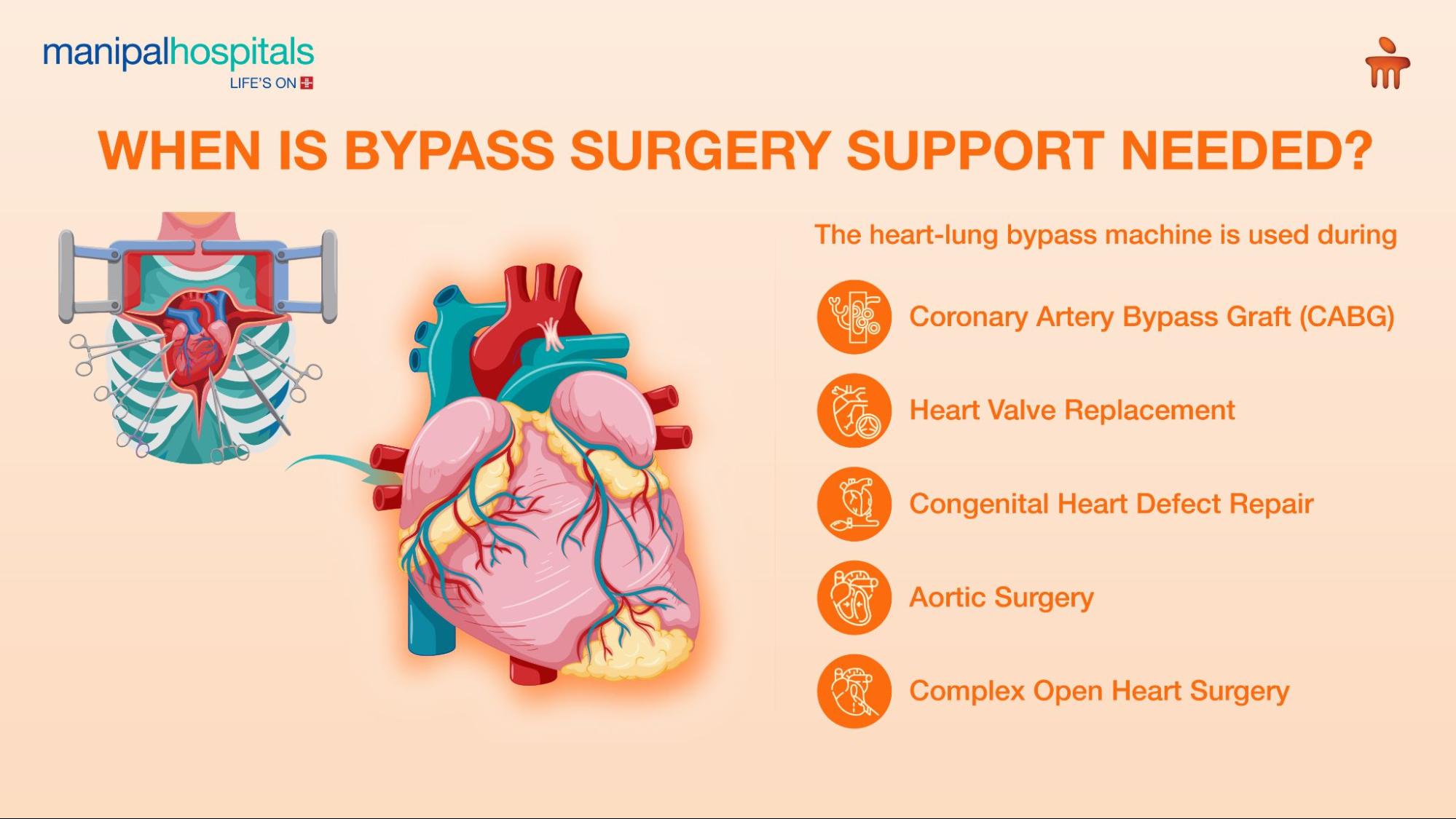
During complex procedures such as coronary artery bypass graft surgery (CABG), valve replacement, or congenital heart defect correction, surgeons need a motionless heart. The cardiopulmonary bypass system allows this by temporarily diverting blood away from the heart and lungs.
The machine performs three critical tasks:
-
Pumps blood throughout the body
-
Adds oxygen and removes carbon dioxide
-
Maintains body temperature
In simple words, it acts as an external heart and lung system during surgery.
How Does the Cardiopulmonary Bypass Machine Work?
The cardiopulmonary bypass machine consists of several carefully engineered components working together:
1. The Pump (Artificial Heart)
The pump draws deoxygenated blood from the body and circulates it through the bypass circuit. This ensures continuous blood flow to vital organs like the brain and kidneys.
2. The Oxygenator (Artificial Lung)
The oxygenator removes carbon dioxide and adds oxygen to the blood. Modern oxygenators are highly efficient and ensure optimal oxygen saturation levels.
3. Heat Exchanger
The body temperature may be lowered slightly during surgery to protect organs. The heat exchanger cools and later gradually warms the blood before the bypass is discontinued.
4. Filters and Reservoirs
These prevent air bubbles and tiny particles from entering circulation, ensuring safe blood flow.
A specialised medical professional called a perfusionist operates the heart-lung bypass machine throughout the surgery. The perfusionist closely monitors oxygen levels, blood pressure, temperature, and circulation parameters in real time.
Why Is the Heart-Lung Machine Important in Open Heart Surgery?
The introduction of the heart-lung bypass machine revolutionised cardiac surgery. Previously, many heart conditions were considered untreatable. Today, the machine enables:
-
Coronary artery bypass surgery
-
Heart valve repair and replacement
-
Aortic aneurysm repair
-
Congenital heart defect correction
-
Complex cardiac tumour removal
Key Benefits of Bypass Surgery Support
-
Creates a still and bloodless surgical field
-
Maintains continuous oxygen supply to organs
-
Reduces risk of organ damage
-
Improves surgical precision
-
Increases overall success rates
With modern advancements, open heart surgery at baner success rates exceed 95% for many common cardiac procedures when performed at advanced cardiac centres.
Heart Care Excellence at Manipal Hospital Baner
At Manipal Hospitals Baner, patients receive comprehensive cardiac care supported by:
-
Advanced cardiopulmonary bypass systems
-
Experienced cardiac surgeons
-
Dedicated perfusion specialists
-
Modern cardiac intensive care units
-
Structured cardiac rehabilitation programmes
The hospital follows international safety protocols and evidence-based treatment approaches. From diagnosis to recovery, every step is carefully monitored to ensure patient safety and faster healing.
Patients undergoing open-heart surgery at Manipal Hospital Baner benefit from personalised care plans, advanced monitoring systems, and post-operative rehabilitation support.
Preparation for Open Heart Surgery with Bypass Support
Dos Before Surgery
-
Follow all pre-operative fasting and medication instructions
-
Control diabetes, blood pressure, and other chronic conditions
-
Stop smoking at least a few weeks before surgery
-
Maintain open communication with your cardiac team
Dos After Surgery
-
Participate in cardiac rehabilitation
-
Follow prescribed medications strictly
-
Adopt a heart-healthy diet
-
Engage in light walking as advised
-
Attend all follow-up appointments
Don’ts
-
Do not stop medications without consulting your cardiologist
-
Avoid heavy lifting during recovery
-
Do not ignore unusual symptoms such as chest pain or breathlessness
-
Avoid unhealthy lifestyle habits
A smooth recovery depends on both medical care and patient cooperation.
Recovery After Heart-Lung Bypass Surgery
Most patients spend a few days in the cardiac ICU after surgery. Gradually, the breathing tube is removed, and patients begin light movement. Full recovery may take 6–12 weeks depending on the procedure and individual health conditions.
Patients often report:
-
Improved breathing
-
Reduced chest pain
-
Better stamina
-
Enhanced quality of life
At Manipal Hospitals Baner, cardiac rehabilitation plays a crucial role in strengthening the heart and preventing future complications.
A Lifesaving Innovation That Transformed Cardiac Surgery
The heart-lung bypass machine stands as one of the most remarkable innovations in modern medicine. It allows surgeons to perform highly complex open-heart surgery procedures safely and effectively.
At Manipal Hospitals Baner, patients benefit from advanced cardiopulmonary bypass support, skilled cardiac teams, and holistic care designed to restore heart health and improve long-term quality of life.
If you or your loved one has been advised to undergo bypass surgery, early consultation with a cardiac specialist can provide clarity and reassurance.
Conclusion
If you or your loved one has been advised to undergo bypass surgery, early consultation with a cardiac specialist can provide clarity and reassurance.
Disclaimer: This content is for informational purposes only and should not replace professional medical advice. Always consult a qualified cardiologist in Baner, Pune for personalised guidance.
FAQ's
Yes. The cardiopulmonary bypass machine is extremely safe when operated by trained perfusionists. Continuous monitoring significantly reduces risks.
The duration depends on the complexity of open-heart surgery. Most procedures require bypass support for 2–4 hours.
No. Patients are under general anaesthesia during surgery and do not feel any pain.
As with any major surgery, there are potential risks such as bleeding, clotting, or temporary organ effects. However, advanced technology and strict protocols minimise complications.
After the surgical repair is complete, the heart is restarted and gradually resumes its function. The machine is slowly disconnected while vital signs are monitored carefully.
Manipal Hospital Baner offers advanced cardiac technology, experienced heart surgeons, state-of-the-art cardiopulmonary bypass machines, and comprehensive post-operative rehabilitation, ensuring safe and successful outcomes.
Share this article on: