7 Min Read
Coronary Artery Disease (CAD) is one of the leading causes of heart-related illness in India and worldwide. It develops when the coronary arteries, the blood vessels that supply oxygen-rich blood to the heart, become narrowed or blocked due to plaque buildup. Over time, this restriction in blood flow can cause chest pain, breathlessness, fatigue, and in severe cases, a heart attack.
At Manipal Hospital Baner, expert cardiologists focus on early diagnosis, advanced treatment, and long-term prevention strategies to help patients manage Coronary Artery Disease effectively. With timely intervention and the right lifestyle measures, CAD can be controlled, and its progression significantly slowed.
Synopsis
Understanding Coronary Artery Disease
Coronary Artery Disease occurs due to a process called atherosclerosis. Fatty deposits made up of cholesterol, calcium, and inflammatory cells accumulate along the artery walls. Gradually, these deposits harden and narrow the arteries, reducing oxygen supply to the heart muscle.
Common symptoms include:
-
Chest pain or pressure (angina)
-
Shortness of breath
-
Pain radiating to the jaw, shoulder, neck, or arm
-
Fatigue during routine activities
-
Sweating or nausea
In some individuals, the first sign may unfortunately be a heart attack. This is why regular heart screening is crucial, especially if you have risk factors such as high blood pressure, diabetes, obesity, smoking habits, or a family history of heart disease.
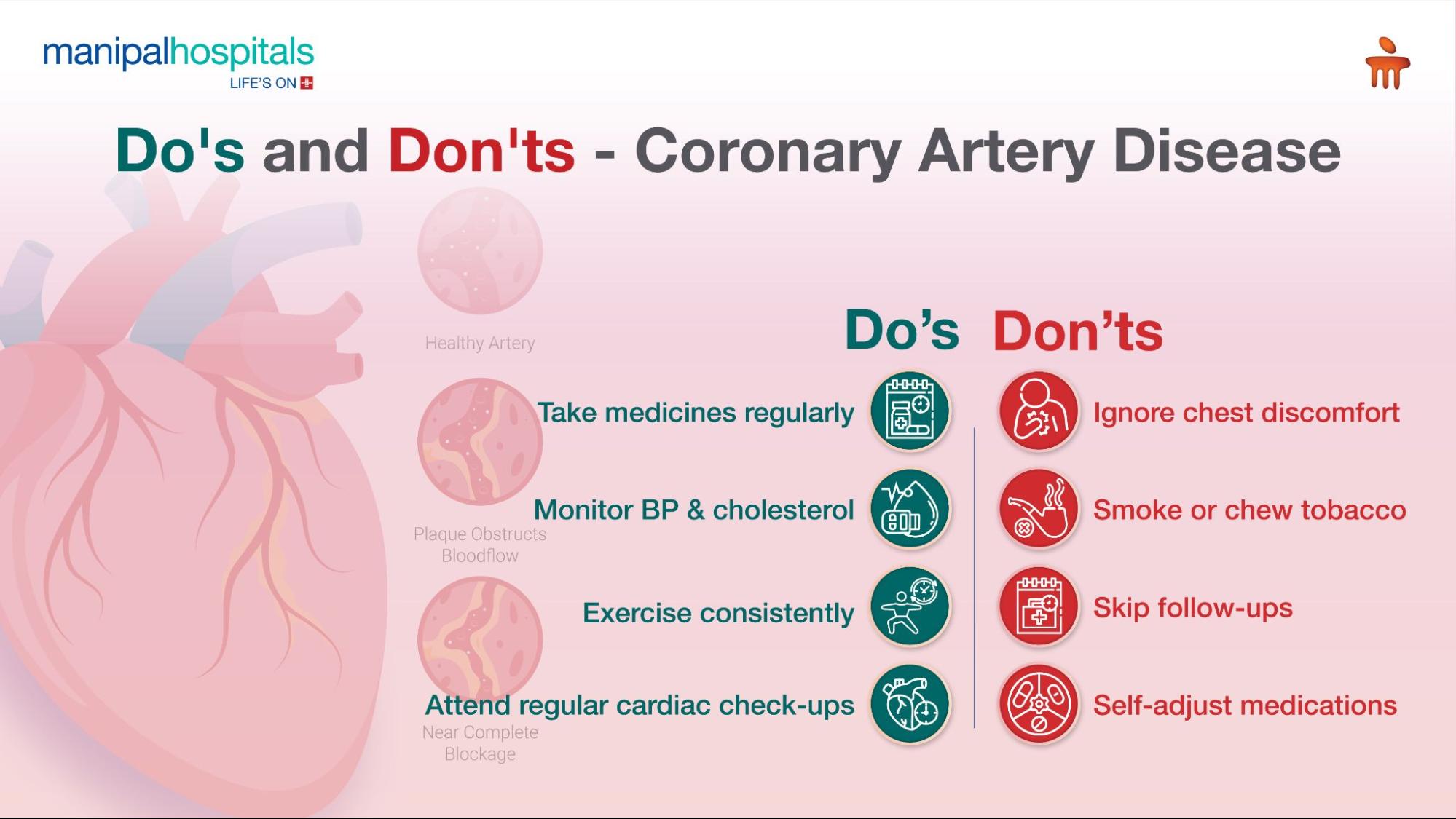
Why Early Diagnosis Matters
Early detection of Coronary Artery Disease significantly improves treatment outcomes. At Manipal Hospital Baner, advanced diagnostic tools such as ECG, 2D echocardiography, TMT (stress test), CT coronary angiography, and cardiac catheterisation are used to assess heart health accurately.
Research shows that patients who follow structured treatment plans can reduce major cardiac events by up to 35%. The key lies in early evaluation and personalised care.
Lifestyle Changes: The Foundation of CAD Management
Lifestyle modification remains the first and most powerful step in managing Coronary Artery Disease.
1. Heart-Healthy Diet
A balanced diet plays a vital role in controlling cholesterol and blood pressure.
Include:
-
Fresh fruits and vegetables
-
Whole grains such as oats and brown rice
-
Lean proteins like fish, lentils, and legumes
-
Healthy fats from nuts, seeds, and olive oil
Avoid or limit:
-
Processed foods
-
Deep-fried items
-
Red and processed meats
-
Sugary beverages
-
Excess salt
Reducing sodium intake helps manage blood pressure, while cutting down added sugar lowers diabetes risk both critical in controlling Coronary Artery Disease.
2. Regular Physical Activity
Exercise strengthens the heart muscle and improves blood circulation.
-
Aim for at least 150 minutes of moderate exercise per week.
-
Include brisk walking, swimming, or cycling.
-
Add light strength training twice weekly.
Patients who maintain regular physical activity often report improved stamina and better quality of life.
3. Quit Smoking and Limit Alcohol
Smoking damages artery walls and accelerates plaque build-up. Quitting smoking dramatically reduces the risk of a heart attack within a year. Excessive alcohol intake can raise blood pressure and strain the heart, so moderation is essential.
4. Manage Stress Effectively
Chronic stress contributes to high blood pressure and unhealthy lifestyle choices. Yoga, meditation, breathing exercises, and adequate sleep can support overall heart health.
Medical Management of Coronary Artery Disease
While lifestyle measures are essential, many patients require medication to manage Coronary Artery Disease effectively.
At Manipal Hospital Baner, treatment plans are customised according to the patient’s condition.
Blood Pressure Control
Antihypertensive medications reduce strain on the heart and protect blood vessels.
Cholesterol Management
Statins and other lipid-lowering medications help reduce LDL (“bad”) cholesterol levels and stabilise plaque deposits. Many patients experience a 30–40% improvement in cholesterol within months.
Blood Sugar Regulation
For diabetic patients, controlling blood glucose is crucial, as high sugar levels damage arteries and accelerate CAD progression.
Antiplatelet Therapy
These medications prevent clot formation and significantly reduce the risk of heart attacks.
With proper medical management, the risk of major cardiovascular events can drop by up to 40%.
Advanced Cardiac Procedures at Manipal Hospital Baner
When blockages are severe or symptoms persist despite medication, interventional procedures may be required.
Angioplasty and Stenting
This minimally invasive procedure involves inserting a catheter with a balloon to open blocked arteries. A stent is often placed to keep the artery open. Recovery is generally quick, and patients often experience immediate relief from symptoms.
Coronary Artery Bypass Surgery
In complex or multiple blockages, bypass surgery may be recommended. One of the most common procedures for this is Coronary Artery Bypass Grafting (CABG), where surgeons create a new pathway for blood flow using a healthy blood vessel from another part of the body.
CABG provides long-term symptom relief and improved survival rates for suitable patients.
The cardiac team at Manipal Hospital Baner uses advanced technology and evidence-based techniques to ensure high procedural success rates and patient safety.
Preventive Care and Regular Monitoring
Managing Coronary Artery Disease is an ongoing process. Regular follow-ups help monitor:
-
Blood pressure
-
Cholesterol levels
-
Blood sugar levels
-
Weight and BMI
-
Medication effectiveness
Cardiac rehabilitation programmes are also recommended for many patients, helping them safely resume daily activities while improving heart strength.
When to See a Cardiologist
Seek immediate medical attention if you experience:
-
Persistent chest pain
-
Unexplained sweating
-
Severe fatigue
-
Fainting episodes
Timely intervention can save lives.
Coronary Artery Disease may sound overwhelming, but with the right guidance and proactive management, it can be controlled successfully. Early diagnosis, healthy lifestyle habits, proper medication, and expert cardiac care make all the difference.
conclusion
If you or your loved ones have symptoms or risk factors for heart disease, consult the experienced cardiologist in Baner, Pune today. Taking action now can protect your heart for years to come.
FAQ's
CAD cannot usually be reversed entirely, but it can be effectively managed with lifestyle changes, medication, and procedures when necessary.
If you have risk factors, annual screening is recommended. Your cardiologist may suggest more frequent visits depending on your condition.
Yes, but always consult your doctor before starting any exercise programme. Cardiac rehabilitation is highly beneficial.
Angioplasty is minimally invasive and involves stent placement, while bypass surgery creates a new blood flow pathway around blocked arteries.
Manipal Hospital Baner offers comprehensive cardiac services, experienced cardiologists, advanced technology, and personalised patient care under one roof.
Share this article on: