4 Min Read
Breast cancer is one of the most common cancers affecting women worldwide, but it is also among the most treatable when diagnosed early. For many patients, breast cancer surgery plays a central role in treatment either to remove the tumour, prevent its spread, or improve long-term survival. At Manipal Hospitals, breast cancer surgery is delivered by experienced surgical oncologists at Baner, Pune, using evidence-based, patient-centred approaches.
This guide explains the types of breast cancer surgery, what patients can expect before and after the procedure, recovery timelines, and survival outcomes, helping patients and families make informed decisions with confidence.
Synopsis
- What Happens in Breast Cancer Surgery?
- Types of Breast Cancer Surgery
- Preparing for Breast Cancer Surgery
- Breast Cancer Surgery Recovery Time
- What to Expect During Recovery
- Breast Cancer After Surgery: Life & Care
- Breast Cancer Surgery Survival Rate
- Why Choose Manipal Hospital Baner, Pune?
- Conclusion
What Happens in Breast Cancer Surgery?
Breast cancer surgery involves removing cancerous tissue from the breast, sometimes along with nearby lymph nodes, to prevent the disease from spreading. The type of surgery depends on factors such as:
-
Stage and size of the tumour
-
Whether cancer has spread to the lymph nodes
-
Hormone receptor status
-
Patient’s overall health and personal preferences
At Manipal Hospitals Pune, surgery is often combined with chemotherapy, radiation therapy, or hormone therapy to improve outcomes.
Types of Breast Cancer Surgery
1. Lumpectomy (Breast-Conserving Surgery)
A lumpectomy removes only the tumour and a small margin of healthy tissue around it, preserving most of the breast.
Recommended when:
-
Cancer is detected early
-
The tumour is small and localised
Key benefits:
-
Breast shape is largely maintained
-
Shorter recovery time
-
Usually followed by radiation therapy
2. Mastectomy
A mastectomy involves removing the entire breast and may be advised when cancer is extensive or recurrent.
Types of mastectomy include:
-
Simple (Total) Mastectomy
-
Modified Radical Mastectomy
-
Skin-Sparing or Nipple-Sparing Mastectomy
Breast reconstruction surgery can be done immediately or at a later stage, based on patient choice and medical advice.
3. Lymph Node Surgery
To determine whether cancer has spread, surgeons may remove lymph nodes from the underarm area.
-
Sentinel Lymph Node Biopsy: Removes the first few lymph nodes where cancer is likely to spread
-
Axillary Lymph Node Dissection: Removes multiple nodes if cancer is detected
Preparing for Breast Cancer Surgery
Before surgery, patients undergo:
-
Imaging tests (mammogram, MRI, ultrasound)
-
Biopsy confirmation
-
Blood tests and cardiac evaluation
-
Detailed counselling about surgical options
At Manipal Hospitals Baner, a multidisciplinary tumour board reviews each case to ensure personalised and optimal treatment planning.
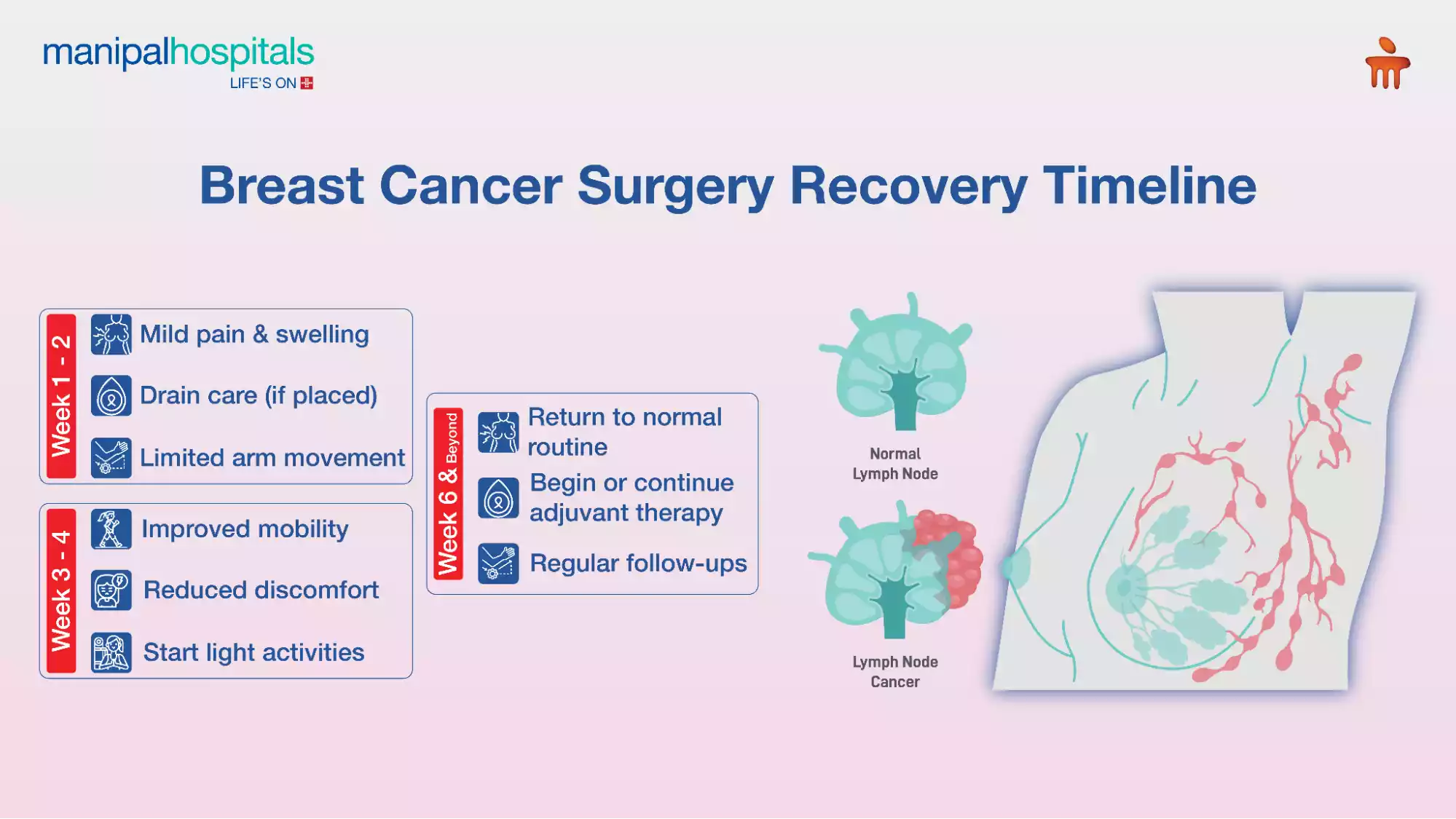
Breast Cancer Surgery Recovery Time
Recovery after breast cancer surgery varies depending on the procedure performed.
|
Surgery Type |
Typical Recovery Time |
|
Lumpectomy |
1–2 weeks |
|
Mastectomy |
3–6 weeks |
|
Mastectomy with Reconstruction |
6–8 weeks |
What to Expect During Recovery
-
Mild to moderate pain or tightness
-
Temporary swelling and bruising
-
Restricted arm movement (initially)
-
Drain tubes (in some cases)
Physiotherapy and guided exercises help restore shoulder mobility and reduce stiffness.
Breast Cancer After Surgery: Life & Care
Life after breast cancer surgery focuses on healing, monitoring, and emotional well-being.
Post-surgery care includes:
-
Wound care and dressing changes
-
Regular follow-up appointments
-
Additional treatments like chemotherapy or radiation
-
Lifestyle changes, such as a balanced diet and gentle physical activity
Emotional recovery is just as important. Support groups, counselling, and family involvement play a vital role in overall healing.
Breast Cancer Surgery Survival Rate
The breast cancer surgery survival rate is highly encouraging, especially when cancer is detected early.
-
Stage I: Over 90% 5-year survival rate
-
Stage II: Approximately 80–85%
-
Stage III: Around 60–70%
-
Stage IV: Depends on response to treatment
Advancements in surgical techniques, early detection, and personalised therapies at centres like Manipal Hospital Baner have significantly improved long-term outcomes.
Why Choose Manipal Hospital Baner, Pune?
-
Experienced breast surgical oncologists
-
Advanced operating theatres and imaging facilities
-
Comprehensive cancer care under one roof
-
Dedicated breast cancer nurses and counsellors
-
Patient-focused recovery and rehabilitation plans
Conclusion
Visit Manipal Hospitals Cancer Care department in Baner, Pune today or book an appointment with experts now!
FAQ's
Some discomfort is expected, but pain is well-managed with medications and usually improves within a few days.
Not always. It depends on tumour type, stage, and lymph node involvement.
Yes, recurrence is possible, which is why regular follow-ups and ongoing treatment are important.
Light activities can usually be resumed within 1–2 weeks, while strenuous tasks should wait for medical clearance.
Yes. Reconstruction is safe and commonly performed, either immediately or later, based on patient preference.
Share this article on: