8 Min Read
-
How prepared are you to handle a sudden episode of seizure at home?
-
What are the dos and don’ts you must know about managing a seizure at home?
This blog brings you insights from a top paediatric neurologist at Yeshwantpur, Bangalore, on how to manage a convulsive event in your own house. It outlines a detailed seizure action plan covering everything from immediate first aid to arranging follow-up care.
When your child has a seizure, it can feel overwhelming and frightening. However, most seizures are brief, and with the right knowledge and preparation, you can manage them safely at home.
This blog explains:
-
What to do during a seizure (first aid)
-
When and how to use rescue medication
-
How to build a clear seizure action plan
-
When to seek emergency care
Synopsis
- What do We Mean by Domiciliary Care of Seizures?
- Recognising Seizure Types
- Immediate Seizure First Aid at Home
- Rescue Medication at Home: What You Need to Know
- Home Safety, Practical Steps to Reduce Risk
- Making a Seizure Action Plan (How to Build One)
- Training and Documentation, Small Actions That Make a Big Difference
- Conclusion
What do We Mean by Domiciliary Care of Seizures?
When we say domiciliary care of seizures, we mean all the practical steps you take to prevent harm and manage seizures at home: recognising seizure types, providing immediate first aid, using prescribed rescue medication safely, keeping records, and liaising with clinicians for ongoing management. This includes caregiver training, simple home safety modifications, and a written seizure action plan so everyone in the household knows what to do.
Good domiciliary care reduces the risk of complications, avoids unnecessary hospital visits, and helps you stay in control.
Recognising Seizure Types
Not all seizures look the same. Some are brief and subtle; others are dramatic and prolonged. Spotting what kind of seizure is happening helps you choose the right response and decide whether to use rescue medication for seizures or call for emergency help.
-
Tonic-clonic seizures: loss of consciousness, stiffening, and jerking movements.
-
Focal seizures: Have unusual sensations or behaviours, jerking of one limb, and speech may pause briefly. The child can be aware or unaware of the event.
-
Absence seizures: brief staring spells, often mistaken for daydreaming.
-
Atonic seizures: sudden loss of muscle tone, risk of falls & injury.
Immediate Seizure First Aid at Home
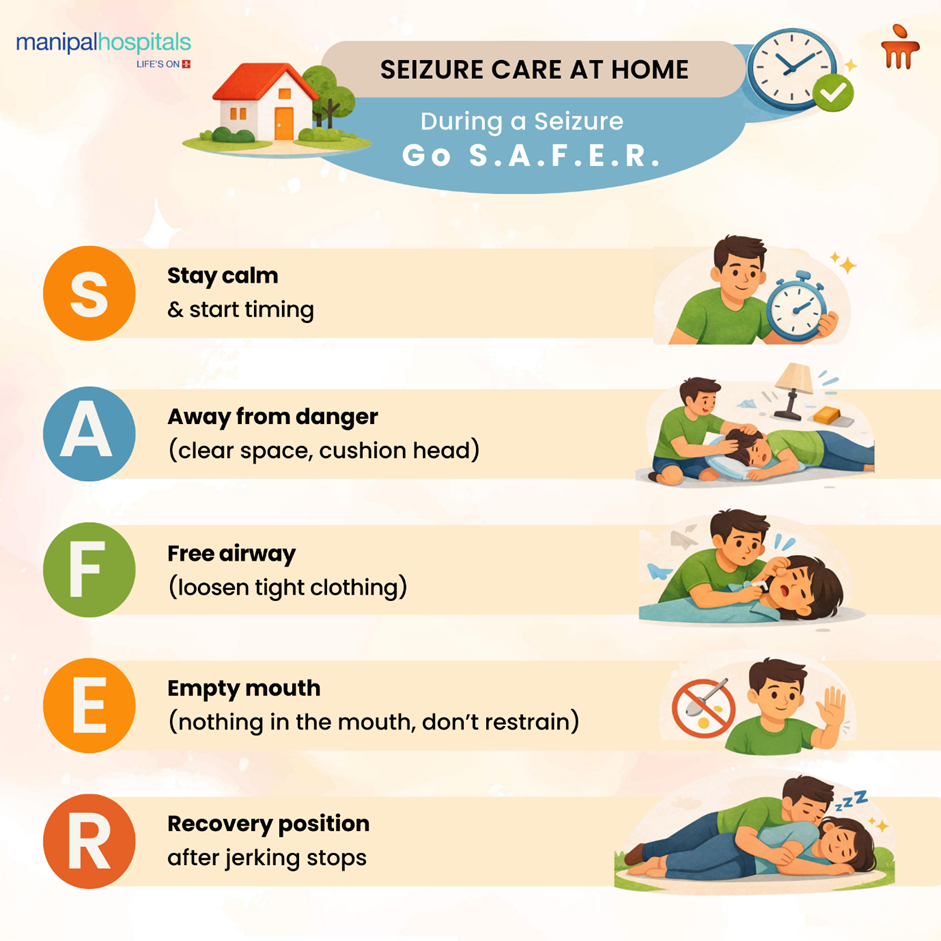
The core goals of seizure first aid at home are to protect from injury, keep the airway open, and track time. Don’t try to hold the person down or put anything in their mouth. Once the convulsions stop, place them in the recovery position and stay until they are fully alert.
-
If the person is on the floor, cushion their head.
-
Loosen tight clothing around the neck, but do not force the jaw open.
-
Clear the area: move dangerous objects away (hot pans, sharp edges, knives).
-
Time the seizure; call an ambulance if it lasts longer than 5 minutes or if repeated seizures occur without recovery, call an ambulance. Knowing these red flags is central to safe home seizure management, as it prevents delays that can worsen outcomes.
Rescue Medication at Home: What You Need to Know
If someone has a history of prolonged seizures or clusters, a clinician may prescribe a rescue medication to use at home, often a benzodiazepine in buccal, intranasal, or rectal form. Nasal midazolam at home is a common example.
These medications are used when:
-
A seizure lasts longer than the time specified in your child’s plan (often 3 minutes).
-
Cluster of seizures (multiple seizures in a short period) without gaining consciousness in between the episodes
These medicines can stop a prolonged seizure, reducing the need for emergency admission. Only give rescue medication if it has been prescribed and you have been trained on how to use it. Caregivers should be trained in administration and aware of dosing and contraindications. If a rescue dose does not stop the seizure, emergency services must be contacted.
Home Safety: Practical Steps to Reduce Risk
You don’t need to overhaul the house. Focus on targeted, sensible changes that reduce injury risk during a seizure.
-
Use non-slip mats and remove tripping hazards in common areas.
-
Avoid bathing alone; prefer showers with a seat or supervised baths if seizures occur.
-
Pad sharp furniture edges where possible.
-
Consider door or window alarms if seizures involve wandering.
These simple adjustments are part of home safety for epilepsy and make daily life more secure and manageable.
Making a Seizure Action Plan (How to Build One)
A seizure action plan is your single-page guide for emergencies. It should be simple and pinned somewhere visible.
Your seizure plan should include:
-
Your child’s seizure type
-
Typical seizure duration
-
Clear step-by-step first aid instructions
-
When to give rescue medication, exact dose, and route
-
When to call emergency services
-
Emergency contacts
Having this plan shared with everyone who may care for the child, relatives, neighbours, and carers, makes your domiciliary care of seizures consistent and reduces panic.
Training and Documentation, Small Actions That Make a Big Difference
Train at least two people in the household to provide first aid and, if needed, to administer rescue medication.
-
Keep a simple domiciliary care of seizures diary: date, time, seizure type, duration, triggers, rescue treatment given, and recovery notes. This diary is invaluable when you review treatment with your neurologist or epilepsy nurse and supports medication adjustments or referrals.
-
A clear record also helps identify patterns, like sleep deprivation or missed medication, that you can address to reduce seizure frequency.
-
Set reminders, use pill boxes, and plan pharmacy refills to avoid missing doses.
-
Regular review with your neurologist ensures medicines remain appropriate, side effects are managed, and rescue therapies are arranged if needed.
Conclusion
Seizures are frightening — but knowledge is empowering.
With proper first aid training, a clear action plan, and rescue medication when prescribed, parents can confidently manage seizures at home while keeping their child safe.
For expert domiciliary seizure care and home health support, consult our expert paediatric neurologist at Manipal Hospital Yeshwanthpur.
FAQ's
If it’s the first seizure, protect the person from immediate danger: cushion the head, move sharp objects away, and time the event. Don’t put anything in their mouth. After the seizure, stay with them until they recover and seek medical help. You should contact local emergency services or your GP for advice, since a first seizure needs assessment.
If it’s the first seizure, protect the person from immediate danger: cushion the head, move sharp objects away, and time the event. Don’t put anything in their mouth. After the seizure, stay with them until they recover and seek medical help. You should contact local emergency services or your GP for advice, since a first seizure needs assessment.
You can use rescue medication only if a clinician has prescribed it and given you clear, written instructions. Rescue therapies, for example, nasal midazolam at home, are usually reserved for seizures lasting longer than the person’s typical event or seizures that continue beyond 3 minutes.
Call an ambulance immediately if the seizure lasts longer than five minutes, if breathing doesn’t return promptly, if the person is injured, or if seizures occur repeatedly without recovery in between. Also call for a first seizure, after a head injury, or if the person is pregnant or unresponsive after the seizure.
The most effective changes are small: keep a seizure action plan visible, train two carers, use a simple seizure diary, minimise hazards in key rooms (bathroom, kitchen), and ensure medicines are taken on time. Together, these reduce risk and make your response faster and safer.
Share this article on: