8 Min Read
Is the tablet or phone helping with homework, or quietly taking over family time? Screen time in children is part of daily life now, but the balance matters. Screens can support learning, social connection, and creativity, yet too much use can affect sleep, attention, eyesight, and mood.
In our latest blog, an experienced paediatric neurologist in Yeshwanthpur, Bangalore, explains the common screen time effects, who is most at risk, and how to set simple routines that protect development without banning technology outright. Use these practical steps to help your child get the benefits of screens while reducing harm, and know when to seek medical or specialist advice.
"Screen time" refers to the amount of time children spend using digital devices like televisions, mobile phones, tablets, computers, or video games. Not all screen use is the same. The quality of screen engagement matters as much as the quantity.
Synopsis
Why is Screen Use Rising in Children?
Screens are easier to access and often part of school, homework, and play. Parents may use devices for quiet time or learning while juggling work. Apps and streaming services are designed to keep attention, so even short sessions can stretch into long ones. Understanding the reasons helps plan realistic limits rather than hoping usage will drop by itself.
At the same time, not all screen use is equal. Video calls with family, guided learning apps, and creative play have value. The goal is to weigh benefits against harms and guide healthy habits.
How Screens Affect Different Areas of Health
While screens offer benefits, excessive exposure can lead to several concerns.
-
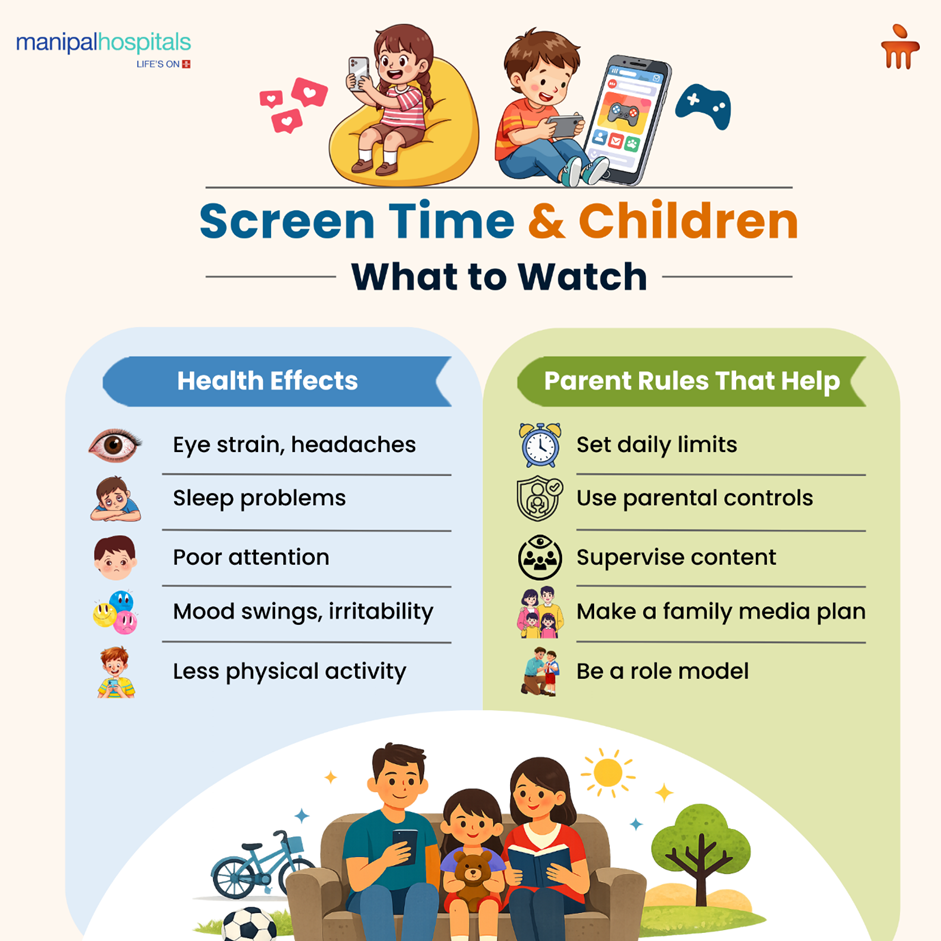
Vision and eyes—Long periods of near focus can cause digital eye strain in kids; they commonly experience dry eyes, sore or tired eyes, and blurred vision after long viewing. Blue light from screens may increase eye discomfort and alter sleep timing and cause sleep disturbances. Regular breaks and proper viewing distance reduce eye strain.
-
Sleep and circadian rhythm—The link between screen time and sleep is strong. Blue light emitted by screens can interfere with melatonin production, making it harder for children to fall asleep. The result leads to shorter sleep duration or poorer sleep quality, which then affects attention, mood, and learning.
-
Attention and learning—Heavy, unstructured screen use is associated with reduced attention span in some children and poorer task persistence. Rapid scene changes and constant notifications may make slower-paced tasks like reading and homework feel less engaging.
-
Behaviour and mood—The behavioural effects of screens include irritability when devices are removed, increased aggression with exposure to violent content, and mood swings linked to social media interactions in older children. Over-reliance on screens as the default calming tool can make other coping strategies harder to learn.
-
Physical activity and weight—More screen time usually means less active time. Sedentary behavior contributes to lower fitness and a higher risk of obesity when not balanced with regular exercise and active play.
-
Social development—Screens can both connect and distance. Video calls and collaborative games support social interaction, but excessive solo screen time limits face-to-face play, where children learn empathy, read social cues, and resolve conflicts.
Age-Wise Guidance and Practical Expectations
Different ages need different rules. The content below pairs realistic expectations with simple actions.
-
0–2 years: Limit passive screen exposure. For babies and toddlers, priority should be real-world interactions that build language and secure attachment. If screens are used, choose high-quality ones, co-view with the child, and keep sessions brief.
-
3–5 years: Use screens for short, supervised learning activities, no more than 30–60 minutes a day of high-quality content. Make screen time interactive and follow up with play that reinforces learning.
-
6–12 years: Set consistent daily limits and protect sleep. Use a family agreement that separates homework screens from leisure screens. Encourage at least one hour of active outdoor play.
-
13+ years: Allow more autonomy but keep firm boundaries on night use and total recreational time. Talk openly about social media, privacy, and the difference between online and real-life relationships.
Across ages, follow screen time guidelines for kids that prioritise sleep, physical activity, and family meals without devices.
Managing Learning and Screens During Schoolwork
-
School often requires device use. Clear separation between school-related and leisure screen use helps maintain focus and prevent overuse.
-
Create a schedule that blocks out homework time with short breaks. During study sessions, silence non-essential notifications and use apps that limit distracting websites.
-
For remote lessons, set a post-class routine to move, stretch, and do an offline activity so screens don’t bleed into the rest of the day.
These steps reduce the negative effects of screen time while preserving useful digital activities.
Practical Rules That Actually Work
Parents often need clear, achievable rules. Start with the house priorities: sleep, school, meals, and exercise, and build screen limits around them. Keep rules consistent and model the same behaviour.
-
Designate screen-free times (mealtimes, 30–60 minutes before bed).
-
Keep screens out of bedrooms to protect sleep.
-
Use parental controls for screen time to limit app access, block inappropriate content, and set time limits where needed.
-
Offer attractive alternatives: craft projects, outdoor games, or family reading to replace habitual scrolling.
-
Create a family media plan outlining hours, content, and consequences.
-
Teach older children about online safety, healthy boundaries, and critical thinking about content.
These actions reduce the risk of screen addiction in children and make technology a tool rather than a default.
You can learn more about Paediatric Neurology here.
When to Worry: Signs a Problem Needs Attention
Most children adapt well to limits. Seek professional advice if any of the following appear:
-
Behavioural shifts: withdrawal, mood swings, or refusal to stop device use, possible screen addiction in children.
-
Persistent sleep problems despite reducing night screen use.
-
Marked decline in school performance or attention linked to screen habits.
-
Frequent headaches, eye pain, or vision changes suggest that digital eye strain in kids needs assessment.
-
Sudden changes after social media exposure: severe anxiety, self-harm talk, or withdrawal.
A paediatrician or child psychologist can assess whether a medical issue, sleep disorder, vision problem, or behavioural intervention is needed.
Conclusion
Screen time is now part of childhood, but its impact depends on how it is used. If you are worried about your child’s screen use pattern and its adverse effects on their health and vision, our expert paediatric neurologists at Manipal Hospital Yeshwanthpur can help you understand what’s normal, what’s not, and how to strike a healthy balance.
FAQ's
Guidance varies by age, but if the impact of screens on children interferes with sleep, school, activity, or family time, it is too much. For younger children, keep entertainment screen time short and supervised; for older kids, aim for balanced daily use with device-free times.
Yes. The link between screen time and sleep is strong. Evening screen use, especially close to bedtime, can delay sleep onset and reduce sleep quality. Avoid screens at least 60 minutes before bed and keep devices out of the bedroom.
Extended screen time can cause digital eye strain in kids: dry eyes, tiredness, and blurred vision. Regular breaks, adequate lighting, and an eye check if symptoms persist are important steps.
Key signs include intense agitation when devices are removed, loss of interest in other activities, declining school performance tied to screen time, and failed attempts to reduce use. If these appear, professional advice can help.
Parental controls allow setting daily limits, blocking inappropriate apps, and scheduling downtime. They also reduce arguments by making rules. Combine controls with clear family rules and positive alternatives for the best results.
Share this article on:


.webp "Guillain-Barré Syndrome: Causes, Symptoms & Treatment")