7 Min Read
Have you ever experienced a pain so sudden and intense that it doubled you over, making it difficult to stand or sit comfortably? Many people describe kidney stones as one of the worst pains they have ever felt. Quite often, the cause turns out to be kidney stones. It is a common problem, and it can affect both men and women at different ages.
Kidney stone symptoms do not always look the same. Some people feel sharp, wave-like pain that shifts from the back to the lower abdomen or groin. Others may notice blood in the urine, burning while passing urine, nausea, or even fever. Knowing how stones form, what signs to watch for, and what treatment involves can help you seek care at the right time. This blog discusses expert insights from an experienced urologist in Yeshwanthpur, covering the causes, warning signs, diagnosis, treatment options, and ways to reduce the risk of future stones.
Synopsis
What Are Kidney Stones?
Kidneys work by filtering waste from the blood and passing it out through urine. Sometimes, small particles in the urine begin to stick together. When there isn’t enough fluid to dilute them, these particles can slowly harden and form a stone.
At first, the stone may sit inside the kidney and cause no trouble. Problems begin when it moves into the ureter, the narrow tube that carries urine to the bladder. Even a small stone can cause significant pain if it blocks the flow of urine.
When we talk about kidney stone causes, we also look at the type of stone formed. The most common are calcium stones. Uric acid stones develop when uric acid levels are high. Struvite stones are linked to urinary infections. Cystine stones are rare and are seen in people with certain inherited conditions.
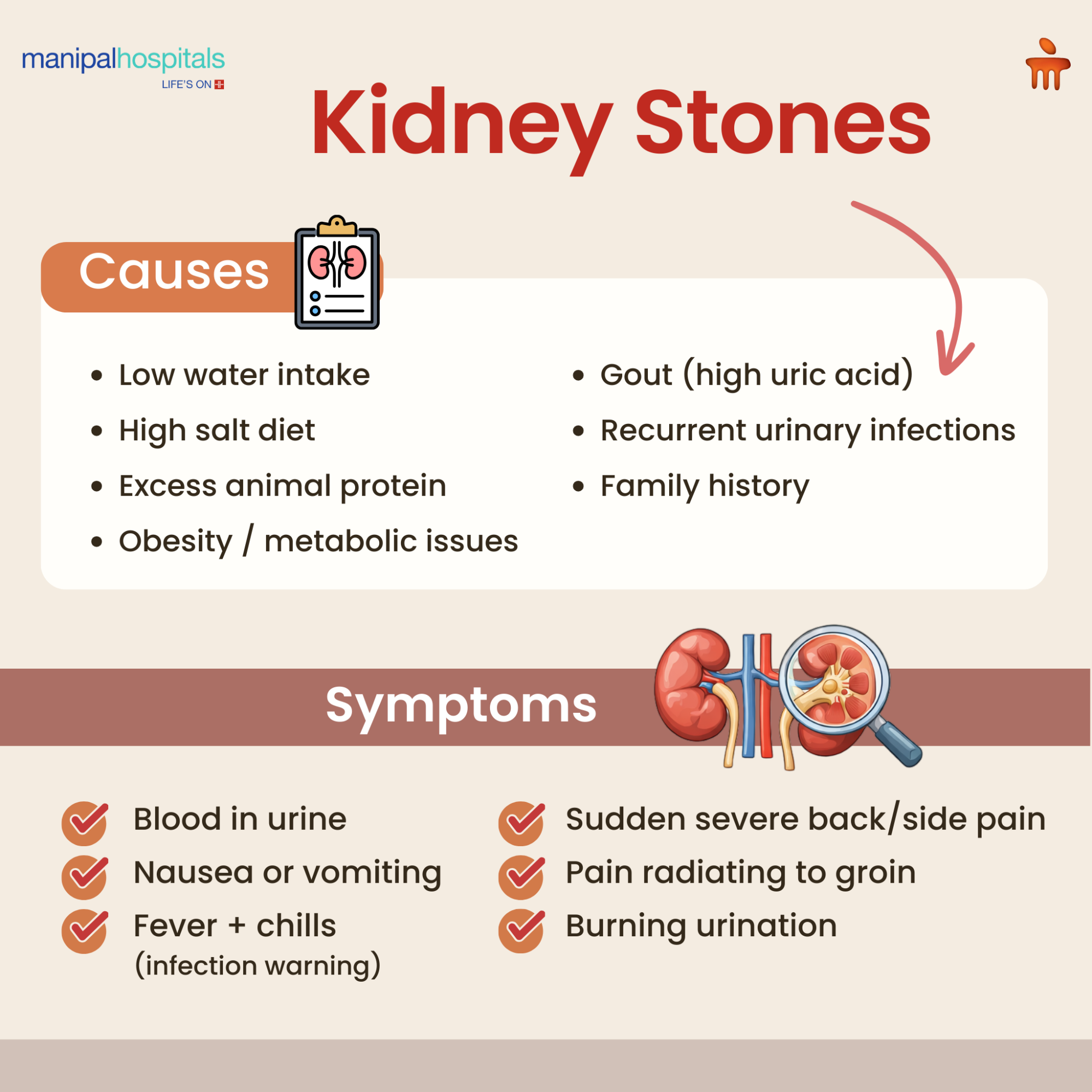
Kidney Stones Causes and Risk Factors
Several factors increase the likelihood of stone formation. Understanding kidney stone causes helps patients reduce future risk.
-
Low Fluid Intake - Not drinking enough water is one of the strongest contributors. When urine becomes concentrated, minerals can bind together more easily and form crystals.
-
Dietary Factors - Certain food patterns raise risk, including
-
High salt intake, which increases calcium in urine
-
Excessive animal protein makes urine more acidic and reduces citrate, a natural stone inhibitor
-
A diet low in calcium paradoxically increases calcium oxalate stone risk because dietary calcium binds oxalate in the gut.
-
Added sugars and sugary drinks, especially those containing high fructose corn syrup, have been linked to higher stone risk
-
High oxalate foods such as spinach, rhubarb, almonds, and beets may contribute in susceptible individuals, though completely avoiding these is rarely necessary
-
-
Family History and Genetics: Having a close relative with kidney stones increases your chance of developing them. Certain inherited conditions, such as cystinuria or primary hyperoxaluria, directly cause stones.
-
Medical and Metabolic Conditions - Several conditions increase susceptibility:
-
Obesity and metabolic factors.
-
Gout, which raises uric acid levels.
-
Digestive diseases or surgeries affecting nutrient absorption.
-
Recurrent urinary tract infections are particularly linked to struvite stones.
Kidney Stone Symptoms
The way a stone feels can vary from person to person. Kidney stone symptoms often begin suddenly, especially when the stone starts moving through the urinary tract. Pain caused by movement is different from pain linked to infection, and recognising the difference is important.
Common symptoms include:
-
Severe pain in the side or back, often just below the ribs. This pain can be intense and difficult to ignore.
-
Pain that spreads to the lower abdomen or groin as the stone travels.
-
Pain that comes in waves and changes in intensity.
-
Urine that appears pink, red, or brown due to blood.
-
Cloudy or foul-smelling urine.
-
Nausea and vomiting, especially during severe pain episodes.
-
Fever and chills if there is an infection related to the kidney stone
When is it an Emergency?
Some kidney stone cases need immediate medical care, especially if there is concern about a urinary tract obstruction or infection. Ignoring these warning signs can lead to serious complications.
Seek urgent medical attention if you notice:
-
Persistent, severe pain that does not improve with medication.
-
Fever along with chills.
-
Difficulty passing urine or very little urine output.
-
Vomiting that prevents you from keeping fluids down.
-
Increasing pain with signs of blockage.
Diagnosis of Kidney Stones
Diagnosis starts with a clear history. The doctor asks about the onset of pain, its location, whether it spreads to the groin, and any urinary changes. Fever, vomiting, and visible blood in urine are noted carefully when assessing kidney stone symptoms.
Tests are then advised:
-
A urine test to detect blood, infection, or crystals.
-
Blood tests to evaluate kidney function and measure levels of calcium or uric acid.
-
Imaging, most often a CT scan or ultrasound. An X-ray may be used in selected cases.
Imaging confirms the presence of a stone and shows its size and location. Management of the stone also depends on these findings. Stones that pass naturally can be analysed to identify their type and guide prevention.
Treatment Options for Kidney Stones
Treatment depends on what the scan shows and how the person is feeling. A tiny stone sitting low in the ureter is handled very differently from a large one blocking the kidney. The available treatment options for kidney stones are chosen after looking at size, position, pain level, and whether infection is present.
Small stones are often managed without surgery. The advice may include:
-
Drinking more fluids helps flush the stone out.
-
Taking pain relief regularly during painful episodes.
-
Medicines that relax the ureter, making it easier for the stone to pass.
If the stone is too large, stuck, or causing ongoing pain, stone removal procedures are considered:
-
Shock wave lithotripsy: Uses focused sound waves to break the stone into smaller pieces.
-
Ureteroscopy: Allows the doctor to pass a thin scope through the urinary tract to remove or fragment the stone.
-
Percutaneous nephrolithotomy: Reserved for large stones and involves removing them through a small incision in the back.
Kidney Stone Prevention: Can Recurrence Be Reduced?
After one stone episode, many people worry about it happening again. The risk does increase, but kidney stone prevention is very much possible with steady changes. Here is what makes a difference:
-
Drink fluids regularly throughout the day. Urine should look light or almost clear. When urine stays diluted, crystals are less likely to form.
-
Cut down on salt. High sodium levels push more calcium into the urine, which can encourage stone formation.
-
Do not stop calcium from food unless specifically advised. Normal dietary calcium actually helps bind certain substances in the gut and reduce stone risk.
-
Reduce heavy intake of animal protein, especially for people who form uric acid stones.
-
If you form calcium oxalate stones, moderating foods like spinach, nuts, and similar high-oxalate items may be recommended after stone analysis.
-
Attend follow-up appointments. Knowing the exact stone type helps guide long-term prevention.
Conclusion
Kidney stones are painful and can be quite distressing. Recognising the signs early and seeking medical help is crucial for preventing complications. The right treatment depends on the size of the stone, where it is lodged, and whether there is any infection.
If you notice symptoms that suggest a kidney stone, consult an expert urologist at Manipal Hospital Yeshwanthpur for expert evaluation and management guidance.
FAQ's
Yes, small stones often pass naturally through urine. Larger stones may need medical treatment or a removal procedure.
Passing time depends on size and location. Small stones may pass within days or a few weeks.
They are not life-threatening by themselves, but severe pain, blockage, or infection can lead to complications.
An untreated obstruction or infection can harm the kidneys. Timely treatment reduces the risk of long-term damage.
Drink adequate fluids daily, reduce salt intake, and follow medical advice based on the stone type.
Share this article on: