9 Min Read
Sometimes a scan meant to reassure you ends up raising more questions. An X-ray, CT scan, or MRI may reveal an unusual area in the bone, but imaging alone cannot always explain what is causing the problem. The change could be due to an infection, inflammation, a benign growth, or, in some cases, cancer. In these situations, a bone biopsy helps doctors find clear answers. By examining a small sample of bone tissue under a microscope, specialists can determine exactly what is happening inside the bone. While the idea of a biopsy may feel worrying at first, modern image-guided techniques have made the procedure much safer, quicker, and more precise.
Through this blog we discuss bone biopsy and its role in accurate diagnosis from leading orthopaedic experts in Yelahanka, Bangalore, and also explore how a bone biopsy works, when it’s needed, and what to expect during recovery.
Synopsis
- What Is a Bone Biopsy?
- Bone Biopsy: What It Can Find
- Types of Bone Biopsy Procedures
- Image-Guided Techniques Used in Bone Biopsy
- When Do Doctors Recommend a Bone Biopsy?
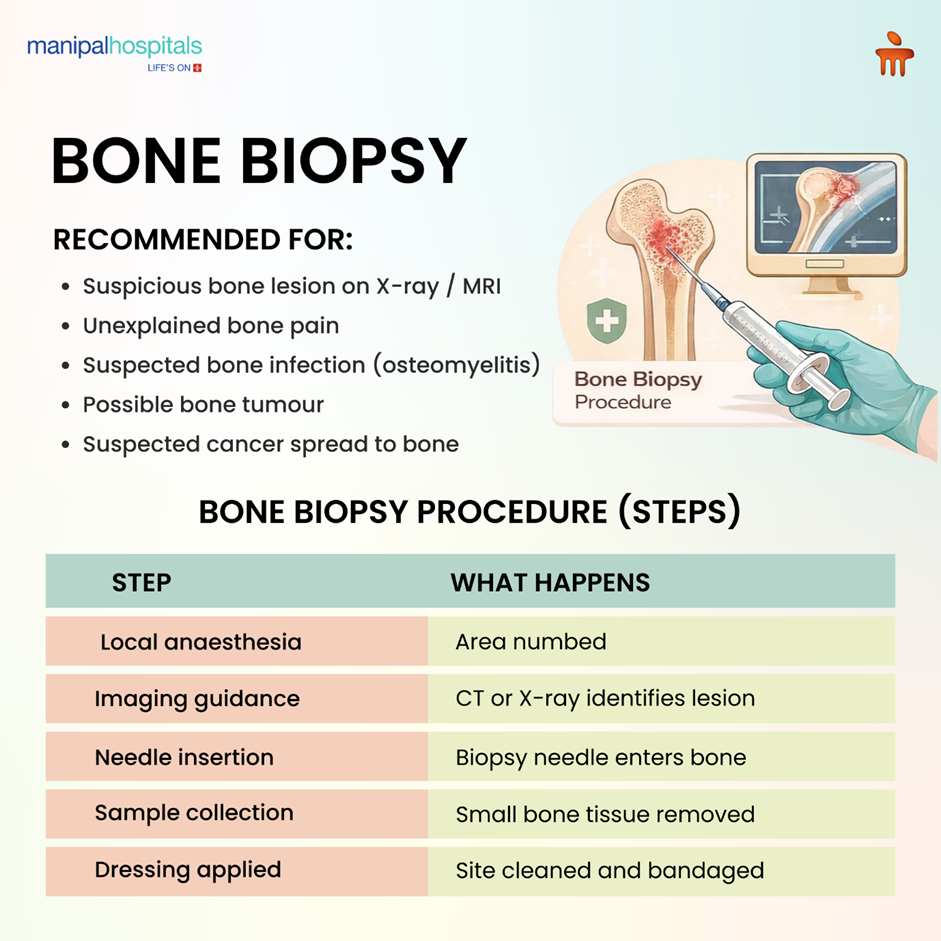
- Step-by-Step Bone Biopsy Procedure
- How Accurate Is a Bone Biopsy?
- Risks of Bone Biopsy
- How Long Does It Take to Recover After a Bone Biopsy?
- Tips for Smooth Bone Biopsy Recovery
- Conclusion
What Is a Bone Biopsy?
In a bone biopsy, a doctor removes a small sample of bone tissue for laboratory analysis. A pathologist examines the tissue for abnormal cells, infection, inflammation, or cancer. Doctors typically recommend a bone biopsy when imaging tests reveal suspicious bone changes that do not clearly indicate the cause.
Bone Biopsy: What It Can Find
By studying the tissue sample, doctors can determine whether the problem is due to infection, a tumour, or another bone disorder. A bone biopsy may help find out:
-
Tumours of the bone (benign or malignant)
-
Osteomyelitis and other bone infections
-
Unexplained pain or lesions in the bones
-
Metastatic cancer that has spread to the bones
-
Bone diseases that affect metabolism
-
Certain blood cancers that involve bone marrow
This test helps doctors make an accurate diagnosis and choose the best treatment plan for you.
Types of Bone Biopsy Procedures
Bone biopsies can be performed in different ways depending on the location of the bone lesion and the amount of tissue required. There are two main types of bone biopsy procedures, based on how the sample is collected.
|
Type of Biopsy |
What It Is |
|
Needle biopsy |
A thin needle is inserted through the skin to collect a bone sample |
|
Surgical (open) biopsy |
A small cut is made to remove a larger bone sample |
Needle biopsies are now more common since they are less invasive and heal faster.
Image-Guided Techniques Used in Bone Biopsy
Modern hospitals often use imaging technology to guide the biopsy needle to the exact location of the abnormal bone area. Much like an ultrasound guided bone marrow biopsy, imaging guidance helps doctors collect tissue samples more accurately while reducing the risk of damaging nearby nerves, blood vessels, or healthy tissues.
Bone Biopsy with CT Guidance
A CT-guided bone biopsy uses images from a CT scan to show the needle exactly where the abnormal bone is.
This method is commonly preferred for:
-
Deep bone lesions
-
Abnormalities in the spine or pelvic bone
-
Tumour locations that are hard to get to
CT guidance improves accuracy and reduces the risk of harming nearby tissues.
Fluoroscopy-Guided Bone Biopsy
Fluoroscopy-guided bone biopsy is a method in which X-ray images are used to guide the biopsy needle in the process. This method is used in the following cases:
-
When the lesion is in a long bone, like the femur or tibia
-
When the abnormality in the bone is visible in the X-ray images
-
In cases where real-time guidance is required
Fluoroscopy provides the doctor with the ability to adjust the position of the needle, enabling them to access the target area correctly.
When Do Doctors Recommend a Bone Biopsy?
In cases where imaging tests reveal abnormalities, doctors may recommend a bone biopsy. Common reasons include:
-
Suspicious bone lesions detected on X-ray or MRI scans
-
Ongoing bone pain without a known reason
-
Suspected bone infections
-
Possible primary bone tumours
-
Cancers that might spread to the bones
In all of these cases, a biopsy of the tissues helps confirm the diagnosis as well as identify the best course of treatment.
Step-by-Step Bone Biopsy Procedure
Learning what happens during a bone biopsy helps make the experience less intimidating. During the biopsy, a variety of factors depend on the kind of biopsy being done. Accordingly, the bone biopsy CPT codes are also determined for proper documentation of your entire treatment process.
|
Step |
What Happens |
|
Local anaesthesia |
The skin and surrounding tissues are numbed to reduce discomfort during the procedure. |
|
Imaging guidance |
A CT scan or fluoroscopy helps the doctor identify the exact location of the abnormal bone area. |
|
Needle insertion |
A specialised biopsy needle is carefully inserted through the skin and guided into the targeted bone. |
|
Sample collection |
Small cores of bone tissue are removed for laboratory examination. |
|
Bandage and dressing |
The needle is removed, the area is cleaned, and a sterile dressing is applied. |
The entire procedure typically takes 30 to 60 minutes, and you can probably return home the same day. Depending on the results of the biopsy, your treatment procedure and any therapeutic requirements will be determined.
How Accurate Is a Bone Biopsy?
Bone biopsy is regarded as one of the most accurate diagnostic tools for bone disorders. The accuracy of the results of this medical test depends on various factors, such as:
-
The location of the lesion
-
Sufficient tissue sampling
-
Guidance for imaging
-
Pathology review
How Accurate Are the Diagnostic Results?
Similar to the accuracy of the biopsy procedure, the results of the medical test also depend on various factors, which include the type of lesion, sampling, and tumour heterogeneity.
|
Method of Diagnosis |
Accuracy |
|
CT-guided bone biopsy |
70–95% diagnostic accuracy |
|
Bone biopsy surgery |
Up to 98% accuracy |
Using imaging guidance significantly improves the accuracy of the biopsy.
Risks of Bone Biopsy
Like any medical procedure, a bone biopsy carries some potential risks. However, serious complications are uncommon, especially when the procedure is performed by experienced specialists using imaging guidance. Some possible risks of bone biopsy include:
-
Minimal bleeding
-
Infection at the site of the biopsy
-
Pain or discomfort that doesn't last long
-
Swelling or bruising
-
Uncommon nerve or tissue damage
Serious complications are very rare, especially when an experienced professional performs the procedure. Doctors take many steps to reduce the risks of a bone biopsy.
How Long Does It Take to Recover After a Bone Biopsy?
Recovery from a needle biopsy is usually quick and straightforward. Knowing what to expect during the healing process can help you plan your activities and follow proper aftercare.
Below is the standard recovery timeline after a bone biopsy:
|
Time After Procedure |
What to Look Forward to |
|
First 24 hours |
Slight pain at the biopsy site |
|
2–3 days |
Gradual reduction in pain and discomfort |
|
1 week |
Most patients return to normal activities |
|
1–2 weeks |
Full recovery of the biopsy site |
Recovery is faster after needle biopsy, while open biopsy may require longer healing. Pain is usually mild and can be managed with over-the-counter pain relievers.
Tips for Smooth Bone Biopsy Recovery
After the procedure, patients can support their recovery by following a few simple tips, which are:
-
Keep the biopsy area clean and dry.
-
Avoid heavy activities for a few days.
-
If pain persists, take painkillers as prescribed by the doctor.
Following your doctor's advice will help you recover from a bone biopsy safely and smoothly.
Conclusion
A bone biopsy is an important test that helps doctors accurately diagnose bone infections, tumours, and other bone disorders. Ultrasound and CT-guided bone biopsy are modern technologies that make the procedure not only accurate but also minimally invasive. It is natural to be nervous about the test, and it is helpful to understand the procedure, its accuracy, and the recovery period to alleviate your nervousness. The positive news is that you can recover quickly with minimal discomfort and be able to lead your normal life within a matter of days.
If you have persistent bone pain or abnormal findings on imaging tests, the orthopaedic experts at Manipal Hospital Yelahanka can help you determine if you need a bone biopsy procedure.
FAQ's
Bone biopsy results are usually available within 5 to 7 days, although the exact timing can vary depending on the tests required. In some cases, additional analyses such as cultures for infection or specialised tumour testing may take longer.
The risk of cancer spreading due to a bone biopsy is extremely low. Doctors use carefully planned biopsy techniques and specialised needles to minimise this possibility, and the procedure is widely considered safe when performed by experienced specialists.
Needle bone biopsy is mostly performed while the patient is awake but feels no pain because the area is numbed with local anaesthesia. In some instances, the patient is also sedated to calm down.
After a bone biopsy, the patient can walk and move normally as long as the bone biopsy was a needle biopsy. However, the patient is advised not to engage in strenuous activities for a couple of days.
After the tissue sample is collected, it is examined in a laboratory by a pathologist. The bone sample can be used for microscopic studies, infection detection, and special staining to detect cancers and other bone disorders.
Share this article on: