9 Min Read
Do you dread the first or the second day of your period because of painful cramps or a backache? For many women and girls, menstrual discomfort is a monthly challenge. Mild cramps are a normal occurrence, but severe cramping can interfere with your normal daily activities. This article shares insights from an experienced gynaecologist in Yelahanka, Bangalore, about practical tips for period pain relief.
It also covers common causes of menstrual cramping and the symptoms associated with them and explores how to stop period pain immediately at home.
Synopsis
- Why Does Period Pain Happen?
- Period Pain Causes
- Types of Period Pain
- Signs That You Might Be at Risk
- Signs That Period Pain Needs Medical Attention
- Effective and Safe Period Pain Relief Tips
- What are Period Pain Relief Devices?
- When to Take Medicines for Period Pain?
- When Should You See a Doctor?
- Conclusion
Why Does Period Pain Happen?
Menstrual cramps (or period pain) occur when the muscles of the uterus contract to shed the uterine lining during menstruation. Prostaglandins (natural chemicals produced by the body) trigger contractions of your uterus. The higher the prostaglandin level in your body, the stronger your contractions will be, and therefore, the greater the level of menstrual cramping will be.
Some women have only mild pain, but others get strong cramps that make daily life difficult. You might also feel bloated, tired, get headaches, feel sick, or have lower back pain. Usually, simple ways to ease period pain can help with these symptoms.
Period Pain Causes
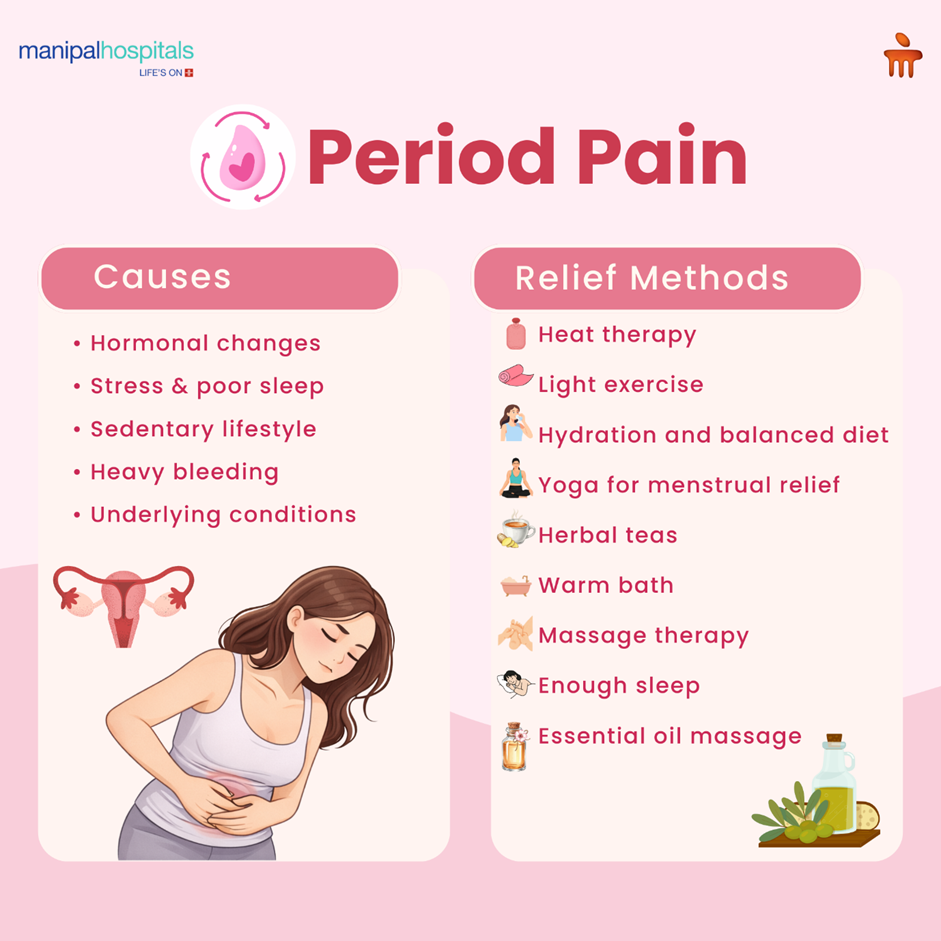
While cramps are a normal part of most cycles, certain factors can amplify the pain:
-
Hormone changes — fluctuations can increase uterine contractions.
-
Ongoing stress or poor sleep — when you’re tired or tense, pain often feels worse.
-
A sedentary lifestyle — long periods of sitting or little daily movement — can aggravate pelvic tension.
-
Medical Conditions - Underlying conditions, such as fibroids or endometriosis, need a doctor’s assessment.
Understanding what makes your pain worse helps you pick the right period pain relief tips methods and know when it’s time to see a clinician.
Types of Period Pain
Not all menstrual pain is the same. Knowing which type you have helps decide whether simple home care is enough or if you need medical tests.
|
Primary dysmenorrhea |
Secondary dysmenorrhea |
|
Common in teenagers and young women |
More common in women in their late 20s–40s, or those with a history of pelvic conditions |
|
Not caused by any underlying disease, it’s the natural cramps of a period |
Caused by an underlying medical condition such as endometriosis, uterine fibroids, adenomyosis, pelvic inflammatory disease (PID) |
|
Caused by higher levels of prostaglandins, chemicals that make the uterus contract |
Caused by structural or inflammatory problems in the pelvic organs |
|
Typical pattern: pain starts with the period, is crampy, comes and goes in waves, and usually eases after a day or two |
Typical pattern: pain may start before the period, gets worse over time, or lasts longer than the bleeding |
|
Often improves with heat, rest, anti-inflammatory painkillers (like ibuprofen), and lifestyle measures |
Requires medical evaluation and targeted treatment (not just painkillers) |
|
Usually occurs without other gynaecological symptoms |
Often accompanied by other issues: heavy or irregular bleeding, pain during sex, poor response to simple pain relief, or fertility concerns |
Signs That You Might Be at Risk
The following individuals may be at risk for severe menstrual cramps:
-
You are below 30 years of age.
-
You had an early puberty, below 11 years of age.
-
You bleed heavily during your menstrual cycle.
-
Experience irregular cycles and bleeding.
-
Have a family history of menstrual-related issues.
-
Smoke often.
Signs That Period Pain Needs Medical Attention
While mild cramps are common, you should see a doctor if you notice:
-
Pain is severe enough to miss school or work
-
Cramps worsen over time
-
You experience fainting or vomiting
-
Bleeding is extremely heavy
-
Pain begins suddenly after years of painless periods
Seeing a doctor early helps check if there's any underlying problem and ensure proper treatment for period pain.
Effective and Safe Period Pain Relief Tips
Many women prefer starting with remedies that provide natural period pain relief. These 10 methods are simple, safe, and work well for mild to moderate cramps.
-
Heat therapy - A hot water bottle, microwavable heat pad or electric heating patch on your lower belly for 15–20 minutes relaxes muscles and improves blood flow. Heat is one of the fastest ways many people find relief.
-
Period pain relief exercise - When you do light activities like walking or stretching, your body releases endorphins (the body’s natural painkillers), reducing pelvic tension.
-
Hydration and balanced diet - Drink regularly and eat small, frequent meals. Foods high in magnesium (leafy greens, nuts), iron (if your flow is heavy), and whole grains help keep energy up and can make cramping feel easier to manage.
-
Yoga for period pain relief - Gentle yoga helps relax pelvic muscles, improves circulation, and calms your nervous system. Doing yoga regularly for menstrual pain not only eases cramps but also reduces stress. It also supports your emotional health during your period. Helpful yoga for menstrual relief includes:
-
Child’s Pose (Balasana): Start in a kneeling position, then reach your arms forward and let your back and hips relax.
-
Cat-Cow Stretch: Alternate between arching your back up like a cat and lowering your belly down like a cow to help loosen your spine.
-
Supine Twist: Lie on your back, then gently let your legs fall to one side for a Supine Twist. This helps release tension in your lower back.
-
Cobra Pose (Bhujangasana): Lie face down, place your hands on the floor, and gently lift your chest.
-
Herbal Teas - Sipping ginger, chamomile, or peppermint tea warms and relaxes the stomach and can ease mild cramps.
-
Warm Bath - Taking a warm bath helps relax pelvic muscles and boosts blood flow, melting stress away.
-
Massage Therapy - A light circular massage over the lower abdomen or lower back with warm oil relaxes muscles. You can do a short self-massage or ask a partner to help.
-
Enough Sleep - Prioritise rest, especially on the first painful day. Sleep helps normalise hormone balance and reduces how raw pain feels.
-
Essential Oil Massage - Some people find diluted lavender, clary sage, or rosemary oil helpful for a short abdominal or lower-back massage. Always mix with a carrier oil and patch-test first.
What are Period Pain Relief Devices?
Wearable devices for period pain have become popular in recent years. These devices use:
-
Heat therapy
-
Transcutaneous electrical nerve stimulation (TENS)
These methods can reduce nerve pain signals and provide temporary relief. Period pain relief devices are portable, easy to use, and can quickly help with period pain without medicine.
When to Take Medicines for Period Pain?
If cramps are severe or don't go away with home remedies for menstrual pain relief, doctors may suggest pain-relieving drugs.
-
NSAIDs (like ibuprofen), which reduce prostaglandin production
-
Hormonal contraceptives to regulate cycles
-
Prescription medications for underlying conditions
Pain medication should be taken under guidance. If you have persistent severe pain, you should see a doctor to rule out conditions like endometriosis, fibroids, or pelvic inflammatory disease.
When Should You See a Doctor?
If you have any of the following, you should see a Gynaecologist for period pain in Yelahanka:
-
Pain during your period is very bad and happens every month.
-
Pain starts up suddenly after years of not having it.
-
Your periods are heavier or more irregular than normal.
-
Natural ways to ease period pain don't work.
-
You feel dizzy, throw up, or pass out.
Early evaluation helps find the root causes and ensures the right treatment is given, and long-term pain relief is achieved.
Conclusion
Menstrual pain is common, but it does not have to control your life. Many women find relief with simple home measures such as heat therapy, gentle exercise, yoga, and healthy lifestyle habits. If you experience severe menstrual pain, you can visit Gynaecologist for period pain in Yelahanka at Manipal Hospital Yelahanka for expert consultation. Our specialists provide accurate diagnosis, personalised care, and effective treatment options to help you manage symptoms safely and confidently.
FAQ's
Prostaglandins cause the uterus to contract, which helps shed the uterine lining during menstruation, leading to period pain.
Period cramps can be managed with natural ways like heat therapy, yoga, staying hydrated, herbal teas, and moderate exercise.
Yes, you can get period pain relief at home by applying hot compresses, getting enough rest, and doing moderate exercise. And taking herbal teas is one of the natural ways.
A period pain relief device can help lessen the intensity of cramps with heat or electrical stimulation, but you should still see a doctor if the pain is very bad.
If pain is severe, worsening, or associated with heavy bleeding or fainting, seek medical advice.
Share this article on: