8 Min Read
Do you often feel a burning sensation in your chest after a heavy or spicy meal? Or noticed discomfort that worsens when you lie down at night? That uncomfortable feeling is commonly known as heartburn or acidity.
While occasional heartburn is common, frequent episodes may signal acid reflux or a chronic condition called gastro-oesophageal reflux disease (GERD). Understanding what the triggers are and knowing simple home remedies for heartburn can help you find faster relief and prevent long-term complications.
In this blog, you’ll find out what causes heartburn, what the home remedies for heartburn are and where to access effective acid reflux treatment in Yelahanka.
Synopsis
What is Heartburn?
Heartburn is a digestive symptom in your chest that happens when stomach acid flows backward into the food pipe (esophagus), causing irritation. This produces a burning sensation in the chest that may worsen after meals or when lying down. Heartburn often worsens:
-
After large meals
-
When lying down
-
After eating spicy or fatty foods
Occasional heartburn is common. Frequent episodes may indicate acid reflux disease.
What is Acid Reflux and GERD?
Acid reflux occurs when stomach acid flows backwards due to weakness of the lower esophageal sphincter (LES), the valve that normally prevents backflow. GERD (gastro-oesophageal reflux disease) is diagnosed when reflux occurs frequently, typically more than twice per week, and causes persistent symptoms or complications. Spotting GERD symptoms early can help you avoid long-term problems and get the right treatment.
What are the Causes of Heartburn?
Heartburn occurs due to acid reflux and increased acidity. Some common causes of heartburn are:
-
Eating too much or too many meals
-
Fried, spicy, or fatty foods
-
Carbonated beverages and drinks with caffeine
-
Drinking and smoking
-
Being overweight or having too much pressure in the stomach
-
Hormonal changes that happen during pregnancy
-
Weakening of the wall between the stomach and the food pipe.
-
Some medicines increase stomach acid.
If these symptoms keep recurring, they can trigger acid reflux again and again, which can lead to gastroesophageal reflux disease (GERD).
Common GERD Symptoms
Heartburn is the most common complaint, but gastroesophageal reflux disease (GERD) can cause several other symptoms, such as:
-
Burning pain in the chest after eating.
-
Acid reflux can make your mouth taste sour.
-
Persistent chronic cough
-
Bloating and acidity that doesn't go away.
-
Regurgitation of food or sour fluid
If you have GERD symptoms more than twice a week, you may need to see a doctor and get treatment to avoid problems. In these situations, home remedies for heartburn relief may not work, and medical treatment for GERD may be needed. Early diagnosis helps control symptoms well and stops problems like oesophagitis or ulcers from happening.
Home Remedies for Heartburn Relief
You can often manage mild or occasional heartburn by making simple lifestyle changes and using natural remedies. Here are some home remedies that can help relieve heartburn, reduce acidity, and control acid reflux.
-
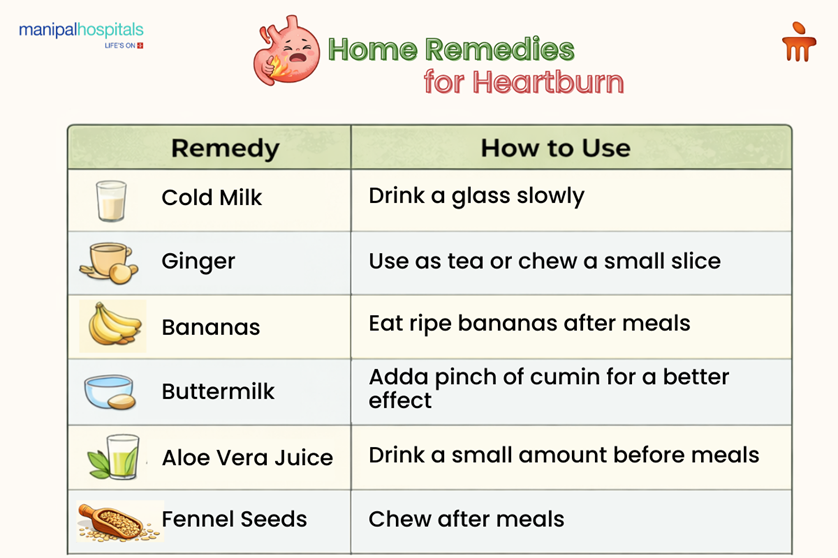
Cold Milk - When you feel heartburn, try drinking a glass of cold milk slowly. Milk can help neutralise stomach acid and lower acidity. This simple remedy often brings quick relief from irritation caused by acid reflux.
-
Ginger - Ginger supports digestion and helps reduce acid reflux due to its natural anti-inflammatory properties. Try drinking ginger tea or chewing on small slices of raw ginger for relief after meals. Regular use may help you reduce the need for medicines.
-
Bananas - They are alkaline, which means they help balance out too much acidity. Eating a ripe banana after meals is a safe home remedy for heartburn that helps protect the lining of the stomach and stop acid reflux. This easy method is one of the best home remedies for heartburn that people recommend.
-
Buttermilk - The lactic acid in buttermilk helps balance stomach acid and improve digestion. Drinking buttermilk with a pinch of cumin powder is a traditional remedy that aids digestion and may reduce acid reflux episodes.
-
Aloe vera juice - Aloe vera juice soothes the digestive tract and soothes irritation caused by acid reflux. Drinking small amounts before meals offers gentle relief and may naturally control symptoms with regular use.
-
Fennel seeds - Chewing fennel seeds after meals improves digestion and reduces stomach acidity. This easy, traditional remedy helps keep the stomach calm and prevents acid reflux.
-
Sleeping with your head raised - Lifting the head of your bed by a few inches can help stop stomach acid from moving back into your oesophagus. Using this tip along with other remedies can reduce night-time GERD symptoms.
Lifestyle Tips to Prevent Heartburn
Along with home remedies, some daily habits can help lower acidity and reduce acid reflux:
-
Eat smaller meals more often.
-
Don't lie down right after you eat.
-
Maintain a healthy weight.
-
Cut down on spicy and greasy foods.
-
Maintain adequate hydration
-
Stop smoking and cut back on drinking.
-
Use stress management techniques.
These steps, along with home remedies, can help reduce how often you get heartburn and improve digestion, especially for people with GERD.
GERD Treatment Options
Lifestyle changes and home remedies may help home improve the symptoms in mild cases but unlikely to correct the underlying cause. The right way to treat GERD is to control acid reflux, ease the symptoms of GERD, and stop long-term digestive problems from happening.
Your doctor may recommend GERD treatments such as:
-
Antacids to balance out the acid in the stomach
-
Proton pump inhibitors (PPIs) reduce acid formation in your stomach
-
Medicines like H2 blockers help control stomach acid
-
Changes to diet
-
24hr ph metry to objectively assess in doubtful patients and refractory patients
With advancements in endoscopic procedures, currently most patients with significant reflux in GERD can be treated via endoscopic procedures like ARMS, ARMA, & GERDx instead of surgery.
When Should You See a Doctor?
If you have any of the following, see a doctor right away:
-
Heartburn that happens often or is very bad.
-
Persistent acid reflux despite home remedies for heartburn.
-
Trouble swallowing or pain in the chest.
-
Weight loss that can't be explained.
-
A cough that won't go away or an irritated throat.
Getting medical care on time makes sure that GERD is treated properly and helps control chronic acidity well.
Conclusion
Acid reflux and excess gastric acid exposure are common causes of heartburn. Simple home remedies can help with occasional heartburn, but if it happens often, prompt evaluation and specialised medical care are recommended. Book an appointment with Manipal Hospital Yelahanka for comprehensive acid reflux treatment in Yelahanka.
FAQ's
Heartburn occurs when the stomach acid flows back into the oesophagus (food pipe). Spicy foods, eating too much, being overweight, and having higher acidity levels can all set off an attack.
Mild symptoms may improve with dietary adjustments, smaller meals, weight control, and elevation of the head during sleep. Certain foods, like bananas or ginger, are good home remedies for heartburn, but persistent symptoms require medical evaluation.
Common signs of gastroesophageal reflux disease (GERD) include frequent heartburn, chronic acidity, regurgitation, and trouble swallowing.
Home remedies for heartburn can help with mild acid reflux, but if you have gastroesophageal reflux disease (GERD) that doesn't go away, you may need to see a doctor and get the right treatment.
Medical evaluation is advised if symptoms are frequent, severe, associated with weight loss, difficulty swallowing, chest pain, or if home remedies fail to provide relief. It is advisable to see a doctor for an evaluation and the right GERD treatment.
Share this article on: