7 Min Read
Hepatitis B and hepatitis C are distinct viral infections which target the liver, potentially leading to severe complications like cirrhosis and even liver cancer. Understanding their differences is crucial for prevention, diagnosis, and effective management. This blog highlights key aspects of Hepatitis B symptoms, causes and treatment options, and how it differs from Hepatitis C.
Synopsis
What is Hepatitis B?
Hepatitis B is an inflammatory condition which attacks the liver, primarily caused by the Hepatitis B virus (HBV). Hepatitis B may either be acute or chronic, and without proper management, it can lead to serious liver damage, such as cirrhosis, or even liver cancer.
Hepatitis B Causes and Transmission
It is important to understand Hepatitis B causes to help prevent its transmission. Hepatitis B virus mainly spreads through contact with infected blood or body fluids. Primary sources of HBV transmission include:
-
Mother-to-Child: One of the most common ways for Hepatitis B transmission is from an infected mother to her child during childbirth.
-
Sexual Contact: Unprotected sexual contact with an infected person can risk transmission.
-
Sharing Needles: Contaminated needles during injection of drugs, vaccination or blood draw can risk transmission.
-
Contaminated Medical Equipment: Contact with unsterilized tools or unscreened blood can risk infection.
-
Sharing Personal Items: Razors, toothbrushes or other personal items can cause infection.
Recognizing Hepatitis B Symptoms
Many individuals may not experience any Hepatitis B symptoms, and sometimes they may resolve on their own. However, symptoms may include:
-
Fatigue
-
Nausea and vomiting
-
Pain in upper right side of stomach
-
Dark urine and/or pale stools
-
Jaundice (yellowing of skin and eyes)
-
Joint pain
-
Loss of appetite
Chronic infection symptoms are often subtle or absent until significant liver damage occurs.
Is Hepatitis B Curable?
Hepatitis B symptoms may resolve on their own for many people, but in some cases, especially infants and a percentage of adults, Hepatitis B can lead to chronic complications. Though incurable, it can be managed effectively with medication to prevent complications.
Hepatitis B Vaccination and Prevention
Hepatitis B is highly preventable through vaccination. Doctors recommend vaccinations for infants, as well as adults who are at risk of infection.
Hepatitis B Treatment Options
Hepatitis B treatment for chronic cases largely involves regular monitoring and antiviral medications. These suppress the virus, reduce inflammation, and prevent progression to cirrhosis, liver failure, and liver cancer. Treatment plans are individualised by specialists as per patient’s condition.
Understanding Hepatitis C
Hepatitis C (HCV) is another viral liver infection which can attack the liver and lead to acute or long-term complications. While both HBV and HCV are viral liver infections, there are some significant differences between both.
Hepatitis C Transmission
Hepatitis C primarily spreads through blood-to-blood contact. It can happen from:
-
Sharing Needles: Most common route of transmission.
-
Unscreened Blood Transfusions: Unscreened blood transfusion largely increases risk of HCV.
-
Contaminated Medical Procedures: Unsterilized equipment stained with blood can increase risk.
-
Mother-to-Child: Possible, though less common than with HBV.
Recognizing Hepatitis C Symptoms
Many people with Hepatitis C have no hepatitis C symptoms for years. Certain symptoms may include:
-
Fatigue
-
Loss of appetite
-
Abdominal pain
-
Muscle and joint aches
-
Jaundice
Symptoms are often mild, due to which diagnosis often occurs after liver damage has progressed.
Hepatitis C Treatment
Hepatitis C symptoms treatment has advanced dramatically with advancements in medical science. Most cases of chronic Hepatitis C is now curable for most cases with Direct-Acting Antiviral (DAA) medications. These treatments take between 8-12 weeks, and have fewer side effects, making them effective in clearing out the virus and preventing further liver damage.
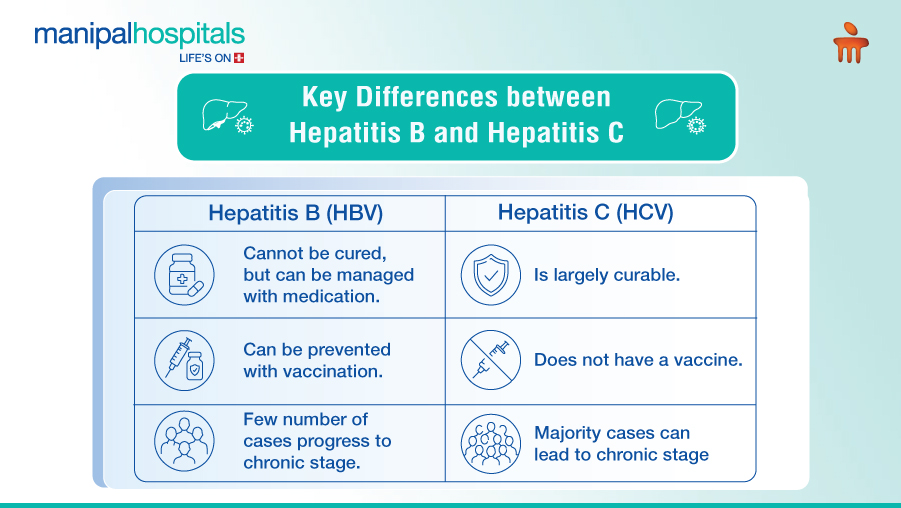
Hepatitis B vs. Hepatitis C: Key Distinctions
-
Vaccine: HBV has an effective vaccine, while HCV does not.
-
Chronicity: HCV has a higher chronicity compared to HBV. According to WHO, 75-80% cases of HCV cases become chronic, while 5-10% HBV cases become chronic.
-
Curability: Chronic HBV is manageable but cannot be cured; chronic HCV is curable in most cases.
Care Essentials: Do's and Don'ts
Do:
-
Get vaccinated for Hepatitis B
-
Practice safe sex
-
Avoid sharing needles/personal items
-
Ensure sterile medical procedures
-
Get tested if at risk
-
Follow medical advice diligently
-
Maintain a healthy lifestyle
-
Limit alcohol.
Don't:
-
Don’t Ignore symptoms.
-
Don’t self-medicate
-
Don’t delay screening if at high risk
Conclusion
Hepatitis B and C are two significant health concerns which can cause severe complications if not addressed timely. While Hepatitis B is largely preventable through vaccination, Hepatitis C can be cured through proper treatment. At Manipal Hospitals, our expert gastroenterologists in Siliguri use cutting-edge technology for providing accurate diagnosis and tailored treatment plans. If you are experiencing hepatitis b symptoms or are concerned about your liver health, visit Manipal Hospitals Siliguri for comprehensive care.
FAQ's
Specific blood tests are needed to find out if you have Hepatitis C or B. If you have risk factors (e.g., pre-1992 blood transfusions, shared needles), then consult your doctor for screening.
No, neither spreads through casual contact like hugging, kissing, or sharing food or drinks. They are transmitted primarily through blood-to-blood contact or other body fluids.
The Hepatitis B vaccine is very safe and recommended for most, especially infants and those who are exposed to risk factors.
Untreated chronic Hepatitis B or C can lead to serious liver damage, including cirrhosis, liver failure, and increased liver cancer risk. Early diagnosis and management are vital.
Yes, co-infection is possible. This can complicate diagnosis and treatment, potentially accelerating liver disease progression. A specialist evaluation is crucial.
Share this article on: