7 Min Read
A change in stool colour can be alarming, and black or tarry stool (often referred to as melena) is particularly concerning. While some causes are harmless, black stool can be a significant indicator of internal bleeding, specifically from the upper gastrointestinal (GI) tract. Unlike simple dark stool from food, melena is tarry, sticky, and unusually malodorous. Understanding the black stool causes and their implications is crucial for health.
Synopsis
Understanding black stool (Melena)
When talking about black stool, meaning melena, we consider stool that is not just dark in colour, but often shiny, sticky, and has a distinct foul odour, resembling tar. This characteristic appearance is typically due to the presence of digested blood. While travelling through the digestive system, blood undergoes certain chemical changes that turn it black. This often points to a source of bleeding higher up in the digestive tract, such as the esophagus, stomach, or small intestine. The darker the stool, the longer the blood has been in the GI tract, indicating an upper GI source.
Common black stool causes
The reasons for dark stool vary significantly, from harmless dietary factors to serious medical conditions, making it crucial to identify the specific cause behind black stool.
1. Non-bleeding causes
These often produce dark stool that is not tarry, sticky, or foul-smelling. These stool darkening factors include:
-
Dietary factors- Consumption of dark foods like black liquorice, blueberries, or dark chocolate
-
Iron supplements- A frequent, harmless cause of dark or blackish-green stool
-
Bismuth Subsalicylate- A class of medications that is used for an upset stomach
2. Upper GI bleeding causes:
These include causes that are serious in nature. They usually cause several noticeable signs beyond black stool and stomach pain. These critical issues require urgent medical evaluation and management:
-
Peptic ulcers- These are sores located in the stomach or small intestine
-
Gastritis/esophagitis- This is an inflammation of the stomach or esophagus that causes erosion and bleeding
-
Esophageal varices- These are enlarged, fragile veins in the esophagus, that are prone to rupture
-
Mallory-Weiss Tear- A tear in the esophagus or stomach lining caused by forceful vomiting
-
Gastrointestinal cancers- Cancers of the esophagus or stomach can also cause bleeding
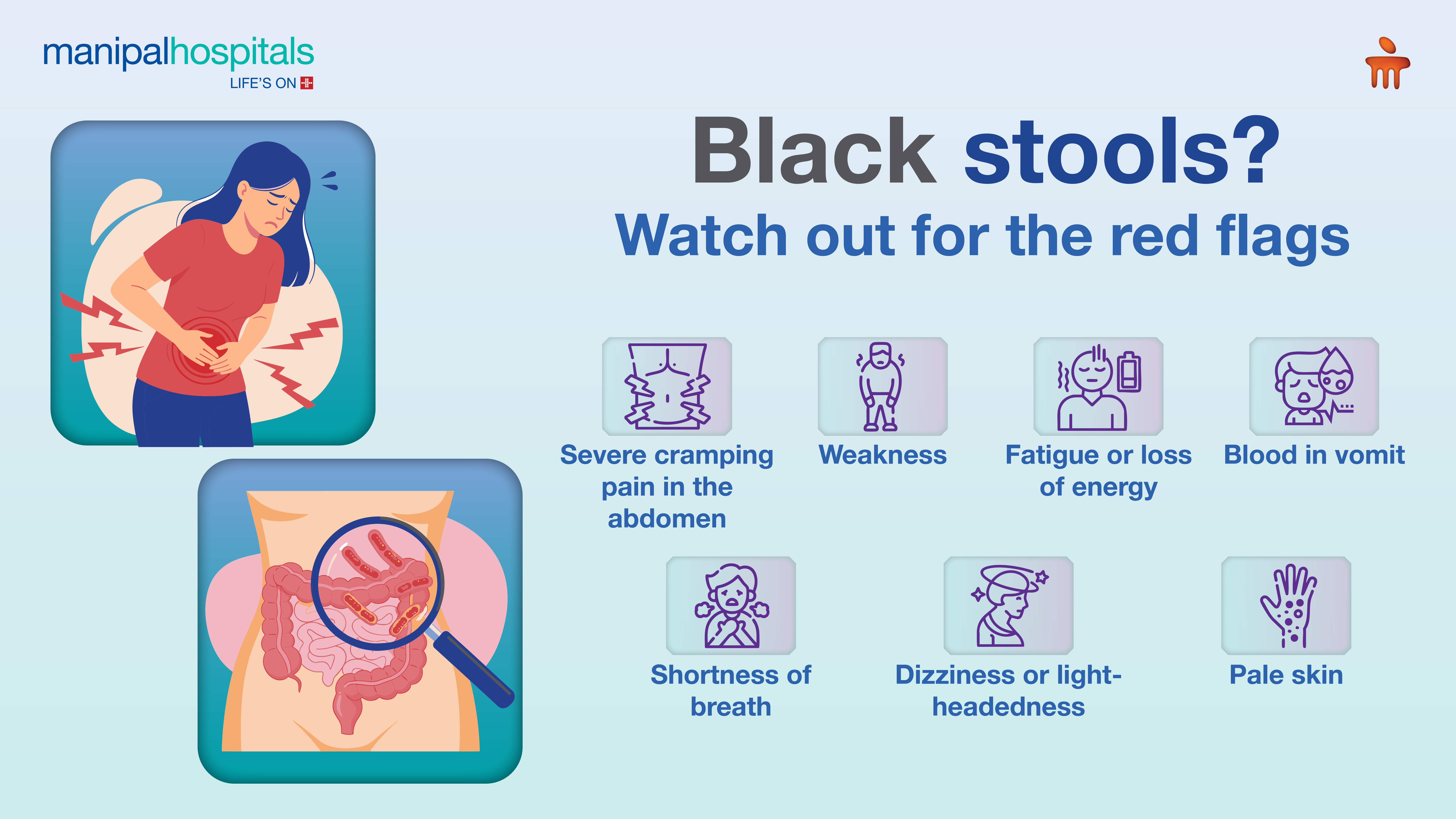
Symptoms of melena
True melena (tarry, sticky, foul-smelling black stool) strongly indicates an upper GI bleed, requiring urgent medical evaluation. Melena calls for urgent medical intervention when accompanied by other alarming symptoms like:
-
Abdominal pain- Discomfort to severe cramping in the abdomen
-
Weakness and fatigue- Blood loss can cause a lack of physical strength
-
Dizziness/light-headedness- These are indications of low blood pressure
-
Pale skin- Skin that looks pale can be a clear sign of anaemia from blood loss
-
Shortness of breath- The lack of energy and strength causes breathlessness even with minimal exertion
-
Vomiting blood- Vomit that has a colour like coffee-ground or is bright red contains blood
Diagnosing the cause of black stool
Diagnosing the exact cause of black stools, especially when internal bleeding is suspected, requires a comprehensive medical evaluation. This starts with a physical examination to assess the patient’s overall condition. Next follows a few blood tests to check for anaemia and other important markers. An endoscopy, using a flexible camera, may be performed to identify potential sources of bleeding in the upper gastrointestinal tract. If no upper GI cause is found or lower GI bleeding is suspected, a colonoscopy may be recommended for further investigation.
Treatment options for melena
The appropriate black stool treatment largely depends on the underlying cause. Non-bleeding causes typically require no specific treatment. For bleeding-related causes, treatment focuses on stopping the haemorrhage and addressing the root condition. Treatment options could be:
-
Endoscopic intervention- Techniques like cauterisation or clipping can often stop bleeding during a regular endoscopy and are effective in over 90% of acute cases.
-
Medications- Proton Pump Inhibitors (PPIs) are used to reduce stomach acid and aid healing.
-
Surgery- These are reserved for severe, recurrent bleeding or cases where endoscopic methods fail.
-
Blood transfusion- This is a necessity in case of significant blood loss and anaemia
Care essentials
Being vigilant towards your symptoms can go a long way in preventing complications or undesirable consequences. Persistent occurrences of melena can be an indication of something more serious than you think. Acting wisely can help you avoid complications.
-
Seek immediate medical attention if your stool is tarry, foul-smelling, and accompanied by symptoms like dizziness, weakness, or stomach pain.
-
Inform your doctor about all medications and supplements that you take, especially iron or bismuth subsalicylate.
-
Describe the appearance of your stool to your doctor as accurately as possible.
-
Do not ignore persistent black stool, especially if it does not resolve within a day or two after stopping suspected dietary causes.
-
Avoid self-diagnosis or delay in seeking professional medical advice for concerning symptoms
Conclusion
If you are experiencing black or tarry stools, particularly if they are accompanied by other concerning symptoms, it is crucial to seek timely medical advice. Talk to our expert gastroenterologist at Manipal Hospitals Siliguri today for a timely evaluation to ensure precise diagnosis and comprehensive care for all reasons of dark stool. We offer prompt detection and modern medical interventions that ensure effective management for most cases of upper GI bleeding, causing black stool. At Manipal Hospitals, we believe in empowering our patients with knowledge to make informed decisions about their well-being.
FAQ's
Stress alone does not directly lead to tarry black stools (melena). The presence of such symptoms usually indicates an underlying medical condition, such as gastrointestinal bleeding, which requires proper evaluation and diagnosis rather than attributing it solely to stress.
The effect typically persists while you are taking the medication and may continue for a day or two after stopping it. Unlike melena, the stools are not tarry in appearance and do not have a strong, foul odour.
The effect typically persists while you are taking the medication and may continue for a day or two after stopping it. Unlike melena, the stools are not tarry in appearance and do not have a strong, foul odour.
Black stools are not always dangerous, as they can result from diet or iron supplements and are usually harmless. However, if they appear tarry, foul-smelling, and are accompanied by weakness, dizziness, or abdominal pain, it may signal an emergency.
Dark stools are usually brownish in colour and may be influenced by diet or medication. In contrast, melena appears jet black, shiny, and tar-like, with a strong, distinctive odour caused by the digestion of blood in the gastrointestinal tract.
Melena may seem to improve if the bleeding temporarily stops, but this does not mean the underlying problem has resolved. The cause can still be serious, so proper medical evaluation and timely treatment are essential to prevent complications.
Share this article on: