4 Min Read
The term "being put on a ventilator" is often associated with critical illness, which is why it often evokes apprehension. Understanding what mechanical ventilation truly entails – its purpose, how it works, and the profound support it offers – can significantly alleviate anxiety. This guide explains more about mechanical ventilation, and how this vital medical intervention functions as a life support machine.
Synopsis
What is Mechanical Ventilation?
Mechanical ventilation is a procedure that uses a machine, called a respirator or ventilator, to either assist or completely take over a critically ill patient’s respiratory mechanism. It is not a form of treatment for the underlying disease itself, but rather a crucial supportive measure that provides time for the body to heal and for medical treatments to take effect. When a person's lungs are unable to adequately take in oxygen or expel carbon dioxide – a condition termed as respiratory failure – a ventilator is then used to ensure vital organs receive the oxygen they need.
Invasive vs. Non-Invasive Ventilation: Understanding the Differences
Mechanical ventilation is a highly specialised procedure that assists critically ill patients to breathe when they are unable to respire efficiently by themselves. Depending on the patient's condition, healthcare providers may choose between two primary types of ventilator treatment: invasive and non-invasive ventilation.
Invasive Mechanical Ventilation
This intensive form involves placing an artificial airway directly into the trachea (windpipe).
-
Endotracheal Tube (ETT): This procedure is called intubation, where a flexible tube is inserted through the mouth or nose into the trachea. The ETT is then connected to the ventilator, which delivers air directly into the lungs.
-
Tracheostomy: For prolonged mechanical ventilation (typically more than 1-2 weeks), a surgical opening is created in the neck directly into the trachea for tube insertion.
Patients on invasive ventilation are typically sedated for comfort.
Non-Invasive Mechanical Ventilation (NIV)
NIV provides respiratory support without an invasive airway procedure. Air is delivered via a mask (nasal, oral, or full-face), which is put over the nose and/or mouth.
-
CPAP (Continuous Positive Airway Pressure): Delivers constant air pressure to keep airways open.
-
BiPAP (Bilevel Positive Airway Pressure): Delivers two levels of air pressure – higher during inhalation, lower during exhalation.
NIV can effectively help patients avoid the risks associated with intubation.
When is Mechanical Ventilation Necessary?
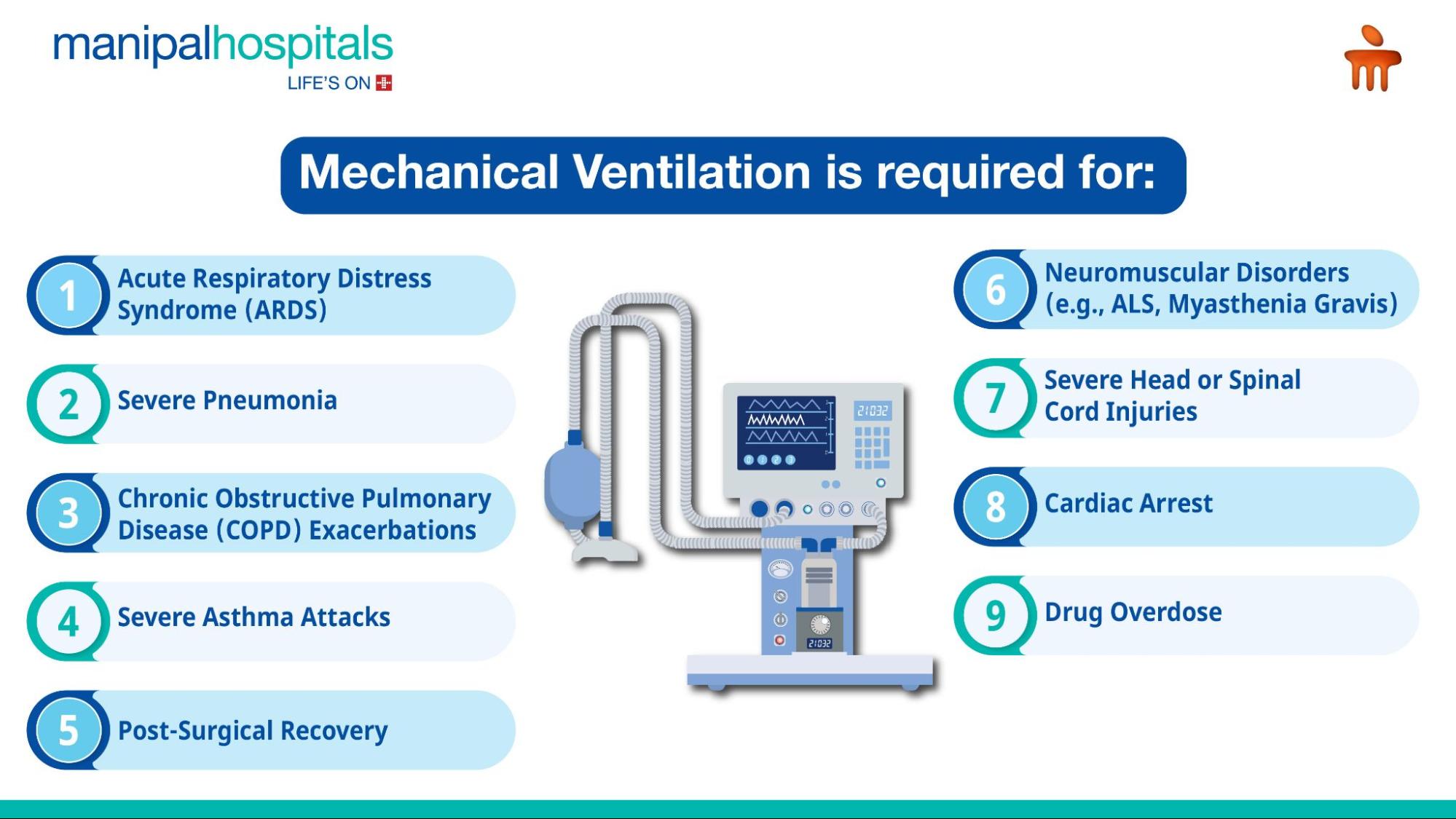
Mechanical ventilation is essentially a life support machine that is used when natural breathing mechanisms are compromised. It is commonly used for conditions like:
-
Acute Respiratory Distress Syndrome (ARDS)
-
Severe Pneumonia
-
Chronic Obstructive Pulmonary Disease (COPD) Exacerbations
-
Severe Asthma Attacks
-
Post-Surgical Recovery
-
Neuromuscular Disorders (e.g., ALS, Myasthenia Gravis)
-
Severe Head or Spinal Cord Injuries
-
Cardiac Arrest
-
Drug Overdose
What to Expect from Mechanical Ventilation
Being on a life support machine can be overwhelming. Patients on ventilation are continuously monitored, and they often receive sedation for comfort. Communication is facilitated through various methods as an ETT prevents speech. As condition improves, the medical team gradually reduces ventilator support, a process called "weaning’, to help restore natural breathing under the close supervision of specialist in ICU and Critical Care, ensuring safe recovery and optimal respiratory support.
Conclusion
While serious, mechanical ventilation is a temporary measure for many, paving the way for recovery. Modern advancements and critical care protocols have significantly improved outcomes. Many individuals successfully come off the ventilator and regain independence. Manipal Hospitals' multidisciplinary team provides personalised ventilator treatment, ensuring the best possible outcomes for patients requiring this vital life support machine.
FAQ's
Patients on invasive ventilation are typically sedated to ensure comfort and minimise pain or anxiety. Non-invasive ventilation can feel uncomfortable initially, but is generally not painful.
The duration of mechanical ventilation varies widely, from a few hours post-surgery to several weeks or months, depending on the underlying condition and how patient responds.
Patients on invasive mechanical ventilation cannot eat or drink by mouth; they receive nutrition intravenously or via a feeding tube. Patients on non-invasive ventilation may consume liquids or soft foods, depending on their condition and mask type.
The process of gradually reducing ventilator support and allowing the patient to gradually breathe by themselves is called "weaning."
Risks can include ventilator-associated pneumonia (VAP), lung injury, temporary vocal cord damage, and muscle weakness.
Share this article on: