7 Min Read
Medical procedures often bring questions and anxiety. A kidney biopsy is a crucial diagnostic tool that helps specialists understand underlying kidney issues, providing vital information often unobtainable through other tests. If your doctor recommended a kidney biopsy test, this blog explains why it is done and what to expect, along with effective treatment options and patient outcomes.
Synopsis
Why is a kidney biopsy performed?
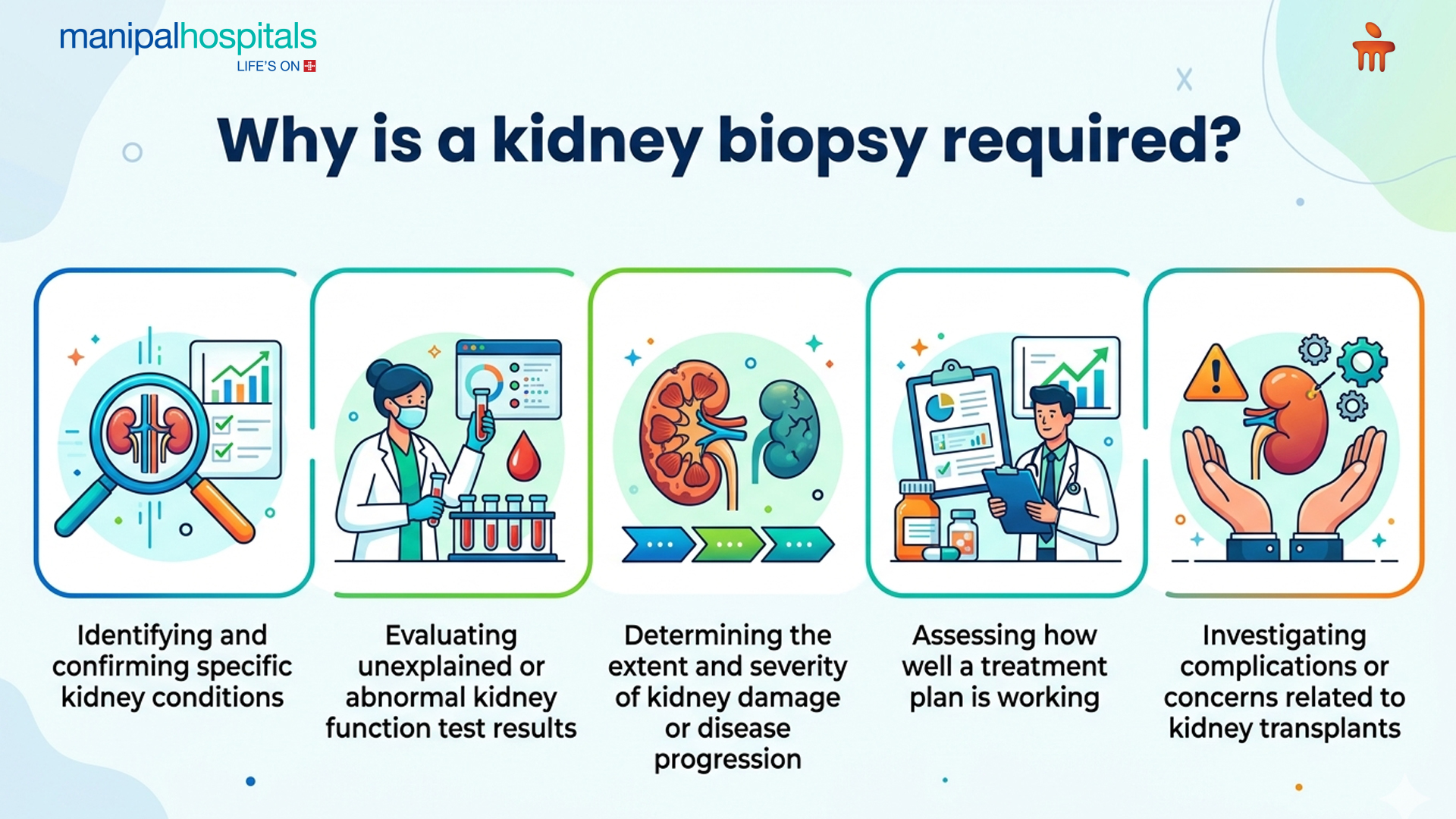
A renal biopsy is often recommended when other tests, like a kidney function test, show potential problems, but the exact cause is unclear. A definitive diagnosis via a renal biopsy procedure often leads to targeted treatment plans for over 90% of patients, improving long-term kidney health. Kidney biopsy, i.e., a microscopic examination of a small kidney tissue sample, is essential for:
-
Diagnosing specific kidney diseases- Identifying types like glomerulonephritis for tailored treatment.
-
Investigating abnormal test results- Explaining persistent issues like high creatinine, blood in urine, or protein in urine.
-
Assessing disease severity- Determining kidney damage to influence prognosis and treatment.
-
Monitoring treatment effectiveness- Observing if treatments work, sometimes via a follow-up kidney biopsy.
-
Evaluating kidney transplant issues- Diagnosing rejection or complications in transplant patients.
What to expect through a kidney biopsy test?
Understanding the renal biopsy procedure can help ease concerns and keep you well-informed and comfortable at every step.
Before the procedure
-
Consultation- Doctor explains procedure, risks, benefits, and answers questions.
-
Blood tests- To check clotting ability and overall kidney function.
-
Medication review- Stop certain medications (like blood thinners) days before the kidney biopsy test.
-
Fasting- No eating or drinking for several hours prior to the renal biopsy procedure.
During the procedure
A percutaneous (through the skin) kidney biopsy is common and usually done with you lying on your stomach for comfort.
-
Local anaesthesia- Numbing the back area for the biopsy.
-
Imaging guidance- Ultrasound or CT scan guides the needle to the kidney precisely.
-
Tissue collection- A thin needle takes tiny tissue samples where you might feel pressure.
-
Duration- While the actual biopsy takes 15-30 minutes, preparation and observation are longer.
After the procedure
After your renal biopsy procedure, the medical staff will monitor you closely.
-
Rest- You are asked to lie flat for several hours to reduce bleeding risk.
-
Observation- Blood pressure, heart rate, and urine output are checked regularly.
-
Pain management- Mild discomfort is common, but managed with pain relief medication.
-
Discharge- Most patients go home the same day; some may need an overnight stay for higher bleeding risk.
Benefits and success rates
The primary benefit of a kidney biopsy is its ability to provide a precise diagnosis that is not available otherwise. This accuracy is invaluable for:
-
Tailored treatment- Leading to specific treatments for the exact cause of your kidney disease symptoms.
-
Preventing further damage- Early, accurate diagnosis can prevent disease progression and preserve kidney function.
-
Informed decisions- Empowering you and your doctor for long-term kidney health decisions.
The diagnostic accuracy of a kidney biopsy test is remarkably high (>95%), making it an indispensable nephrology tool. Serious complications are rare (<1% at experienced centres), highlighting its safety and effectiveness.
Care essentials
-
Follow all post-procedure instructions for proper healing and to prevent complications.
-
Drink plenty of fluids as advised by your doctor to stay hydrated and help your kidneys.
-
Watch for signs of bleeding (bright red urine, severe back pain), fever, or increasing pain, and report them immediately.
-
Never ignore any unusual or worsening symptoms, but seek prompt, immediate medical attention.
-
Do take prescribed medications, especially pain relievers or antibiotics, as directed.
-
Do not take blood-thinning medications unless specifically instructed by your doctor after the procedure.
-
Avoid heavy lifting, vigorous exercise, or activities that could strain your abdomen for at least 1-2 weeks.
-
Avoid driving immediately after the procedure; arrange for someone to drive you home after the procedure.
Conclusion
Early diagnosis plays a vital role in managing kidney conditions effectively and preventing further complications. If you have persistent symptoms, abnormal kidney function test results, or require clarity on the need for a biopsy, consult our specialists for expert guidance. At Manipal Hospitals, our specialists provide advanced evaluation and personalised care to determine the right approach for your kidney health. Book an appointment with our expert urologists at Manipal Hospitals Siliguri (Pradhan Nagar unit) today for a timely assessment and comprehensive kidney care.
FAQ's
Local anaesthesia numbs the area where the procedure is performed, helping prevent sharp pain during the kidney biopsy. However, patients may still experience a sensation of pressure, pulling, or mild discomfort during the procedure.
The collected tissue samples are carefully analysed in a laboratory by specialists to identify any underlying kidney conditions. The results usually take a few days to a week, and your doctor will guide you on the expected timeline and next steps.
While blood tests, urine tests, and imaging studies provide valuable information about kidney health, a renal biopsy is often the only method to confirm a diagnosis by directly examining kidney tissue at a microscopic level.
The most common risk associated with a kidney biopsy is minor bleeding, which is usually temporary. Less common complications may include infection, pain, or injury to nearby organs, but precautions help reduce these risks.
You will typically need to fast, avoiding food and drinks for several hours before the procedure. This helps reduce the risk of complications and ensures better safety during the kidney biopsy process.
Share this article on: