8 Min Read
Swelling in the legs, a feeling of heaviness in the abdomen, or constant tiredness is easy to brush aside at first. Many people assume it is just due to a long day, too much salt, or a lack of rest. But when these symptoms keep coming back, they can sometimes point to something more serious, including right-sided heart failure. Right-sided heart failure happens when the right side of the heart is unable to pump blood forward to the lungs as effectively as it should. As a result, blood begins to back up in the veins, and fluid may collect in different parts of the body. That is often why people notice swelling in the feet, ankles, legs, or even the abdomen.
Knowing the early signs matters. The sooner right-sided heart failure is recognised, the sooner it can be treated, and its complications can be reduced. This blog explains the condition in detail, including the signs and symptoms of right-sided heart failure, diagnostic methods, and options for right heart failure treatment in Salem.
Synopsis
- What Is Right-Sided Heart Failure?
- Right-Sided Heart Failure Symptoms
- Signs of Right-Sided Heart Failure
- Causes of Right-Sided Heart Failure
- Risk Factors You Should Know
- Diagnosis of Right-Sided Heart Failure
- Possible Complications
- Right Heart Failure Treatment
- Living with Right-Sided Heart Failure
- When Should You Seek Medical Help?
- Conclusion
What Is Right-Sided Heart Failure?
To understand right-sided heart failure, it helps to know what the right side of the heart normally does. The right side receives oxygen-poor blood from the body and sends it to the lungs so it can pick up oxygen. It is a constant, behind-the-scenes job, but one that is essential for keeping the body supplied with the oxygen it needs.
When the right side weakens, that flow becomes less efficient. Blood does not move forward as smoothly and instead begins to collect in the veins. Over time, the condition can lead to visible swelling, fluid buildup, and a sense of fullness or discomfort in the abdomen. These are among the more noticeable right-sided heart failure symptoms, and they often develop gradually rather than all at once.
In some people, the condition appears after left-sided heart failure places extra strain on the right side. In others, it develops because of lung-related illness or a problem in the heart itself. Either way, recognising the signs of right-sided heart failure early gives doctors a better chance to step in before the condition progresses.
Right-Sided Heart Failure Symptoms
The symptoms of right-sided heart failure are often linked to fluid accumulation rather than breathing issues alone. These symptoms can develop slowly, which is why they are sometimes overlooked.
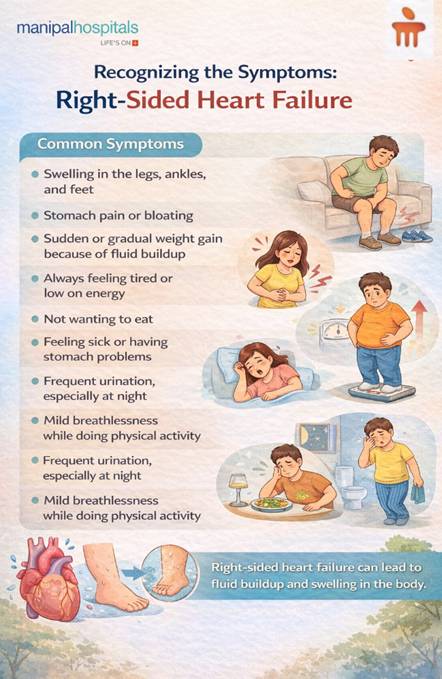
Some common signs of right-sided heart failure are:
-
Swelling in the legs, ankles, and feet
-
Stomach pain or bloating
-
Sudden or gradual weight gain because of fluid buildup
-
Always feeling tired or low on energy
-
Not wanting to eat
-
Feeling sick or having stomach problems
-
Frequent urination, especially at night
-
Mild breathlessness while doing physical activity
These right-sided heart failure symptoms may not appear all at once. Instead, they tend to progress gradually, making early recognition important.
Signs of Right-Sided Heart Failure
Doctors often rely on clinical findings to identify the signs of right-sided heart failure. These signs are typically observed during a physical examination.
Key signs of right-sided heart failure:
-
Swollen neck veins due to higher pressure
-
A painful, enlarged liver
-
Fluid is building up in the stomach
-
Swelling that is easy to see in the lower limbs
-
Changes in skin colour in later stages
Understanding the signs and symptoms of right-sided heart failure helps in distinguishing it from other conditions with similar presentations.
Causes of Right-Sided Heart Failure
There are several possible causes of right-sided heart failure, and finding the underlying reason is a key part of treatment. In many cases, the problem starts somewhere else in the heart or lungs and gradually places extra strain on the right side.
Some common causes include:
-
Left-sided heart failure, which is the most common cause
-
Chronic lung diseases such as COPD
-
Pulmonary hypertension
-
Pulmonary embolism, or blood clots in the lungs
-
Valve disorders, especially problems involving the tricuspid or pulmonary valve
-
Congenital heart defects present from birth
-
Obstructive sleep apnoea
-
Right ventricular myocardial infarction
-
Cardiomyopathies that affect the right ventricle
Among all the causes of right-sided heart failure, left-sided heart dysfunction remains the most common. That said, lung conditions are also a major contributor in many patients, especially when the heart has to work against higher pressure in the lungs for a long period of time.
Risk Factors You Should Know
Some people are more likely to get right-sided heart failure because of their health or lifestyle. Common Risk Factors:
-
A long-term lung disease
-
Previous heart problems
-
Regular Smoking
-
High blood pressure
-
Overweight
-
Lack of adequate exercise
Being aware of these factors can encourage early screening and reduce the likelihood of developing severe disease.
Diagnosis of Right-Sided Heart Failure
Diagnosing right-sided heart failure involves combining clinical findings with imaging and laboratory tests.
Some common ways to diagnose are:
-
A physical exam to look for signs of right-sided heart failure
-
Blood tests to check how well the organs are working
-
Chest imaging to find fluid buildup
-
Echocardiography to check the structure and function of the heart
-
An electrocardiogram to check the heart's rhythm
-
Advanced imaging for hard cases
Early diagnosis improves outcomes and allows for better management of right-sided heart failure symptoms.
Possible Complications
If not treated appropriately, right-sided heart failure can lead to several complications.
Potential Complications Include:
-
Liver congestion and long-term damage
-
Kidney dysfunction
-
Severe swelling and fluid retention
-
Reduced physical capacity
-
Frequent hospital visits
Recognising the signs and symptoms of right-sided heart failure early helps reduce the risk of these complications.
Right Heart Failure Treatment
The approach to right heart failure treatment in Salem focuses on relieving symptoms, addressing the underlying cause, and improving overall heart function.
Treatment Options Include:
1. Medications
Medications are usually the first line of treatment. The most frequently used medications are diuretics, which assist in getting rid of extra fluids from the body, thus helping to relieve swelling in the legs, feet, and belly. Depending on the patient’s health, doctors may also recommend the use of ACE inhibitors, which help in the performance of the heart; beta-blockers to slow the heart rate and reduce strain; and blood thinners when clot-related risk is a concern.
2. Lifestyle Adjustments
-
Limiting salt intake
-
Managing fluid consumption
-
Engaging in supervised physical activity
-
Avoiding smoking
3. Oxygen Support
If the cause of the heart failure is a lung-related problem, oxygen support may be helpful in increasing oxygen levels in the blood, thus assisting the heart in its performance. This is especially useful for people whose breathing problems are part of the larger picture.
4. Advanced Interventions
In some cases, treatment needs to go beyond medicines and lifestyle changes. If valve problems are contributing to the condition, valve repair or replacement may be recommended. Certain patients may also benefit from device-based therapies, depending on how advanced the condition is and what is causing it.
Right heart failure treatment is usually personalised, taking into account the severity and underlying causes of right-sided heart failure.
Living with Right-Sided Heart Failure
Managing daily life with right-sided heart failure requires consistency and awareness.
Practical Self-Care Tips:
-
Check body weight regularly
-
Follow medication schedules strictly
-
Maintain a balanced, low-salt diet
-
Avoid excessive alcohol intake
-
Stay physically active within safe limits
These steps can significantly reduce right-sided heart failure symptoms and improve overall well-being.
When Should You Seek Medical Help?
Certain warning signs should not be ignored and require immediate medical attention.
Seek Help If You Notice:
-
Rapid increase in weight
-
Severe swelling in the legs or abdomen
-
Difficulty breathing even at rest
-
Chest discomfort
-
Extreme fatigue
Recognising the signs of right-sided heart failure early can prevent emergency situations.
Conclusion
Right-sided heart failure is a complex but manageable condition when identified early. Being aware of right-sided heart failure symptoms and understanding the causes of right-sided heart failure can help individuals seek timely care. With appropriate diagnosis and a structured treatment plan, many patients can lead stable and active lives. If you are experiencing symptoms or need expert evaluation, consider seeking a specialised cardiologist in Salem at Manipal Hospitals for comprehensive cardiac care.
FAQ's
Some of the first signs are swelling in the legs, tiredness, mild stomach pain, and slow weight gain because of fluid retention.
The most common causes of right-sided heart failure include left-sided heart failure, lung diseases, pulmonary hypertension, and valve disorders.
In addition to tests, doctors look for physical signs like swelling, an enlarged liver, and neck veins that are too big.
Yes, it can be managed effectively with medications, lifestyle changes, and appropriate medical care.
Treatment usually involves medications, changes to the diet, oxygen therapy, and sometimes more advanced procedures.
Yes, following medical advice, cutting back on salt, and staying active can make symptoms much better.
If you have swelling, tiredness, or trouble breathing that doesn't go away, you should see a doctor.
Share this article on:


__Its_Type_and_Benefits.webp "what-is-ecg-types-benefits")