6 Min Read
Do your knees or hands feel uncomfortable during simple movements that once felt effortless? Joint pain that creeps into daily life, morning stiffness, or discomfort that worsens after activity are experiences that many people ignore as “just ageing". However, these signs may point to a common joint condition affecting the global population. Osteoarthritis (OA), or the most common progressive joint disorder, affects over 15% of India's adult population. Understanding osteoarthritis and its causes can help you seek early medical advice and manage the condition better. This article covers what osteoarthritis is and its causes, symptoms, diagnosis, and treatment options.
Synopsis
What is Osteoarthritis?
To better understand joint pain, it helps to know what osteoarthritis is. This condition is a type of joint disease where the protective cartilage at the ends of bones slowly wears away. Cartilage lines your joints and lets them move smoothly, without pain. It acts as a two-in-one shock absorber for the joints. When it gets thinner or disappears, the bones start to rub together, which can cause pain, swelling, and stiffness and make joint movement uncomfortable.
Joint Changes in Osteoarthritis
Osteoarthritis does not occur overnight. The disease progresses through gradual structural changes within the joint. As the condition progresses, the bone beneath the cartilage may start to harden and thicken. Small bony outgrowths, known as osteophytes, can form around the joint edges, contributing to stiffness and discomfort. The joint lining may also become mildly inflamed, which can increase pain and swelling during movement.
With the onset of osteoarthritis, the following joint areas might be affected:
-
Bone and Cartilage
-
Tendons and ligaments
-
Synovium or joint lining
-
Knee Meniscus
Understanding this gradual process highlights why early osteoarthritis treatment focuses on joint protection and symptom control.
Osteoarthritis Causes
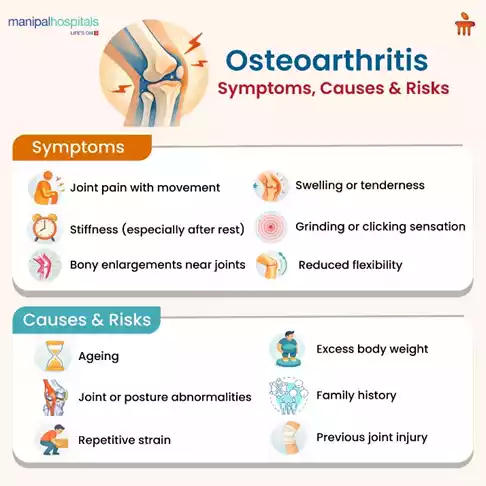
The most common osteoarthritis causes include ageing, as cartilage naturally becomes less resilient over time. However, age alone does not fully explain the condition. Other important risk factors include:
-
Sports Injury or joint overuse
-
Reduced mobility
-
Obesity or excess body weight
-
Genetic factors and family history
-
Musculoskeletal abnormalities
Recognising Osteoarthritis Symptoms
Osteoarthritis symptoms vary depending on the joint involved and the stage of the disease. Early symptoms are often subtle and may be overlooked. Over time, symptoms tend to become more noticeable and persistent.
Common osteoarthritis symptoms include:
-
Joint pain that worsens with activity and improves with rest
-
Stiffness, usually lasting less than 30 minutes
-
Decreased range of motion affecting daily mobility
-
Swelling or tenderness around the affected joint
-
A grating or clicking sensation during joint movement
-
Hard lump formation around the affected joint
Evaluating Joint Pain and Osteoarthritis
Diagnosis of osteoarthritis is based on a combination of medical history, physical examination, and imaging studies. The clinician assesses osteoarthritis symptoms, joint movement, tenderness, and signs of swelling or deformity.
|
Diagnosis |
Clinical Evaluation |
|
Discussion of the onset of joint pain and stiffness. |
The doctor reviews your daily routine and assesses the level of pain experienced. |
|
Physical examination of the affected joint. |
The doctor reviews your daily routine to understand the joint activities included. |
|
X-ray of the affected joint |
Review of cartilage thinning or bone changes. |
|
MRI (only in selected cases) |
Detailed look at cartilage and surrounding tissues. |
|
Blood tests (if required) |
Used to rule out other forms of arthritis. |
|
Review of other risk factors such as age, weight, or past injury. |
Evaluation of posture and walking pattern. |
Accurate diagnosis helps distinguish osteoarthritis from other causes of joint pain and ensures that osteoarthritis treatment is targeted and effective.
Management of Osteoarthritis
Effective osteoarthritis treatment focuses on relieving symptoms, improving joint function, and slowing disease progression.
Medical Approaches
-
NSAID gels or topical agents.
-
Oral NSAIDs or pain relievers.
-
Injections for pain relief.
-
Duloxetine for chronic pain.
-
Surgery for severe cases.
-
Low-dose radiation.
-
PRP and stem cell therapy.
Non-Medical Approaches
Beyond medical care, daily habits play a crucial role in managing osteoarthritis symptoms. Some effective lifestyle habits can help maintain a healthy joint:
-
Healthy weight management.
-
Blood sugar level management.
-
Daily movement of joints.
-
Muscle relaxation techniques.
-
Healthy food habits.
Risk of Untreated Osteoarthritis
Osteoarthritis is a degenerative joint condition that can lead to joint destruction if left untreated. Some of the risks of untreated OA are as follows:
-
Chronic pain
-
Reduced mobility
-
Disturbed sleep
-
Cartilage degeneration
-
Depression and anxiety
-
Reduced quality of life
Prevention is Better Than Cure
The best way to prevent osteoarthritis is to maintain a healthy lifestyle with the following habits:
-
Avoid tobacco
-
Include low-impact exercise
-
Healthy diet plan
-
Wearing a seatbelt while driving
-
Wearing protective sports guards
-
Regular joint checkups
When to Seek Medical Advice
Joint discomfort may appear gradually, making it easy to delay evaluation. However, timely medical advice helps prevent further joint damage and allows early intervention before symptoms worsen. Paying attention to specific warning signs can guide you on when professional care is needed.
You should consider a medical evaluation if:
-
Joint pain continues for several weeks despite rest or basic home care
-
Stiffness starts interfering with daily activities such as walking, climbing stairs, or gripping objects
-
Swelling, warmth, or visible joint changes develop
-
Pain begins affecting sleep or routine movement
-
Recurrent joint discomfort returns after minor activity or exercise
Conclusion
Osteoarthritis is a common but manageable joint condition. Understanding osteoarthritis, recognising its early symptoms, identifying the causes, and following a structured treatment plan can significantly improve comfort and function. With timely care, lifestyle adjustments, and appropriate medical support, individuals can maintain mobility and quality of life despite osteoarthritis. For personalised assessment and comprehensive osteoarthritis treatment, consult an experienced orthopaedic or rheumatology specialist at Manipal Hospital Salem.
FAQ's
Osteoarthritis is a degenerative joint condition that develops with cartilage breakdown. whereas other forms of arthritis are caused when the immune system attacks joints.
Early osteoarthritis symptoms often include mild joint pain during movement, early morning stiffness, and discomfort after prolonged activity. These signs are manageable initially but may worsen over time.
There is no permanent cure for osteoarthritis, but effective osteoarthritis treatment can relieve pain, improve joint function, and slow disease progression when started early.
Yes, osteoarthritis can affect younger adults, especially after joint injuries, repeated strain from certain occupations, or sports-related stress. Excess body weight, poor posture, and untreated joint damage can accelerate cartilage wear even at an earlier age.
When done correctly, exercise does not worsen osteoarthritis symptoms. Low-impact activities and strength training actually support joint stability, reduce pain, and improve mobility.
Share this article on: