5 Min Read
Imagine growing up with a normal routine: school, sports, family time, only to realise something isn’t quite right slowly. Perhaps your hearing changes, or your eyes feel different, or routine tests suddenly reveal the words “kidney damage".
For thousands of people, especially children and young adults, this story is real. It has a name, Alport Syndrome.
This inherited condition is rare, but early diagnosis and timely care can change a person’s entire health journey. Here’s a simple, easy-to-understand breakdown of what it is, what to look out for, and how treatment works.
Synopsis
What Is Alport Syndrome?
Alport Syndrome is a genetic disorder that affects the kidneys, ears (hearing), and eyes. It occurs when the collagen protein responsible for building the kidney’s filtering membranes doesn’t form correctly. Over time, this leads to progressive kidney damage, making it one of the known causes of chronic kidney disease.
Although rare, early recognition is key because proper management can slow down the progression, protect kidney function, and support hearing and vision health.
Causes of Alport Syndrome
Alport Syndrome develops because of a change (mutation) in genes responsible for producing type IV collagen, a structural protein found in many parts of the body. There are three main forms:
1. X-Linked Alport Syndrome (XLAS) – Most common
-
Passed from mothers (carriers) to sons more severely
-
Daughters can also show symptoms, but often milder
2. Autosomal Recessive Alport Syndrome (ARAS)
-
Occurs when both parents carry the defective gene
3. Autosomal Dominant Alport Syndrome (ADAS)
-
Less common
-
Only one parent needs to carry the abnormal gene
Regardless of the inheritance type, the underlying issue is the same — weakened or missing collagen gradually affects the kidneys, ears, and eyes.
Early & Late Alport Syndrome Symptoms
Because Alport Syndrome progresses slowly, it often begins subtly. Many families don’t recognise the signs until later, when kidney or hearing issues become more obvious. Watching for early symptoms can make a big difference.
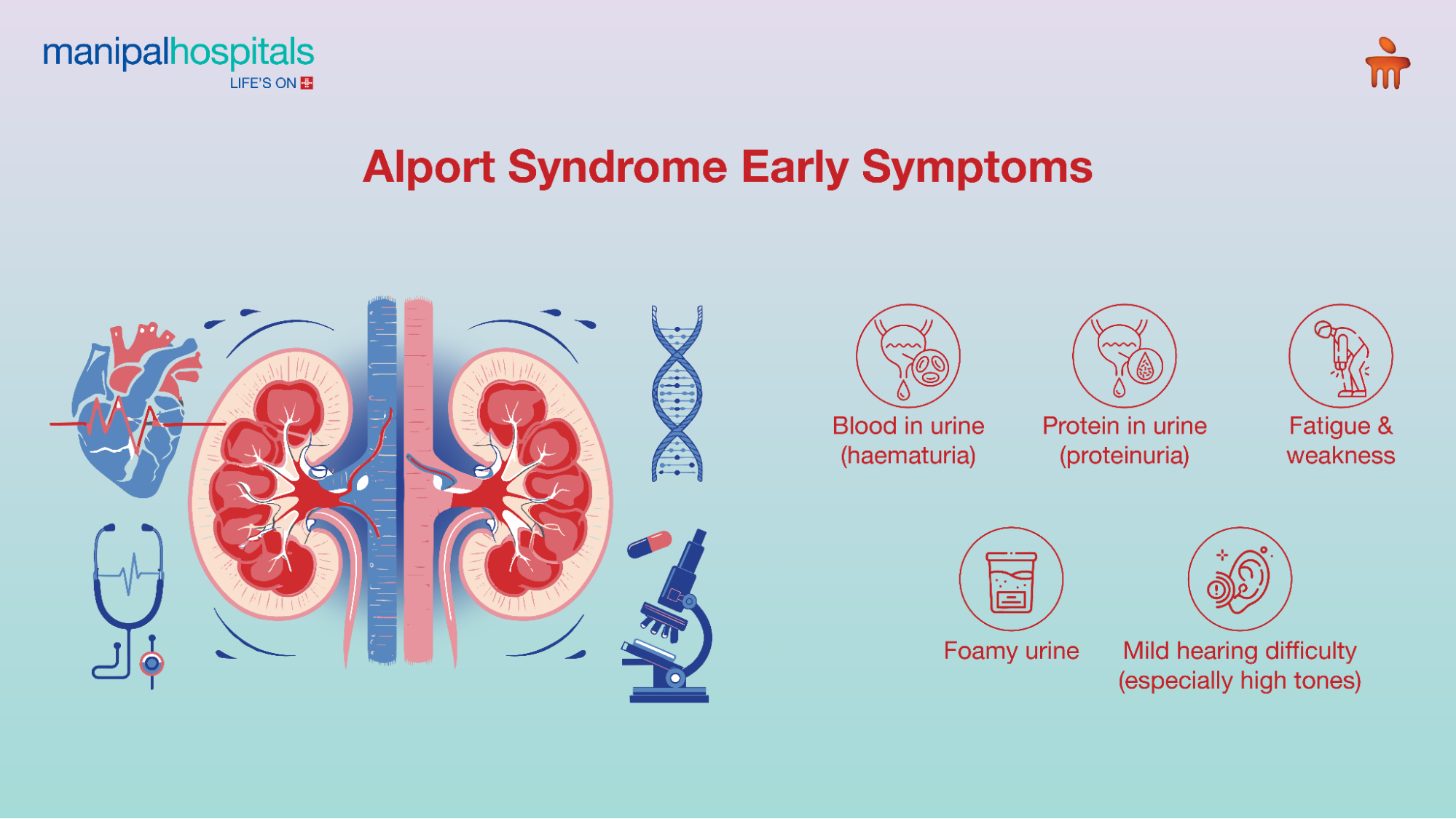
Early Symptoms
-
Blood in urine (haematuria) – often the first sign
-
Protein in urine (proteinuria)
-
Mild hearing difficulty in noisy environments
-
Foamy urine (due to protein loss)
Progressive or Late Symptoms
-
Worsening kidney function
-
Hearing loss, especially high-pitched sounds
-
Swelling in legs, feet, or face
-
Eye changes such as:
-
Abnormal lens shape
-
Retinal changes affecting vision
-
-
End-stage kidney disease in severe cases
If anyone in the family has kidney problems or early-onset hearing loss, doctors usually recommend screening others too.
Alport Syndrome at a Glance
-
Affects: Kidneys, hearing, eyes
-
Cause: Genetic collagen disorder
-
First Signs: Blood in urine, protein loss
-
Progression: Kidney damage + early hearing loss
-
Diagnosis: Urine tests, genetic tests, kidney biopsy
-
Treatment: BP control, kidney protection, hearing/eye support
-
Advanced Care: Dialysis or kidney transplant if needed
How Is Alport Syndrome Diagnosed?
Doctors use several tests to confirm the diagnosis:
-
Urine Tests - To detect blood or protein leakage
-
Blood Tests - To assess kidney health
-
Hearing Evaluation - To detect early sensorineural hearing loss
-
Eye Examination - To check for lens or retina abnormalities
-
Genetic Testing - Gold standard for identifying collagen gene mutations
-
Kidney Biopsy (in selected cases) - To examine the structure of kidney membranes
Alport Syndrome Treatment Options
There is no single cure yet, but modern medical care can significantly slow disease progression and improve quality of life.
1. Medications to Protect Kidney Function
-
ACE inhibitors / ARBs
These are the first-line medicines. They help reduce protein leakage and slow kidney damage.
2. Managing Blood Pressure
-
Stable BP protects the kidneys and heart.
3. Hearing Support
-
Early audiology assessments
-
Hearing aids
-
Regular follow-ups
4. Eye Care
-
Routine eye checks
-
Treatment for corneal or lens abnormalities, if needed
5. Lifestyle Modifications
-
Low-sodium diet
-
Adequate hydration
-
Avoiding NSAIDs (which can strain the kidneys)
-
Monitoring weight and blood pressure
6. Treatment for Advanced Kidney Disease
If kidney disease progresses, options include:
-
Dialysis
-
Kidney transplant – considered the best long-term option
Centres like Manipal Hospital Baner, Pune, offer complete multidisciplinary care, combining nephrology, audiology, and genetic counselling.
Living with Alport Syndrome: What Families Should Know
Living with a rare condition is emotionally and physically challenging, especially when it affects children. But support, awareness, and regular medical supervision can help patients lead full, active lives.
-
Children should undergo regular kidney monitoring
-
Families benefit from genetic counselling
-
Hearing tests should start early
-
Emotional support plays a key role
-
Early treatment delays severe kidney complications
Parents often find comfort when they meet specialists who understand rare genetic kidney conditions, which is why advanced centres like Manipal Hospital Baner, Pune play an important role in long-term care.
FAQ's
No, but kidney disease is a major feature of Alport Syndrome. The condition also affects hearing and vision.
There is no permanent cure, but treatments significantly slow kidney damage and improve quality of life.
The earliest signs are usually blood in urine, mild hearing difficulty, and protein loss.
Yes, it tends to progress over time, but hearing aids and early interventions help manage it well.
When kidney function drops significantly or reaches end-stage disease, a transplant offers a long-term solution.
Share this article on:


.webp "Nerve Pain: Causes, Symptoms, and Treatment Options")