6 Min Read
It can be challenging for parents when a baby is born early and requires specialised care. Preterm infants, born before 37 weeks of pregnancy, often have underdeveloped organs such as the lungs, brain, and immune system. Consequently, these infants often need specialised medical attention and advanced care. The process of moving a premature baby from one facility to another, ideally one with more advanced capabilities, is called premature baby transport. This procedure prioritises the baby's safety and the maintenance of stable vital signs.
A well-equipped ambulance with experienced staff is used for this journey. In this blog, we’ll explain why a newborn might need to be moved, how it is carried out safely, and how services like a premature baby ambulance in Old Airport Road, Bangalore, can help protect babies’ health.
Synopsis
- Why Preterm Babies Need Specialised Transport
- What Is a Premature Baby Ambulance?
- How Preterm Baby Transport Is Planned
- Challenges During Transport of Premature Babies
- Role of Neonatal Transport Teams
- Safety Measures During Premature Baby Transport
- Advanced Neonatal Transport at Manipal Hospitals
- Why Early Medical Transport Matters
- Conclusion
Why Preterm Babies Need Specialised Transport
Transporting preterm babies is very different from transporting adults. These newborns are delicate and need constant monitoring and specialised care during transfer. Several important factors must be managed to keep them safe and stable. Preterm babies may need transport due to the following:
-
Severe breathing difficulties requiring advanced ventilation
-
Extremely low birth weight
-
Complications related to premature birth
-
Need for specialised neonatal surgery
-
Access to neonatal intensive care unit (NICU) facilities
-
Monitoring of serious infections or medical conditions
During transport, additional care is essential to maintain vital functions:
-
Body temperature: Preterm babies lose heat quickly and need controlled warmth
-
Breathing support: Underdeveloped lungs may require respiratory assistance
-
Heart rate monitoring: Continuous monitoring helps maintain stable circulation
-
Infection control: Immature immune systems increase infection risk
-
Blood sugar levels: Low levels can affect brain function
A well-planned neonatal transport system, supported by a dedicated premature baby ambulance equipped with advanced medical equipment, ensures safe transfer and continuous care throughout the journey.
What Is a Premature Baby Ambulance?
A premature baby ambulance is specially designed to transport critical newborns safely, functioning as a mobile neonatal intensive care unit. The ambulance features equipment that allows doctors and nurses to monitor and care for the baby throughout the transport. Some of the equipment used in a premature baby ambulance includes:
-
Incubator for transporting newborns
-
Portable ventilator for breathing support
-
Oxygen supply systems
-
Monitors for the heart and lungs
-
Pumps for giving medicine through an IV
-
Temperature control devices
These systems ensure continuous monitoring and support, helping maintain stability throughout the transfer.
How Preterm Baby Transport Is Planned
Before transport, the medical team checks the baby's health and prioritises stabilising the newborn. When moving a premature baby, the neonatal team usually goes through several steps.
1. Medical Assessment
The baby is stabilised as much as possible before transport, based on their condition and urgency. Doctors assess the baby's breathing stability, heart rate, oxygen levels, body temperature, and blood pressure. Once the baby is stabilised, the team proceeds with transporting the premature babies safely.
2. Preparation for Transport
Before departure, the neonatal team makes sure that they are equipped with all necessary medical equipment. To prepare for the transport:
-
The baby is placed in a neonatal transport incubator safely
-
Oxygen support is provided if needed
-
IV access is established for medications
-
Vital signs are continuously monitored
These safety steps are essential when moving a preterm baby.
3. Transport by Neonatal Ambulance
When a baby is stable, they are moved in a premature-baby ambulance that is equipped with machines capable of handling neonatal emergencies. A trained team of neonatologists, neonatal nurses, and paramedics accompanies the baby to make sure they get continuous care. The medical team monitors the premature baby while transporting and modifies the treatment as needed.
Challenges During Transport of Premature Babies
Transporting a fragile, premature baby needs skill and care, as it may involve several challenges. This is why trained neonatal transport teams are essential for managing these risks effectively.
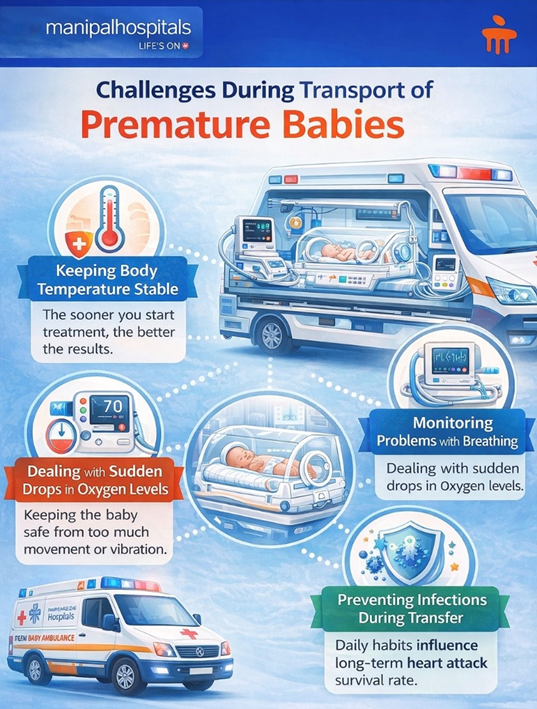
The following can be the major challenges:
-
Keeping body temperature stable
-
Monitoring problems with breathing
-
Dealing with sudden drops in oxygen levels
-
Keeping the baby safe from too much movement or vibration
-
Preventing infections during transfer
A well-equipped premature baby ambulance at Old Airport Road in Bangalore helps reduce these risks by offering advanced neonatal care during the transfer.
Role of Neonatal Transport Teams
A trained neonatal transport team is required to safely move a premature baby. It typically includes neonatologists, neonatal nurses, respiratory therapists, and emergency medical technicians. During the transfer, the team handles:
-
Keeping an eye on vital signs all the time
-
Taking care of breathing support devices
-
Changing medications and fluids
-
Quickly responding to medical emergencies
This specialised knowledge makes sure that transporting premature babies is safe and quick.
Safety Measures During Premature Baby Transport
Several safety measures are followed to protect premature babies during transport. Some important safety measures are:
-
Stabilising the temperature inside the transport incubator
-
Specially designed transport setups and careful handling help minimise vibration during movement
-
Checking the oxygen supply
-
Infection control measures
-
Proper positioning of the baby during transport
These safety rules make it possible to move a preterm baby with very little risk.
Advanced Neonatal Transport at Manipal Hospitals
At Manipal Hospitals, Old Airport Road in Bangalore, neonatal specialists give advanced care to premature babies, including special transportation services for premature babies. The hospital provides:
-
Advanced neonatal intensive care units
-
Trained neonatologists and neonatal nurses
-
Latest newborn monitoring systems
-
Specialised neonatal emergency teams
A specially equipped ambulance for premature babies at Old Airport Road, Bangalore, helps ensure safe and efficient transport, even in critical situations.
Why Early Medical Transport Matters
Timely transfer of a preterm baby can significantly improve survival and recovery outcomes. Early transport allows access to specialised care, such as:
-
Advanced respiratory support
-
Neonatal surgery, if required
-
Continuous monitoring of vital functions
-
Nutritional and developmental support
Ensuring safe and timely transport helps provide premature babies with the specialised care they need for better outcomes.
Conclusion
When a baby is born too early, both families and healthcare providers face unique challenges. If premature babies need advanced neonatal care, they should be transferred with the appropriate medical expertise and equipment. With careful planning, a dedicated neonatal team, and advanced facilities like a premature baby ambulance, newborns can be safely moved to hospitals that offer specialised care. Advanced neonatal services and a special premature baby ambulance in Old Airport Road, Bangalore, ensure that every step of moving a premature baby focuses on their safety, stability, and health.
FAQ's
It depends on how far they need to go and the baby’s condition. During the trip, medical staff closely monitor the infant to ensure their stability.
Most of the time, parents and their baby travel separately. This helps the transport team focus completely on keeping the infant secure and stable.
The team uses specific equipment, such as incubators, ventilators, infusion pumps, heart monitors, oxygen supplies, and devices to manage temperatures to keep a preterm baby safe while they are being moved.
Before the infant is moved, doctors assess their breathing and temperature, establish IV access, and verify vital signs to make sure the baby is safe during the travel.
When skilled teams utilise the correct tools, moving a premature baby can help them obtain the care they need fast and may even help them improve outcomes.
Share this article on: