6 Min Read
Polycystic Kidney Disease (PKD) is a complex genetic disorder that causes numerous fluid-filled cysts to grow in the kidneys, enlarging them and eventually leading to impaired kidney function. While it is a significant health concern, particularly as it can lead to kidney failure, advances in medical science and comprehensive care offer substantial hope. Understanding PKD, its symptoms, and available treatments is the first step towards effectively managing the condition and maintaining a good quality of life.
Polycystic kidney disease is a hereditary condition characterised by the growth of multiple cysts within the kidneys. These cysts are non-cancerous sacs of fluid. Over time, they can grow very large, causing the kidneys to increase in size and reducing their ability to filter waste from the blood.
While the kidneys are primarily affected, cysts can also develop in other organs, such as the liver, pancreas, and, less commonly, the brain, leading to aneurysms. Early detection and proactive management are key to slowing its progression and preventing severe complications like kidney failure.
Synopsis
Types of Polycystic Kidney Disease
PKD is almost always an inherited condition, meaning it is passed down through families. There are two primary types:
Polycystic Kidney Disease (PKD) mainly exists in two primary types, based on how it’s inherited and when it appears:
Autosomal Dominant Polycystic Kidney Disease (ADPKD)
Autosomal Dominant Polycystic Kidney Disease (ADPKD) is the most common form of PKD, accounting for about 90% of all PKD cases. ADPKD typically becomes apparent in adulthood, often between the ages of 30 and 50, though cysts can begin to form much earlier. Only one copy of the affected gene from a parent is needed for a child to inherit ADPKD. If one parent has ADPKD, there is a 50% chance their child will inherit the condition. The genes responsible are PKD1 (accounting for about 85% of ADPKD cases) and PKD2 (about 15% of cases), with mutations in PKD1 generally leading to a more severe and rapidly progressing form of the disease, making understanding these polycystic kidney causes essential for diagnosis and prognosis.
Autosomal Recessive Polycystic Kidney Disease (ARPKD)
Autosomal Recessive Polycystic Kidney Disease (ARPKD) is a rare and more severe form of polycystic kidney disease that typically presents in infancy or early childhood. It occurs when a child inherits the defective gene from both parents. In this condition, multiple small cysts develop in the kidneys, often leading to enlarged kidneys and impaired function from a very young age. ARPKD can also affect the liver, causing complications such as liver fibrosis. Newborns may present with breathing difficulties due to enlarged kidneys, along with poor growth and early signs of kidney dysfunction, making early diagnosis and careful management crucial.
Symptoms of PKD
Symptoms of PKD can develop gradually (especially in adults) and may include:
-
High blood pressure (hypertension)
-
Pain in the back or sides (due to enlarged kidneys)
-
Abdominal fullness or swelling
-
Blood in the urine (hematuria)
-
Frequent urinary tract or kidney infections
-
Kidney stones
-
Fatigue and weakness
-
Gradual decline in kidney function
Causes of PKD
Polycystic Kidney Disease (PKD) is primarily a genetic condition caused by mutations in specific genes, most commonly PKD1, PKD2, or PKHD1, leading to the formation of multiple fluid-filled cysts in the kidneys. It is usually inherited, either from one parent (autosomal dominant PKD, the more common form) or from both parents (autosomal recessive PKD, which is rarer and more severe). In some cases, it can also develop later in life due to long-standing kidney disease, known as acquired cystic kidney disease. As these cysts grow, they cause symptoms such as high blood pressure, pain in the back or sides, abdominal swelling, blood in the urine, frequent infections, kidney stones, fatigue, and a gradual decline in kidney function.
Diagnosis of PKD
Diagnosing PKD typically involves a combination of medical history, physical examination, and specific diagnostic tests.
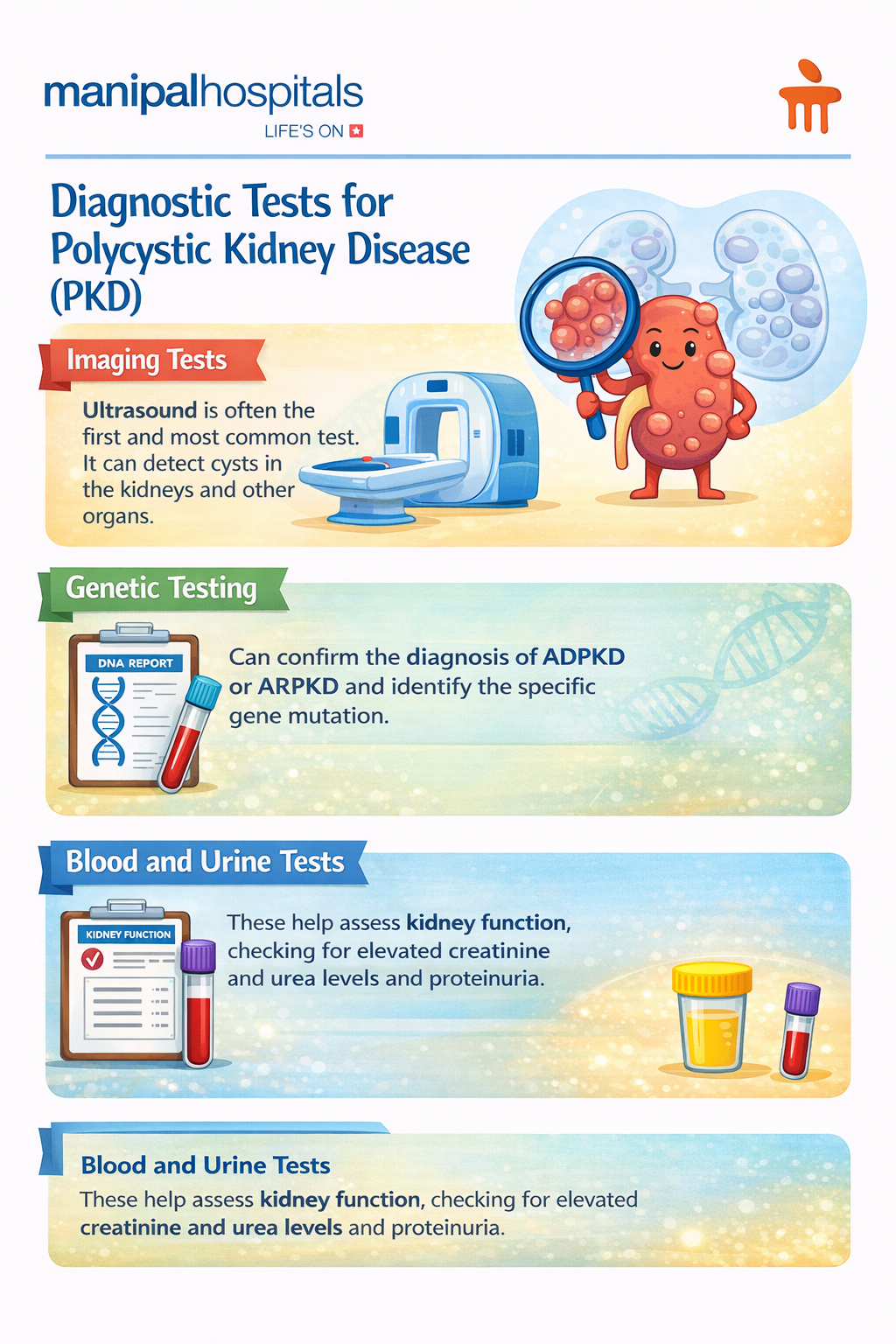
Specialists utilize advanced techniques for accurate diagnosis:
-
Imaging Tests: Ultrasound is often the first and most common test. It can detect cysts in the kidneys and other organs. CT scans and MRI provide more detailed images, especially when ultrasound results are inconclusive or to monitor cyst growth.
-
Genetic Testing: Can confirm the diagnosis of ADPKD or ARPKD and identify the specific gene mutation. This is particularly useful for family planning or when imaging results are ambiguous.
-
Blood and Urine Tests: These help assess kidney function, checking for elevated creatinine and urea levels (indicators of kidney impairment) and proteinuria (protein in urine). Regular monitoring of these parameters is crucial.
Effective Treatment and Management of PKD
While there is currently no cure for PKD, effective treatments and management strategies can significantly slow disease progression, alleviate symptoms, and improve quality of life. Manipal Hospitals offers a holistic approach to PKD treatment and management. Blood pressure control is arguably the most critical aspect of PKD management; aggressive control of high blood pressure can significantly slow the growth of cysts and preserve kidney function, reducing the rate of kidney function decline by up to 30%. For pain management, over-the-counter pain relievers or stronger prescription medications may be used, though it's vital to avoid NSAIDs, as they can harm kidney function. Infection control requires prompt treatment of UTIs and cyst infections with appropriate antibiotics to prevent further kidney damage.
Dietary modifications are often recommended, including limiting sodium, potassium, and phosphorus intake, with adequate fluid intake also encouraged to help prevent kidney stones; our dietitians provide personalised dietary advice. Lifestyle changes, such as maintaining a healthy weight, regular exercise, and avoiding smoking and excessive alcohol consumption, contribute to overall kidney health. For ADPKD, specific therapies are available that can slow the rate of kidney function decline and cyst growth in eligible patients, as determined by a nephrologist.
This comprehensive PKD treatment also includes the management of complications, such as treating kidney stones, managing liver cysts, and monitoring for cerebral aneurysms. If PKD progresses to end-stage renal disease (ESRD), advanced treatments for kidney failure include dialysis (hemodialysis or peritoneal dialysis) or kidney transplant, with kidney transplantation offering an excellent long-term solution and successful outcomes reported in over 95% of patients after one year, showcasing the effectiveness of modern polycystic kidney disease treatment.
Conclusion
If you are experiencing these polycystic kidney disease symptoms or have a family history of PKD, it is crucial to seek timely medical advice and book an appointment for polycystic kidney disease treatment at Manipal Hospital Old Airport Road, Bangalore.
FAQ's
Currently, there is no cure for PKD. However, effective treatments and management strategies are available to slow its progression, control symptoms, and manage complications, significantly improving a patient's quality of life.
The rate of PKD progression varies greatly among individuals. Factors like the specific gene mutation (PKD1 often progresses faster than PKD2), the age of symptom onset, and blood pressure control can influence progression. Regular monitoring helps in understanding individual progression.
Yes, lifestyle changes are very important. Maintaining healthy blood pressure through diet and exercise, staying well-hydrated, avoiding smoking, and limiting sodium intake can significantly help in managing symptoms and slowing disease progression.
A kidney-friendly diet plays a crucial role. This often involves reducing sodium intake to help control blood pressure, ensuring adequate hydration, and sometimes limiting protein, potassium, and phosphorus as kidney function declines. A dietitian can provide personalized guidance.
Dialysis or kidney transplantation becomes necessary when PKD progresses to end-stage renal disease (ESRD), meaning the kidneys can no longer adequately filter waste products from the blood. Your nephrologist will discuss these options when your kidney function reaches a critical level, often when GFR is below 15 ml/min/1.73m².
Share this article on: