5 Min Read
That sudden flutter in your chest. A racing heartbeat while you are resting, or a brief pause that makes you catch your breath. Most people experience occasional changes in their heartbeat, often triggered by stress, caffeine, or lack of sleep. But when the rhythm feels irregular, too fast, or unexpectedly slow without a clear reason, it can raise concern. Heart arrhythmia refers to any disturbance in the heart’s normal rhythm. While many episodes are mild and temporary, certain forms can increase the risk of stroke, heart failure, or even sudden cardiac events.
Understanding what is happening inside your heart can replace fear with clarity. In this blog, we’ll explore the different heart arrhythmia types, why they occur, and the full range of modern arrhythmia treatment options available today. You will learn exactly what to expect and when to seek help.
Synopsis
What Is Heart Arrhythmia?
The heart works through a finely tuned electrical system. With each beat, electrical impulses travel through specialised pathways, telling the chambers when to contract and pump blood. When that electrical flow becomes disrupted, the rhythm changes.
A heart arrhythmia may cause the heart to beat too quickly (tachycardia), too slowly (bradycardia), or irregularly. Some people describe it as an “irregular heartbeat", while others feel skipped beats or pounding sensations. Not every rhythm change is dangerous, but the pattern and frequency matter greatly.
Understanding the Different Arrhythmia Types
Rhythm disturbances are not all the same. They vary based on where they originate and how they affect blood circulation. Recognising the specific pattern helps guide treatment decisions.
1. Atrial Fibrillation (AF)
This kind of condition is the most common form of cardiac arrhythmia. The upper chambers (atria) quiver instead of contracting effectively. Blood can pool inside the atria, increasing stroke risk. Symptoms may include palpitations, breathlessness, fatigue, or sometimes no symptoms at all.
2. Atrial Flutter
Similar to AF but with a more organised electrical loop in the atria. The heart rate can become very fast, though often in a regular pattern.
3. Supraventricular Tachycardia (SVT)
These are rapid rhythms that begin above the ventricles. Episodes can start and stop suddenly and may cause dizziness or chest tightness.
4. Ventricular Tachycardia (VT)
Originating in the lower chambers, this type of disorder is more serious. Sustained VT can impair blood flow to vital organs and may progress to life-threatening rhythms.
5. Ventricular Fibrillation (VF)
A VF qualifies as a medical emergency. The ventricles quiver chaotically and cannot pump blood effectively. Immediate defibrillation is required.
6. Bradyarrhythmias
When the heart beats too slowly due to faulty electrical signaling, often linked to ageing or conduction system disease.
Each of these arrhythmia types behaves differently and requires a tailored approach
What Causes Heart Arrhythmia?
It’s natural to wonder why the rhythm changes in the first place. In some cases, the cause is temporary. In others, it reflects underlying heart disease.
Common arrhythmia causes include:
Coronary artery disease or prior heart attack
-
High blood pressure
-
Heart valve disorders
-
Cardiomyopathy
-
Thyroid imbalance
-
Electrolyte disturbances (low potassium or magnesium)
-
Excess alcohol or caffeine
-
Certain medications
-
Genetic channelopathies
Ageing alone can increase the likelihood of developing a heart arrhythmia, as the electrical pathways may gradually degenerate over time.
How Does Heart Arrhythmia Feel?
Symptoms vary widely. Some people notice dramatic changes, while others discover the condition during a routine check-up.
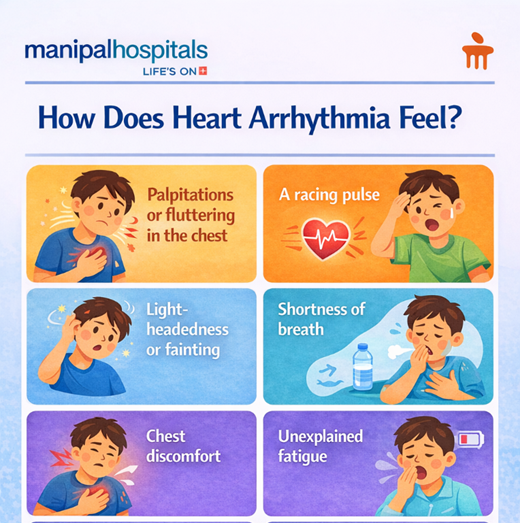
You may experience:
-
Palpitations or fluttering in the chest
-
A racing pulse
-
Light-headedness or fainting
-
Shortness of breath
-
Chest discomfort
-
Unexplained fatigue
-
Sudden weakness
An irregular heartbeat accompanied by fainting, severe breathlessness, or chest pain requires urgent medical attention.
How Doctors Diagnose Heart Arrhythmia
Diagnosis begins with listening - both to your story and your heartbeat. A detailed history often provides crucial clues about frequency, triggers, and associated symptoms. In this process, some key diagnostic tools are generally used, such as:
-
Electrocardiogram (ECG): Records the heart’s electrical activity in real time.
-
Holter monitor: Continuous ECG recording over 24-48 hours.
-
Event recorder: Used for intermittent symptoms over weeks.
-
Echocardiogram: Evaluates heart structure and function.
-
Stress testing: Assesses rhythm changes during exertion.
-
Electrophysiology (EP) study: A specialised test mapping electrical pathways inside the heart.
Imaging and blood tests may also be used to identify reversible causes. The goal is not just to confirm a cardiac arrhythmia, but to understand its origin and risk profile.
Risk Stratification in Common Arrhythmias
Some rhythm disturbances are inconvenient but low risk. Others carry significant long-term implications. The below outlines clinical factors doctors use to assess severity and guide management.
|
Arrhythmia Type |
Stroke Risk |
Sudden Cardiac Death Risk |
Long-Term Monitoring Needed |
Typical First-Line Strategy |
|
Atrial Fibrillation |
Moderate to High (varies by CHA₂DS₂-VASc score) |
Low |
Yes |
Anticoagulation + Rate/Rhythm control |
|
Atrial Flutter |
Moderate |
Low |
Yes |
Catheter ablation is often effective |
|
Paroxysmal SVT |
Low |
Very Low |
Occasionally |
Vagal manoeuvres or ablation |
|
Ventricular Tachycardia (structural heart disease) |
Low |
High |
Yes |
ICD ± antiarrhythmic drugs |
|
Ventricular Fibrillation |
Not applicable |
Extremely High |
Lifelong |
Emergency defibrillation + ICD |
|
Sick Sinus Syndrome |
Low |
Moderate (if untreated) |
Yes |
Pacemaker implantation |
This structured assessment ensures that arrhythmia treatment decisions are precise rather than routine.
Treatment Options for Heart Arrhythmia
Management depends entirely on the type, severity, and overall heart health. Some cases require monitoring alone. Others need active intervention.
Lifestyle Modifications
For mild rhythm disturbances:
-
Limiting caffeine and alcohol
-
Managing stress
-
Improving sleep patterns
-
Correcting thyroid or electrolyte imbalances
Medications
Doctors may prescribe the following:
-
Beta blockers to slow the heart rate
-
Calcium channel blockers
-
Antiarrhythmic drugs to maintain rhythm
-
Anticoagulants to reduce stroke risk
Medication plans are individualised and monitored closely to avoid side effects.
Electrical Cardioversion
A controlled electrical shock restores normal rhythm in selected patients, particularly with atrial fibrillation.
Catheter Ablation
A minimally invasive procedure where abnormal electrical pathways are identified and cauterised. It offers long-term control in many patients, especially those with SVT or atrial flutter.
Pacemakers
Used for slow rhythms. These small implanted devices ensure the heart does not fall below a safe rate.
Implantable Cardioverter Defibrillator (ICD)
Recommended for patients at risk of dangerous ventricular arrhythmias. The device detects and corrects life-threatening rhythms automatically.
Effective arrhythmia treatment today is highly advanced, often allowing patients to return to normal daily activities with minimal restriction.
Living Safely with Heart Arrhythmia
A diagnosis does not mean giving up an active life. With structured follow-up and proper therapy, most individuals live well for decades.
Key aspects of ongoing care include:
-
Regular cardiology reviews
-
Monitoring medication adherence
-
Stroke prevention strategies when required
-
Heart-healthy diet and exercise
-
Blood pressure and diabetes control
Recognising warning signs early and maintaining open communication with your healthcare provider makes all the difference.
Conclusion
Heart rhythm changes can be frightening, but knowledge brings reassurance. Heart arrhythmia ranges from minor disturbances to conditions requiring urgent intervention. The important step is timely diagnosis and an individualised management plan. From advanced mapping studies to minimally invasive procedures, most cases of heart arrhythmia are treatable and controllable with the help of modern tools and medicines. If you or a loved one is exploring options for irregular heartbeat treatment in Old Airport Road, Bangalore, consulting the experienced cardiology team at Manipal Hospitals, Old Airport Road, can ensure precise evaluation and comprehensive care tailored to your condition.
FAQ's
Acute stress and panic can stimulate adrenaline release, which may provoke transient rhythm disturbances, especially in individuals prone to SVT or premature beats. However, persistent or recurrent arrhythmias should not be attributed to anxiety without proper cardiac evaluation.
Certain inherited channel disorders, such as long QT syndrome or Brugada syndrome, can run in families. Genetic testing may be advised when arrhythmias occur at a young age or when there is a family history of sudden cardiac death.
In many people, moderate exercise improves cardiovascular health and reduces episodes. However, specific arrhythmias, particularly those linked to structural heart disease, may require tailored exercise guidance under medical supervision.
Consumer wearable devices can detect pulse irregularities, but they are screening tools, not diagnostic instruments. Abnormal readings should always be confirmed with medical-grade ECG testing.
Certain long-standing rhythm disorders, particularly atrial fibrillation, are associated with a higher risk of cognitive decline, partly due to micro-embolic events and reduced cerebral perfusion. Effective stroke prevention strategies can significantly reduce this risk.
Share this article on: