8 Min Read
Does your child sometimes complain they feel very tired or seem to get sick a lot? It can be overwhelming as a parent to see your child frequently feeling fatigued! Common illnesses or insufficient nutrients can sometimes trigger certain symptoms. However, these symptoms can also be early signs of blood disorder diseases that require a doctor's attention. Knowing when to be concerned and when to get expert help can make a big difference. This article explains the warning signs and types of blood disorders in children and why early diagnosis by a paediatric haematologist matters.
Synopsis
- Why Kids Need to Have Healthy Blood
- Common Warning Signs Parents Should Not Ignore
- Understanding the Different Types of Blood Disorders
- Platelet and Blood Clotting Disorders
- Blood Vessel Disorders and Circulation Problems
- What Is ITP Blood Disorder?
- How to Find Out if You Have a Blood Disorder
- Why Early Diagnosis Makes a Difference
- When Should Parents Take Their children to a Pediatric Hematologist?
- What Parents Should Know About Living With a Blood Disorder
- Final Word
Why Kids Need to Have Healthy Blood
Blood plays a key role in a child’s growth and development. It delivers oxygen, helps fight infections, stops bleeding, and heals wounds. If any part of the blood is not working properly, it can affect growth, immunity, and overall development.
Blood disorders may involve different components of the blood, including:
-
Red blood cells
-
White blood cells
-
Platelets
-
Blood vessels and clotting mechanisms
Common Warning Signs Parents Should Not Ignore
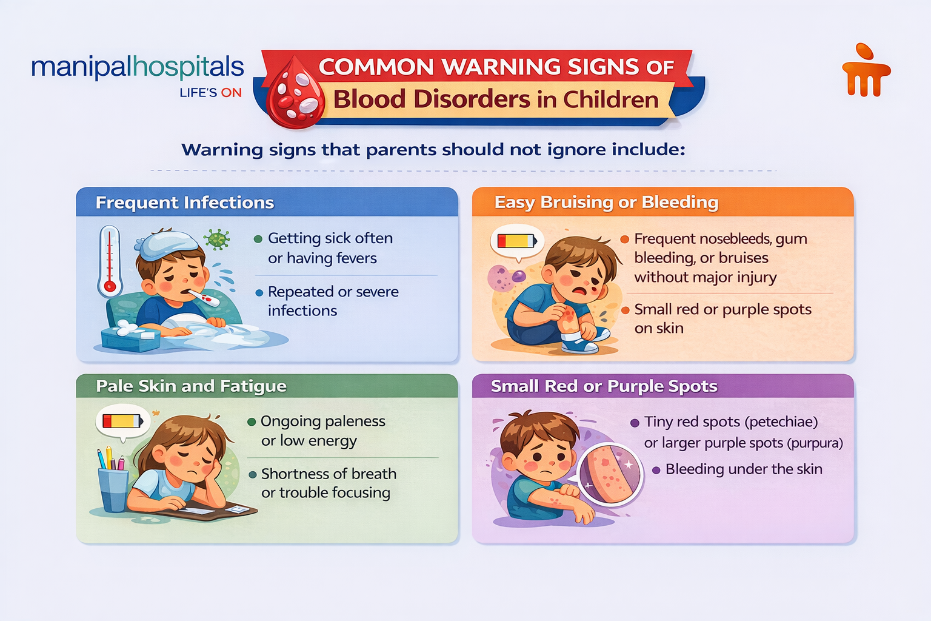
Children with blood-clotting disorders often experience these recurring symptoms:
-
Frequent or Severe Infections: If your child gets sick more often than usual, takes longer to recover, or has unusual infections, it could be a sign of an underlying white blood cell disorder or immune dysfunction.
-
Easy Bruising or Bleeding: Frequent nosebleeds, gum bleeding, or bruises that appear without significant injury may suggest a blood-clotting disorder or blood-coagulation disorder.
-
Pale Skin and Fatigue: Ongoing paleness, low energy, shortness of breath, or trouble focusing can be signs of red blood cell disorders like anaemia.
-
Small red or purple spots on the skin: Some children may develop small red spots (petechiae) or larger patches (purpura) on their skin. These relate to platelet disorders, such as immune thrombocytopenia (ITP).
Understanding the Different Types of Blood Disorders
Parents often want to know what types of blood disorders might affect their child. While there are many types of blood disorders, most can be categorised into a few main groups.
Problems with Red Blood Cells
Red blood cell disorders are among the most common blood problems in children. These include:
-
Iron deficiency anaemia
-
Thalassemia
-
Sickle cell disease
Children with these conditions may look pale, feel tired, be irritable, or not grow as expected. Finding these issues early allows for prompt treatment and helps prevent long-term problems.
Problems with White Blood Cells
White blood cell disorders impact a child’s immune system. They may include:
-
Low white cell counts (neutropenia)
-
White blood cells that do not function properly
-
Certain childhood leukaemias
These disorders increase susceptibility to recurrent or severe infections, as white blood cells are responsible for fighting infections.
Platelet and Blood Clotting Disorders
Blood clotting disorders make it difficult for the body to form stable clots. Examples include:
-
Von Willebrand disease
-
Immune thrombocytopenia (ITP blood disorder)
Children may bruise easily, bleed heavily after minor injuries, or bleed for a long time after dental work or surgery.
Blood Vessel Disorders and Circulation Problems
Blood vessel disorders are conditions that affect the blood vessels themselves. These can lead to abnormal bleeding, rashes, circulation issues, inflammatory vasculitic conditions, or vascular malformations.
In certain cases, blood circulation disorders may cause pain, swelling, or color changes in the skin.
What Is ITP Blood Disorder?
ITP, or immune thrombocytopenia, is a common platelet disorder in children. It happens when the immune system attacks platelets by mistake, lowering their numbers.
Children with ITP may develop:
-
Bruising easily
-
Bleeding from the nose
-
Gums that bleed
-
Petechiae (small red spots on the skin)
ITP is usually diagnosed through platelet counts and exclusion of other causes. The good news is that many cases of ITP in children are temporary and will improve with careful monitoring or simple treatment. Still, it is important to see a specialist to make sure there are no other blood disorders.
How to Find Out if You Have a Blood Disorder
Usually, a detailed history and physical examination precede the evaluation of a suspected blood disorder.
Doctors often ask parents about:
-
How often do infections happen
-
Family history of blood disorders
-
Patterns of bleeding or bruising
-
Growth and development milestones
Next, blood tests are done to check for:
-
Red blood cell levels and structure
-
White blood cell counts and how they work
-
Platelet numbers
-
peripheral smear
-
Blood clotting and coagulation pathway profiles
Sometimes, extra tests like a bone marrow exam or genetic studies are needed to confirm the diagnosis.
Why Early Diagnosis Makes a Difference
If you catch them early, many blood disorders can be treated. Quick diagnosis can:
-
Reduce the risk of severe infections
-
Lower the chance of bleeding
-
Support normal growth and improve energy levels
-
Allow for rapid treatment and better long-term planning.
For example, finding red blood cell disorders like thalassaemia early allows doctors to start transfusion and chelation programmes. Early detection of white blood cell disorders can also prevent life-threatening infections.
When Should Parents Take Their children to a Paediatric Haematologist?
You should see a specialist if your child:
-
Has frequent infections without a clear cause.
-
Bruises or bleeds easily.
-
Appears persistently pale or fatigued
-
Has abnormal blood test results
-
Has a known family history of blood disorders
A paediatric haematologist is trained to assess all types of blood coagulation disorders and guide families through diagnosis, treatment, and follow-up with clear and compassionate care.
What Parents Should Know About Living With a Blood Disorder
It can be difficult to learn your child has a blood disorder, but with proper care from specialists in Manipal paediatric and child care, many children live healthy, active lives. Advances in paediatric haematology mean that many conditions once considered serious are now much easier to treat.
Ongoing care may include:
-
Regular monitoring
-
Drugs or supplements
-
Transfusions or immunotherapy when needed
Lifestyle guidance to reduce infection or bleeding risks
Final Word
Not every bruise or infection means there is a problem, but patterns matter. As a parent, trust your instincts if your child’s symptoms persist or seem unusual. If you are worried about frequent infections, easy bruising, pale skin, or possible blood circulation problems, seeing a paediatric haematologist at Manipal Hospitals Old Airport Road can help you feel more confident about your child’s care.
FAQ's
Not always. Young children often get infections as their immune systems grow. However, if infections are frequent, severe, or don’t go away, they might signal a white blood cell disorder. See a doctor, especially if other symptoms appear.
It’s normal for active children to get the occasional bruise. You should be concerned if bruises show up without injury, bleeding lasts a long time, or nosebleeds happen often. These could be signs of a blood-clotting disorder and should be checked by a doctor.
Often, yes. Iron deficiency is common. But if pale skin and tiredness don’t go away, they could be linked to red blood cell disorders like inherited anaemias. Blood tests can help tell if it’s a nutritional issue or a blood disorder.
Some blood disorders, such as thalassemia or hemophilia, are inherited from parents. Other blood disorders are caused by the immune system or environmental factors. Taking a detailed family history and doing the right tests can help find inherited conditions early.
ITP blood disorder (immune thrombocytopenia) happens when the immune system destroys platelets. In children, it is usually temporary and often goes away on its own. Still, regular checkups are important to prevent bleeding problems and to rule out other blood disorders.
Doctors usually start with simple blood tests to check red cells, white cells, platelets, and how well the blood clots. These results may necessitate additional tests to confirm a specific blood disorder and determine the appropriate treatment.
Share this article on: