2.png)
 9 Min Read
As men become older, they may notice changes in their urination habits. Waking up several times at night to pass urine, taking longer to start the stream, or feeling that the bladder has not emptied properly can all point to an enlarged prostate.
The medical term for this condition is benign prostatic hyperplasia, or BPH. It is a common cause of urinary symptoms in older men, especially after the age of 50. The prostate is a small gland below the bladder that surrounds the urethra, the tube that carries urine out of the body. When the prostate enlarges, it can press on the urethra and make urine flow less freely.
Although this condition is common, many men delay seeing a doctor because symptoms develop slowly. This blog will take you through why the prostate enlarges, how symptoms progress, and what is the best treatment for an enlarged prostate.
Synopsis
What Happens When the Prostate Gets Enlarged?
The prostate gland is part of the male reproductive system and produces fluid for semen. In younger men, it’s about the size of a chestnut. As men age, hormonal changes can cause the prostate to grow slowly. When the prostate enlarges, it presses against the urethra, making it harder for urine to pass. This can cause urination to become more difficult, slower, or weaker.
The bladder then has to work harder to push urine through the narrowed opening. Over time, the bladder muscles can become thicker and less effective, leading to more urination problems. This is why symptoms of an enlarged prostate often get worse over time if not treated.
Causes of Enlarged Prostate
The exact process behind an enlarged prostate is not fully understood, but several well-recognised factors are linked to it.
1. Age-Related Hormonal Changes
One of the main causes of an enlarged prostate is age-related hormonal change. As men get older, the balance between testosterone and other hormones shifts. This seems to play a role in prostate growth, even though the change happens gradually and often without warning signs at first.
2. Dihydrotestosterone (DHT) Activity
DHT is a hormone made from testosterone. It plays an important role in prostate tissue growth, and higher DHT activity is associated with enlargement of the prostate. This is one of the main biological processes involved in BPH, which is why some enlarged prostate treatment options focus on reducing the effect of this hormone.
3. Family History
Men with a family history of prostate enlargement may have a greater chance of developing the condition themselves. If close relatives have experienced BPH, urinary symptoms may appear earlier or become more noticeable over time.
4. Lifestyle Factors
Some lifestyle habits do not directly cause the prostate to enlarge, but they can worsen urinary symptoms and make them harder to manage. These include:
-
A sedentary lifestyle
-
Being overweight
-
Unhealthy dietary habits
-
Low physical activity levels
These factors may not be the main reasons for an enlarged prostate, but they can increase discomfort and affect bladder health. In some men, they also make symptoms feel more severe than the prostate size alone would suggest.
Understanding these risks can help with earlier evaluation and better symptom control.
Recognising Enlarged Prostate Symptoms
In the beginning, an enlarged prostate may not always cause obvious symptoms. As the gland grows and places more pressure on the urethra, urinary problems start to appear.
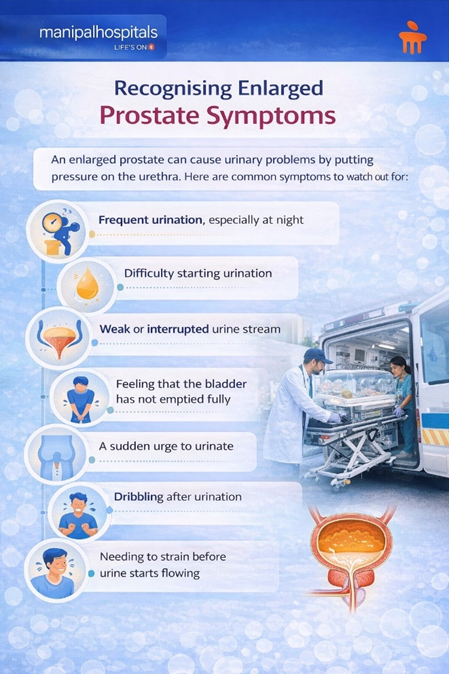
Common enlarged prostate symptoms include:
-
Frequent urination, especially at night
-
Difficulty starting urination
-
A weak or interrupted urine stream
-
Feeling that the bladder has not emptied fully
-
A sudden urge to urinate
-
Dribbling after urination
-
Needing to strain before urine starts flowing
Some men also notice that they need to pass urine more often during the day, or they may feel a sudden urgency that is hard to hold. These symptoms can be frustrating, especially when they interfere with sleep or work.
Understanding the Severity of Enlarged Prostate
Doctors assess prostate enlargement by checking your symptoms, the size of your prostate, and how well your bladder is working. This helps them decide the most suitable enlarged prostate treatment.
Severity is typically classified into three levels:
|
Severity Level |
Typical Symptoms |
Impact on Daily Life |
|
Mild |
Occasional urinary difficulty |
Minimal disruption |
|
Moderate |
Frequent urination and a weaker urine stream |
Noticeable discomfort |
|
Severe |
Difficulty emptying the bladder or urinary retention |
Significant lifestyle impact |
Understanding the level of severity helps doctors choose the right treatment for the enlarged prostate. A man with mild symptoms may only need observation and lifestyle changes, while someone with more severe blockage may need medication or a procedure.
Treatment Options for Enlarged Prostate
Enlarged prostate treatment depends on the severity of symptoms, the size of the prostate, and the person’s overall health. In some cases, symptoms can be managed conservatively. In others, more active treatment is needed to improve urine flow and reduce the risk of complications.
Lifestyle Changes
If symptoms are mild, a doctor may suggest changes that reduce strain on the bladder and ease discomfort, such as:
-
Reducing caffeine and alcohol intake
-
Limiting fluids before bedtime
-
Maintaining a healthy weight
-
Staying physically active
-
Practising bladder training techniques
These changes do not shrink the prostate, but they can reduce urinary frequency, improve sleep, and make daily life more manageable. For some men, these small adjustments make a noticeable difference, especially when symptoms are still early.
Medications
When symptoms get worse, doctors often prescribe medications as part of enlarged prostate treatment. Two groups of medicines are commonly used:
-
Alpha-blockers: These medicines relax the muscles around the prostate and bladder neck, which makes it easier for urine to flow.
-
5-alpha reductase inhibitors: These medicines help reduce prostate size over time by blocking hormones that contribute to prostate growth.
Sometimes, doctors prescribe both types of medicine together. This may help improve enlarged prostate symptoms more effectively, especially when the prostate is larger or when symptoms have been present for a while. Find top urologists in Old Airport Road for prostate care to discuss personalised treatment options.
Minimally Invasive Procedures
If medicines do not help enough, doctors may suggest a minimally invasive procedure. These are designed to reduce prostate tissue while avoiding major surgery when possible.
Examples include:
-
Laser prostate surgery
-
Prostatic urethral lift procedures
-
Radiofrequency-based therapies
Compared with traditional surgery, these procedures usually involve a shorter hospital stay and quicker recovery. They are often considered when the symptoms are more than mild, but full surgery is not yet necessary. The best option depends on the prostate size, the pattern of symptoms, and the patient’s medical condition.
Surgical Treatment
Surgery is usually considered when symptoms are severe, when there is urinary retention, or when other treatments have not worked well enough. One option is TURP, where extra prostate tissue is removed to ease urine flow. It is often used in moderate to severe cases.
In some patients, surgery offers the most reliable relief when the prostate is significantly blocking urine flow. Your doctor will decide the most suitable enlarged prostate treatment based on symptoms, examination findings, and test results.
When Should You See a Doctor?
Many men ignore urinary symptoms, assuming they are part of ageing. That can delay diagnosis and make the condition harder to manage later. It is important to see a doctor if you experience any of the following:
-
Frequent nighttime urination
-
Difficulty starting urination
-
Reduced urine flow
-
Pain during urination
-
Blood in urine
-
Sudden inability to urinate
These symptoms can mean the prostate is enlarging, but they may also point to another urinary condition that needs evaluation. Early assessment can prevent complications and make treatment simpler. If you are looking for prostate enlargement treatment in Old Airport Road, a urologist can assess the problem and suggest the most appropriate next step.
Conclusion
An enlarged prostate affects many men as they age. The symptoms often develop slowly, which is why they are easy to dismiss at first. But if ignored, they can gradually interfere with sleep, comfort, and day-to-day life. The good news is that several effective options are available for enlarged prostate treatment. At Manipal Hospitals, experienced urologists offer prostate enlargement treatment in Old Airport Road with a focus on accurate diagnosis and personalised care.
FAQ's
Yes. If an enlarged prostate is left untreated, the bladder has to work harder to push urine out. Over time, this can weaken bladder function and increase the risk of infections, incomplete emptying, or urinary retention. In some cases, the bladder may become less responsive, which makes symptoms harder to manage.
Not always. Drinking too little water can actually irritate the bladder and make urinary symptoms feel worse. A balanced fluid intake is usually better. It also helps to reduce caffeine and alcohol later in the day, since both can increase urinary urgency and frequency.
Yes. Being active can help with body weight, circulation, and general bladder health. Exercise does not reverse an enlarged prostate, but it may help reduce some of the discomfort linked to the condition. Regular movement can also support better long-term urinary function.
No. Many enlarged prostate symptoms improve with the right enlarged prostate treatment. Some men respond well to medication, while others may need a procedure. The outcome depends on how large the prostate is, how early treatment begins, and whether complications have developed.
Yes, stress can make the bladder more sensitive and increase the urge to urinate more often. If you already have an enlarged prostate, stress may make the symptoms feel more noticeable. It does not cause the condition itself, but it can make day-to-day urinary discomfort harder to cope with.
Share this article on: