7 Min Read
Have you ever wondered whether baby teeth really matter since they eventually fall out? Many parents assume baby teeth are temporary and less important than adult teeth. Early childhood caries, often shortened to ECC, is a pattern of decay that affects infants and young children and can cause pain, difficulty eating, and speech delays if untreated. Because ECC develops quickly and can affect several teeth at once, early recognition and simple preventive steps make a large difference. This article explains what ECC looks like, why it happens, how it is diagnosed and treated, and the everyday things you can do to protect your child’s smile. Clear, achievable actions by parents and caregivers prevent most cases and spare children avoidable discomfort.
Synopsis
- What Is Early Childhood Caries?
- Why ECC Matters
- Common Causes and Risk Factors
- Signs and Symptoms to Watch For
- How Dentists Diagnose ECC
- Treatment Options for ECC
- Prevention Strategies You Can Use Today
- Childhood Oral Care Timeline
- When to See a Dentist Urgently
- Long-Term Impact of Untreated ECC
- Conclusion
What Is Early Childhood Caries?
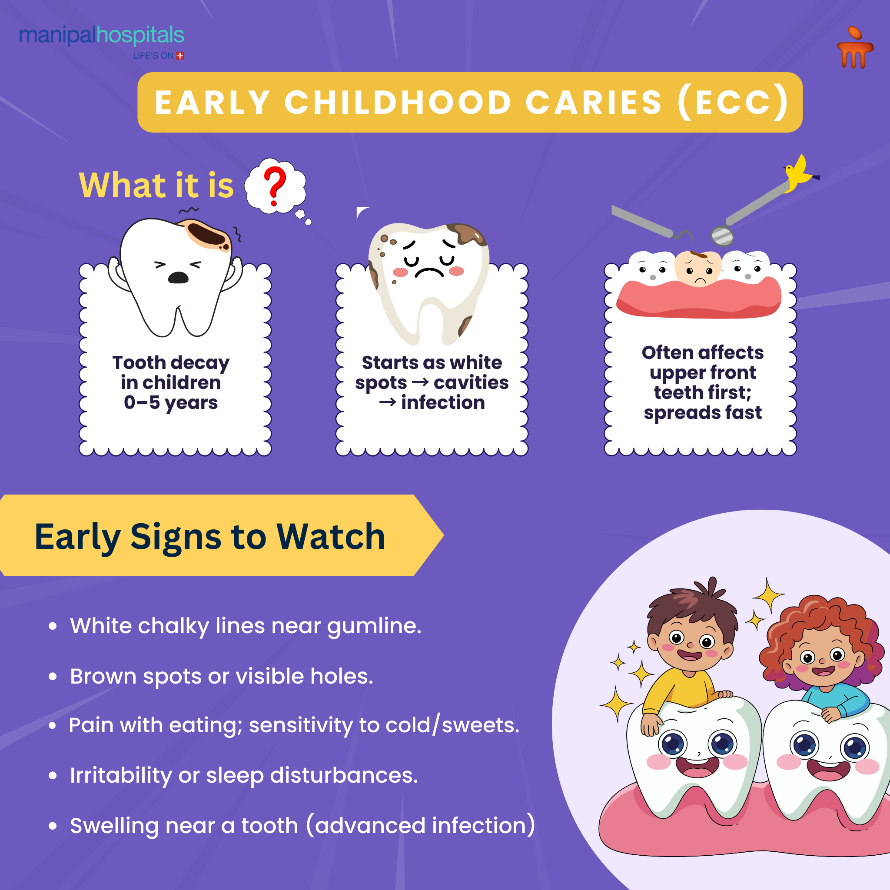
Early childhood caries refers to tooth decay in children from infancy through age five. It often begins on the upper front teeth and can rapidly involve molars and multiple surfaces. ECC is not a single cavity but a disease pattern driven by frequent exposure to sugars, poor oral hygiene, and bacteria that thrive when teeth are bathed in fermentable carbohydrates repeatedly. Left unchecked, ECC can progress from white spots to brown cavities and finally to infection that affects the tooth pulp.
Why ECC Matters
People sometimes think baby teeth are only placeholders, but healthy primary teeth are important for multiple reasons. They help your child chew and get proper nutrition, they guide the growth and position of permanent teeth, and they support speech development and self-confidence. Untreated baby teeth decay can cause pain, infection, and difficulty sleeping. Severe ECC may require general anaesthesia for dental treatment in young children, which carries additional risks and stress. Preventing ECC protects immediate comfort and long-term oral health.
Common Causes and Risk Factors
Understanding what causes ECC helps you target prevention. The disease results from the interaction of bacteria, sugars and vulnerable tooth surfaces, but certain behaviours and conditions raise the risk.
-
Frequent exposure to sugary liquids such as fruit juice, sweetened milk, formula given at night, or prolonged use of sippy cups with sweet drinks.
-
Putting a child to bed with a milk or juice bottle that remains in the mouth.
-
Sharing spoons or cleaning pacifiers by mouth, which can transfer cavity-causing bacteria from the caregiver to the child.
-
Inadequate oral hygiene for erupting teeth. Cleaning should begin with the first tooth.
-
Low fluoride exposure or lack of access to preventive dental care, such as fluoride varnish.
-
Socioeconomic factors and limited access to a paediatric dentist delay routine dental visits.
-
Frequent snacking on cariogenic foods and prolonged grazing throughout the day.
If your child has several of these risk factors, ask your dentist for a tailored prevention plan.
Signs and Symptoms to Watch For
Early signs of decay are subtle. Acting at the white spot or early lesion stage often prevents cavity formation and the need for fillings.
-
White chalky lines or spots near the gum line on upper front teeth.
-
Brown or dark spots that indicate enamel breakdown.
-
Visible holes or pits in the teeth.
-
Sensitivity or pain while eating, especially with cold or sweet foods.
-
Irritability, poor sleep, or feeding problems linked to dental pain.
-
Swelling or drainage around a tooth in a more advanced infection.
If you notice any of these signs, schedule a dental visit promptly rather than waiting.
How Dentists Diagnose ECC
Dental assessment for ECC is quick and focused on identifying early lesions and risk factors so a plan can start immediately.
-
Visual inspection of the teeth under good light to spot white lesions and cavities.
-
Gentle probing or drying of teeth to reveal early enamel changes.
-
Bitewing X-rays in selected cases to check between teeth, especially when molars are involved.
-
Review of feeding and snacking patterns, fluoride exposure, and family dental history.
-
Risk assessment to decide on the frequency of follow-up and preventive treatments such as fluoride varnish.
Your paediatric dentist will explain findings and propose a family-centred plan you can follow at home.
Treatment Options for ECC
Treatment depends on how advanced the decay is. The earlier you intervene, the less invasive the treatment.
-
Remineralisation for very early white spot lesions using topical fluoride and dietary change to reduce sugar exposure.
-
Restorative care, such as tooth coloured fillings for established cavities, is performed with behaviour guidance techniques suitable for young children
-
Stainless steel crowns for molars with extensive decay to restore form and function.
-
Pulp therapy or pulpotomy for teeth where the decay has reached the nerve but the tooth is still salvageable.
-
Extraction when a tooth is beyond repair, followed by space maintenance when necessary to guide future teeth.
-
Use of nitrous oxide, conscious sedation or general anaesthesia for anxious young children when necessary and after careful assessment.
Treatment always pairs with preventive measures to stop new lesions from forming.
Prevention Strategies You Can Use Today
Most ECC is preventable with straightforward household habits and regular dental care. Prevention focuses on reducing the frequency of sugar exposure, supporting early hygiene and using fluoride appropriately.
-
Start cleaning when the first tooth erupts. Use a soft infant toothbrush and a smear of fluoride toothpaste about the size of a grain of rice for children under three.
-
Avoid putting your child to bed with bottles containing milk, formula or juice. Water is acceptable if a bottle is necessary.
-
Limit sugary snacks and drinks. Offer water between meals and save sweet treats for occasional times.
-
Use a cup for drinks as soon as your child can handle it, usually by about 12 months.
-
Schedule the first dental visit by the child’s first birthday or within six months of the first tooth erupting.
-
Ask about professional fluoride varnish applications at dental visits and about the appropriate fluoride concentration in your local water supply or toothpaste.
-
Encourage breastfeeding but follow guidance about nighttime feeding and oral hygiene after feeds.
-
Avoid transferring saliva directly from adult to child to limit bacterial transmission.
Adopting these measures reduces the chance of ECC and supports broader healthy habits.
Childhood Oral Care Timeline
|
Age |
What to do |
Why it matters |
|
Birth to 6 months |
Clean gums with a soft cloth after feeds |
Removes bacteria and establishes a routine |
|
Around the first tooth |
Start brushing with rice sized smear of fluoride toothpaste |
Prevents early enamel demineralisation |
|
By 12 months |
First dental visit |
Early risk assessment and parental guidance |
|
12 to 24 months |
Transition to cup; avoid sugar in bottles |
Reduces prolonged sugar exposure |
|
2 to 3 years |
Increase the amount of toothpaste to pea size under dental advice |
Improved cleaning as the child develops coordination |
|
3 to 6 years |
Regular dental checks every 6 months or as advised |
Professional prevention, including fluoride varnish |
When to See a Dentist Urgently
Some signs suggest immediate dental attention rather than routine scheduling. Acting quickly prevents worsening infection and pain.
-
Severe tooth pain that disturbs sleep or feeding.
-
Swelling of the face or gum around a tooth, suggesting spreading infection.
-
Fever with dental pain indicates systemic involvement.
-
A tooth knocked out or displaced after trauma.
-
Sudden unexplained changes in behaviour that could relate to oral pain.
If you see these signs, visit the best dentists in Old Airport Road, Bangalore.
Long-Term Impact of Untreated ECC
Untreated decay in primary teeth can have lasting consequences beyond immediate pain. Addressing ECC early prevents these outcomes.
-
Poor nutrition from pain while eating affects growth
-
Speech delay and difficulty with certain sounds when the front teeth are affected
-
Early loss of primary teeth disrupts the space needed for permanent teeth, increasing orthodontic needs
-
Chronic infection that can affect general health and school attendance
-
Negative self-image and social discomfort for young children with visible decay
Treating ECC early protects both health and quality of life.
Conclusion
Preventing early childhood caries is within your control. Simple daily habits, early dental visits and timely professional care stop most decay before it starts. If you want expert guidance or a first dental check for your child, book a consultation at Manipal Hospital Old Airport Road. Our team will assess risk, provide gentle treatment when needed and design a practical plan you can follow at home.
FAQ's
Your child should see a dentist by the first birthday or within six months of the first tooth erupting for early risk assessment and guidance on preventive care.
Yes, appropriate small amounts of fluoride toothpaste and professional fluoride varnish are safe and effective. Your paediatric dentist will advise the right regimen.
Yes. Many cavities are treated with fillings or crowns that restore function and prevent pain. Early treatment avoids more invasive care later.
Avoid putting your child to bed with bottles containing milk, formula or juice. If a bottle is needed, fill it with water and clean teeth in the morning.
Choose a paediatric dentist who uses child-centred behaviour guidance. Short familiarisation visits, positive reinforcement, and parental calm help children adapt and cooperate.
Share this article on: