5 Min Read
-_A_Life-Changing_Advance_in_Treating_Movement_and_Neurological_Disorders.webp "Deep Brain Stimulation (DBS): A Life-Changing Advance in Treating Movement and Neurological Disorders")
Living with neurological disorders such as Parkinson’s disease, Essential Tremor (ET) and Dystonia can be physically and emotionally challenging. Most symptoms associated with these disorders can have a very disruptive effect on daily life. For example, symptoms such as uncontrolled movements, stiffness, tremors, or slowed mobility often restrict the ability to function independently. When traditional therapies (medications) are not working well enough or are resulting in significant side effects, Deep Brain Stimulation (DBS) can give patients new hope.
Synopsis
What is Deep Brain Stimulation (DBS)?
Deep Brain Stimulation (DBS) is a neurosurgical treatment that is minimally invasive and provides a source of controlled electrical stimulation to help regulate and control abnormal activity in the brain. The procedure involves the insertion of flexible leads into specific areas of the brain that control the physical movements of the body.
The leads are attached to a small electronic device called a neurostimulator that is implanted underneath the patient's skin in the chest area (similar to a pacemaker). The neurostimulator sends electrical stimulation through the leads to help reduce abnormal signals generated by the brain, significantly decreasing symptoms of tremors, stiffness, and involuntary movements.
Who Can Benefit from DBS?
Patients who are typically considered good candidates for deep brain stimulation (DBS) include people:
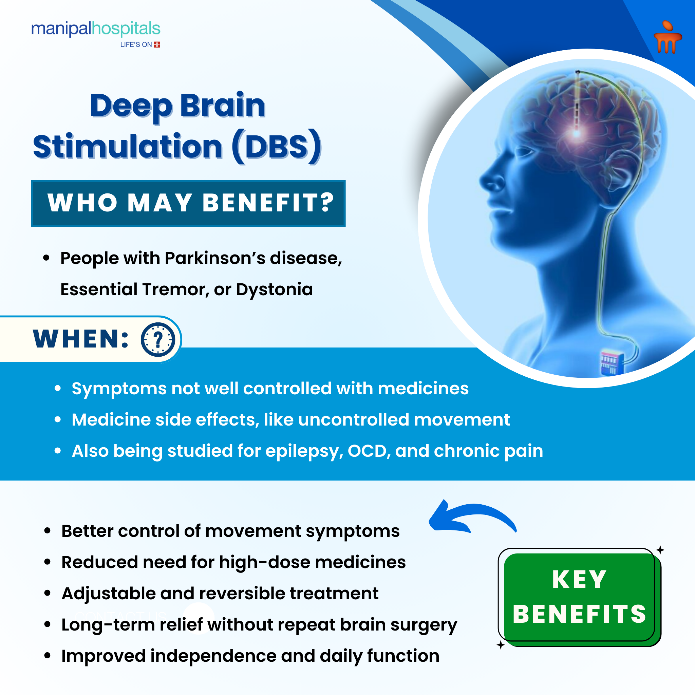
- With Parkinson’s disease, tremor or dystonia.
-
Whose symptoms cannot be adequately managed by medication.
-
Who experience abnormal movements due to their medications (dyskinesias).
-
Who meet the standard medical criteria for surgery and have an understanding of the potential outcomes. DBS is being evaluated as a treatment option of choice in several different patient populations, including, but not limited to, epilepsy, obsessive-compulsive disorder (OCD), and chronic pain.
How Does DBS Work?
DBS works by using electrodes placed within the brain to stimulate, create, or block neural circuits. The electrical stimulation of the deep nuclei in the brain corrects the abnormal signals in these regions, helping patients improve their symptoms.
Benefits of DBS
-
Improved quality of life compared to patients who do not receive DBS therapy. Patients typically report greater satisfaction in various areas of life due to their ability to function with reduced amounts of medication. Improvements in these areas usually lead to greater fulfillment in their lives.
-
DBS decreases dependence on medications for symptom control and makes the symptoms more manageable for most DBS patients.
-
DBS is more reliably controlled by adjusting the stimulation
-
DBS provides long-term support without requiring repeat surgery after the procedure.
Life After DBS
Most patients notice gradual improvement in symptoms after DBS programming and adjustments. Regular follow-up visits are essential to optimize stimulation settings and medications. With proper care, many patients return to daily activities with renewed confidence and improved mobility.
DBS does not cure neurological disorders, but it can dramatically improve symptom control and overall quality of life, allowing patients to regain independence and dignity.
FAQ's
DBS is a standard neurosurgical procedure with excellent proven safety when performed at experienced facilities. As with all surgical interventions, there are risks associated with DBS. However, serious complications that arise from DBS are rare.
Depending on the intended use of DBS and the surgical technique utilized for your specific condition, sections of the surgery could occur while the patient is awake and under local anesthesia or with the use of general anesthesia. Your physician will work with you to determine the safest option for your care.
While DBS significantly relieves the impact of the symptoms and improves the quality of life of people with Parkinson’s disease, it does not cure it or prevent its progression.
The neurostimulator battery will generally last between 3 and 10 years, depending on how actively you use it. The batteries also come with a recharging option.
After receiving DBS treatment, some patients may find that they can reduce their current prescription medications or even discontinue taking them entirely. However, most patients will require continued use of medications for their long-term care.
Share this article on: