5 Min Read
When your child develops a fever, it is natural to feel anxious. You want to act fast. You want your child to get better quickly. And a common thought comes to mind: “Should I give an antibiotic?” But before doing that, let us pause and think together. Fever is not always a disease in itself; it is often a sign that the body is fighting an infection. In many cases, especially in children, fever is caused by common viral illnesses that improve with time, rest, and supportive care. Starting the wrong medication in a hurry may not help your child recover faster and can sometimes do more harm than good. Understanding when to treat a fever, how to keep your child comfortable, and when to seek medical advice can make all the difference in ensuring safe and effective care.
Synopsis
Is an antibiotic always needed?
The first medicine for fever is anti-fever medicine, not antibiotics. Antibiotics are meant only for bacterial infections, not for every fever. Most fevers are caused by viruses, and antibiotics do not kill them. Giving antibiotics during viral illness usually does not improve the child’s condition.
Can I reuse an old antibiotic prescription?
Many parents think, "The doctor prescribed this antibiotic last time. Can I give the same medicine now?” But here is an important truth: An antibiotic prescribed for a previous fever may not be needed for the current fever. Every illness is different. What worked before may be unnecessary or even harmful now. So, the question is, "Is it safe to repeat an old prescription without consulting a doctor?” No, it is not.
What about antibiotics given to other children?
Sometimes we hear, "My neighbor’s child had a fever, took this antibiotic, and recovered,” or “My colleague’s kid improved with this medicine.” But remember: Just because another child recovered with a particular antibiotic does not mean your child needs the same medicine. Every child’s infection is different. Giving the same antibiotic blindly can be dangerous.
Knowing antibiotic names doesn’t mean they are safe to use. Many parents are familiar with the names of antibiotics, but knowing the name of a medicine does not mean it should be used. Do not experiment with antibiotics on your child’s body because this “trial” can have serious consequences.
The hidden danger: drug-resistant infections
When antibiotics are used unnecessarily, beneficial bacteria in the gut are destroyed. Harmful, resistant bacteria grow, which can make children very sick, and they may even need hospital admission. These harmful bacteria may not respond to common antibiotics in the future. In some cases, infections become so resistant that no antibiotic works effectively.
What should parents do instead?
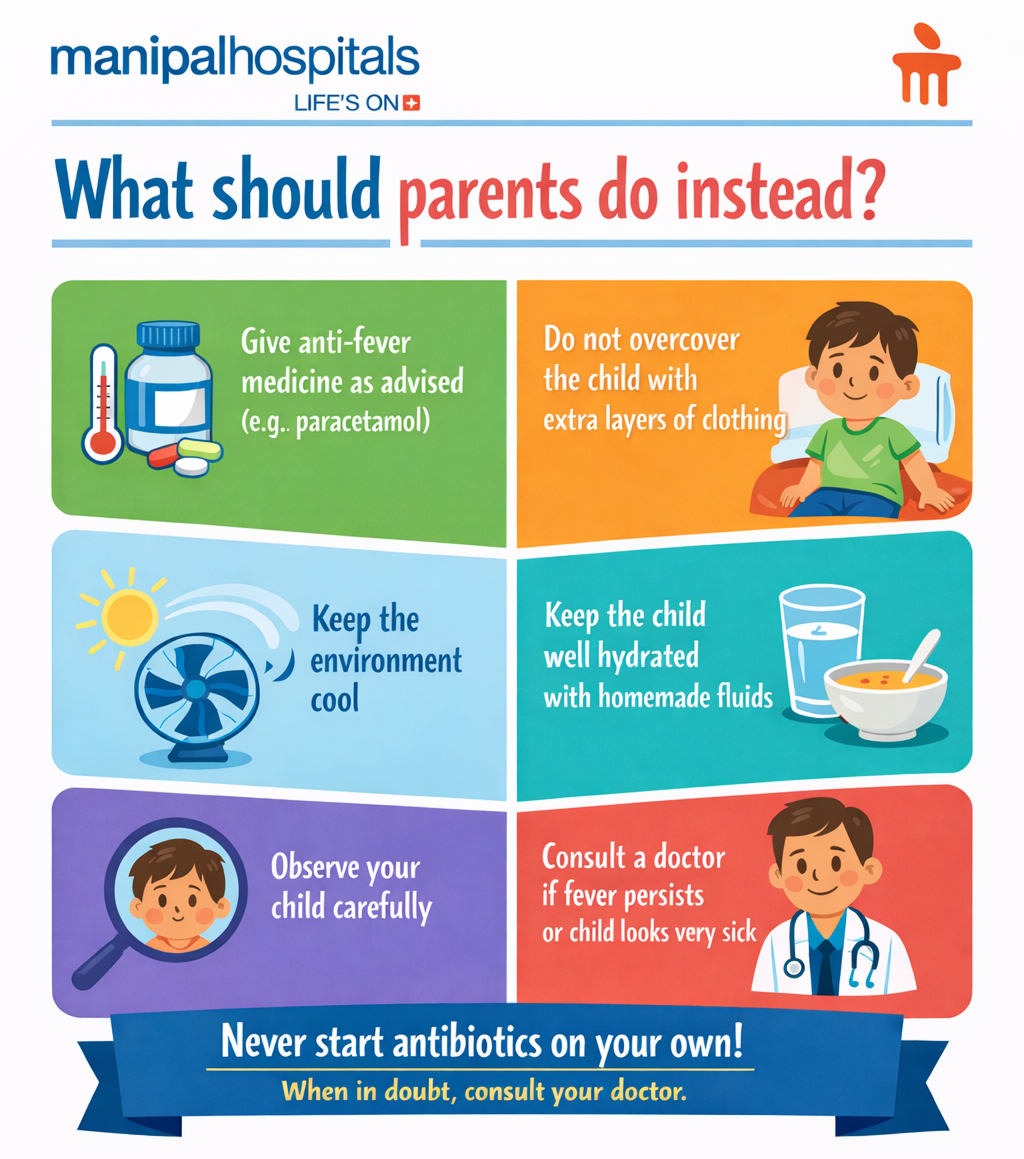
When your child has a fever:
-
Give anti-fever medicine as advised (e.g., paracetamol).
-
Do not overcover the child with multiple layers of clothing.
-
Keep the environment cool.
-
Keep the child well hydrated with homemade fluids.
-
Observe your child carefully.
Consult a doctor if the fever persists or if your child appears very sick. Never start antibiotics on your own. Your intention is always to protect your child. But sometimes, the safest choice is not stronger medicine; it is the right decision.
As a parent, it is important to keep the following precautions in mind:
-
Not every fever needs antibiotics.
-
Old prescriptions should not be reused.
-
Other children’s medicines should not be copied
-
Self-medication with antibiotics can be dangerous.
Remember, your child deserves care that is not just quick but also safe, wise, and future-proof.
FAQ's
You should consult a doctor if the fever lasts more than 2–3 days, is very high (above 102°F/39°C), or if your child appears unusually drowsy, irritable, or dehydrated or has difficulty breathing, vomiting, or seizures.
Paracetamol can usually be given for fever in the correct dose based on your child’s weight. However, always follow your doctor’s advice regarding dosage and frequency, especially for infants and young children.
Keep your child hydrated with plenty of fluids, dress them in light clothing, keep the room cool, and allow them to rest. Avoid overcovering with blankets, as such actions can increase body temperature.
Avoid using very cold water or ice baths. If needed, lukewarm sponging can help provide comfort, but medication like paracetamol and adequate hydration are more effective for reducing fever.
Antibiotics are needed only when a doctor confirms a bacterial infection, such as certain throat, ear, or urinary infections. Most childhood fevers are viral and recover without antibiotics, so never start them without medical advice.
Share this article on: