7 Min Read
Could your body be giving you quiet warning signs of a heart attack without you realising it? A heart attack does not always arrive with dramatic chest-clutching pain. Sometimes it whispers first: unusual fatigue, vague indigestion, or a dull ache that slips under the radar. That quieter version is often called a silent heart attack, and while it may feel less alarming in the moment, the consequences can be just as serious. This article explains what to watch for, how symptoms can differ between sexes, what might appear weeks before an event, and practical steps to get assessed and treated.
Synopsis
- What Is a Silent Heart Attack?
- Who are at risk of having silent heart attacks?
- What Does a Heart Attack Feel Like?
- Six Signs You Might See Before A Heart Attack
- Mini Heart Attack and Mild Heart Attack: What They Mean
- Can You Have a Heart Attack and Not Know It?
- How Long Does a Heart Attack Last?
- How to Diagnose Heart Failure Versus Heart Attack
- Warning Signs Specific to Women
- What to Do If You Suspect a Silent or Mild Heart Attack
- Prevention: Lowering Your Risk
- Conclusion
What Is a Silent Heart Attack?
A silent heart attack occurs when blood flow to part of the heart is reduced or blocked, causing heart muscle damage, but the symptoms are mild, atypical, or missed entirely. Because symptoms are subtle, people may not seek help, and the event is discovered later on an electrocardiogram (ECG) or imaging. Silent events are not harmless; they cause scar tissue in the heart and increase the risk of future problems.
Who are at risk of having silent heart attacks?
Women, people with diabetes, and older adults are more likely to experience non-classical or silent presentations. About 25% of all the reported silent heart attacks are in the elderly population. In women, symptoms may be less obvious, such as fatigue, nausea, and jaw or back discomfort, and are sometimes mistaken for stress, indigestion, or normal ageing. Diabetes can blunt pain perception, so people with diabetes often under-recognise heart attack symptoms because these groups may present atypically; vigilance and prompt assessment matter.
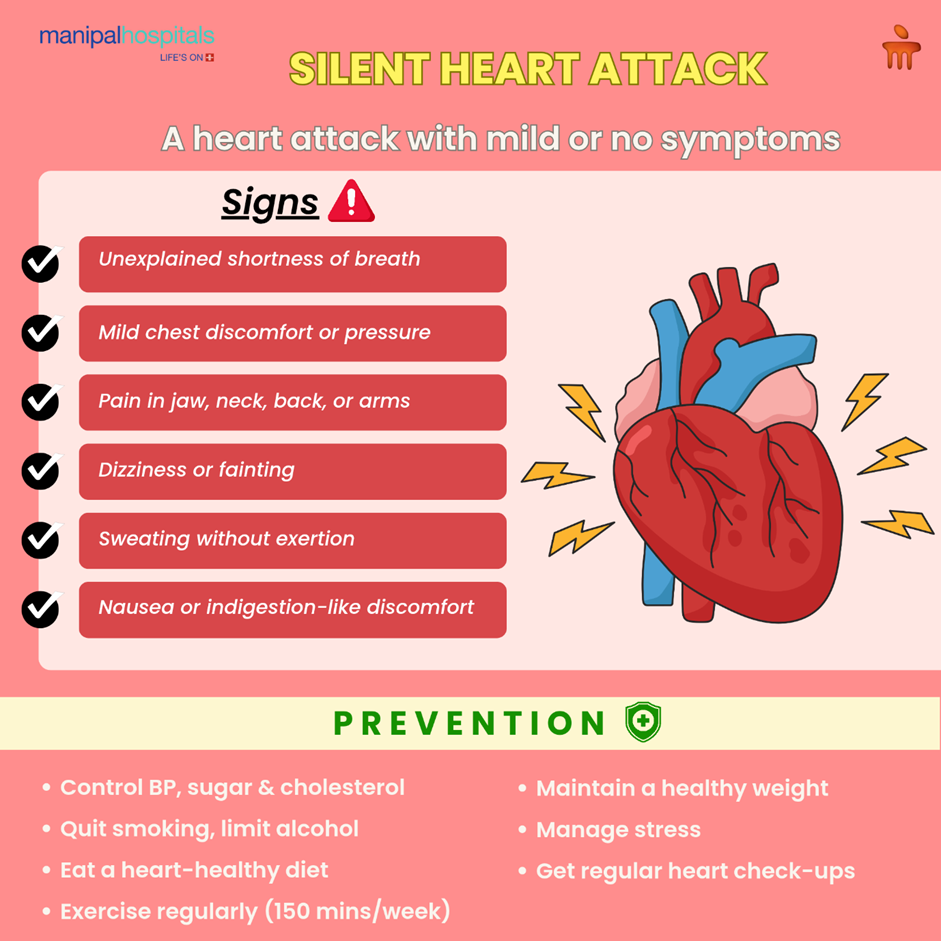
What Does a Heart Attack Feel Like?
Typical heart attack pain is chest pressure, squeezing, or severe discomfort that may spread to the arm, shoulder, jaw, or back. But many heart attacks, especially silent ones, present differently. People report:
-
Unexplained, extreme fatigue.
-
Indigestion, nausea, or a burning sensation.
-
Shortness of breath without chest pain.
-
Mild chest discomfort that lasts for long.
-
Light-headedness, cold sweats, or dizziness.
These milder sensations can be the only clues, which is why the question, “What does a heart attack feel like?” has many different answers depending on the age, gender, activity, and status of the person.
Six Signs You Might See Before A Heart Attack
Some people have prodromal symptoms, subtle warnings, in the days to weeks before a heart attack. Common early signals include:
-
Increasing, persistent fatigue.
-
New or worsening shortness of breath.
-
Intermittent chest discomfort or pressure, commonly Mistaken for “Gastric”
-
Unexplained indigestion, bloating, or nausea.
-
Recurrent light-headedness or dizziness.
-
Reduced exercise tolerance or unexplained malaise.
These 6 signs of a heart attack are not specific, but if several occur together or represent a clear change from normal, seek medical review. Early evaluation can identify worsening coronary disease before a major event.
Mini Heart Attack and Mild Heart Attack: What They Mean
Terms such as "mini heart attack symptoms" or "mild heart attack" are commonly used to describe smaller or less damaging myocardial infarctions. Medically, these terms are inappropriate, as even a “small” heart attack can lead to mortality; any heart muscle damage from interrupted blood flow is significant. A smaller infarct may cause milder symptoms, but it still requires urgent assessment and treatment because scarred tissue can weaken heart function over time.
Can You Have a Heart Attack and Not Know It?
Yes, and that is the point of the question: can you have a heart attack and not know it?
Silent heart attacks can occur with no obvious symptoms or with signs that are mistaken for benign problems. This is particularly true for people with diabetes or those who have limited or atypical symptoms. Any unexplained, persistent shortness of breath or laboured breathing, warrants a medical check, especially in people with cardiovascular risk factors.
How Long Does a Heart Attack Last?
Heart attack episodes vary. Some people experience intense symptoms for several minutes; others have ongoing, smouldering symptoms that last hours. Without treatment, symptoms can continue or worsen. Importantly, once blood flow is restored quickly, heart muscle damage can be limited, which is why rapid medical attention changes outcomes. The answer to how long a heart attack lasts depends on its severity and how quickly treatment begins.
How to Diagnose Heart Failure Versus Heart Attack
The phrase "how to diagnose heart failure" relates to a different but related problem. Heart attack diagnosis typically includes ECG, blood tests for cardiac enzymes (troponins), and imaging such as echocardiography or cardiac MRI.
Heart failure diagnosis depends on symptoms, physical exams, natriuretic peptide blood tests, and imaging to assess pumping function.
Both conditions overlap: a heart attack can precipitate heart failure, and both require specialist cardiology assessment. If tests suggest prior silent infarction, cardiologists will plan further investigation and treatment.
Warning Signs Specific to Women
Heart attack symptoms in women and heart attack signs for females often include:
-
Unusual fatigue that interferes with daily life.
-
Nausea or indigestion that is new and persistent.
-
Shortness of breath with minimal exertion.
-
Pain or discomfort in the jaw, neck, back, shoulder, or upper abdomen.
-
Anxiety, light-headedness, or fainting spells.
Because these symptoms are frequently attributed to less urgent causes, women should insist on an evaluation if they are new, persistent, or unexplained. Early detection saves lives.
What to Do If You Suspect a Silent or Mild Heart Attack
If you or someone else has any concerning symptoms, especially breathlessness, new chest discomfort, fainting, sweating, or bleeding chest pain, call emergency services immediately. Even if symptoms are mild or atypical, get prompt evaluation. In the hospital, clinicians will perform an ECG and blood tests; if a heart attack is confirmed, treatments aim to restore blood flow (medication, angioplasty) and limit damage. Time matters; earlier care reduces long-term heart damage.
Prevention: Lowering Your Risk
Reduce risk through known measures:
-
Stop smoking and avoid second-hand smoke.
-
Control blood pressure, cholesterol, and diabetes with medications and lifestyle.
-
Maintain a healthy diet, regular activity, and a healthy weight.
-
Manage stress and get regular medical checks, especially if you have risk factors.
-
Discuss screening and prevention with a cardiologist if you have a strong family history or multiple risk factors.
Prevention also means recognising early, subtle symptoms and seeking timely care.
|
Symptom or sign |
What it might indicate |
Action |
|
Prolonged unexplained fatigue |
Possible silent ischaemia or prodromal sign |
Seek GP or urgent review if new and progressive |
|
New indigestion or nausea |
Atypical heart attack symptoms |
Get a medical assessment, especially with risk factors |
|
Shortness of breath with minimal exertion |
Cardiac ischaemia or heart failure |
Urgent evaluation and ECG |
|
Chest discomfort that comes and goes |
Possible angina or evolving infarct |
Call emergency services if persistent/worsening |
|
Jaw, back, or shoulder discomfort |
Atypical referral pain from the heart |
Early medical review recommended |
The concept of the “Golden Hour”:
If a patient with a heart attack arrives at the hospital within the first 60 minutes of symptom onset, the best treatment can be provided in the form of primary angioplasty, with excellent outcomes.
Conclusion
A quiet, persistent change in energy, digestion, or breathing is not something to shrug off. While most coughs, indigestion spells, and tired days are harmless, the possibility that they represent a silent heart attack or evolving cardiac problem should prompt timely medical assessment, especially in people with risk factors. If you or someone you care for has persistent, unusual fatigue, new shortness of breath, recurrent indigestion, or unexplained discomfort in the jaw, back, or shoulders, contact a clinician without delay.
For expert cardiology care or urgent assessment near Mysore, consider consulting your health care provider. If immediate emergency care is required, present to the Best Cardiology Hospital in Mysore for rapid imaging and specialist review.
Early evaluation preserves heart function and widens treatment options. Book an appointment or seek emergency help now if you have concerning symptoms.
FAQ's
Common silent heart attack symptoms include unexplained fatigue, mild chest discomfort, indigestion, shortness of breath, and light-headedness. These symptoms can be subtle and dismissed; if they are new or progressive, seek medical review.
Women are more likely than men to present with atypical or less dramatic symptoms such as nausea, back pain, or extreme fatigue. This is why heart attack symptoms in women may be missed unless evaluated carefully.
Yes. Even a mild heart attack or mini heart attack symptoms indicate heart muscle damage and raise the risk of future events and heart failure. All suspected heart attacks require urgent assessment.
If you have new, unexplained fatigue, indigestion, breathlessness, or jaw/back discomfort, contact your doctor promptly or go to the emergency department. Early ECG and blood tests can detect an unrecognised event.
Diagnosis uses ECG, blood tests for troponin, and imaging such as echocardiography or cardiac MRI. Sometimes the event is first noted later when tests show evidence of past infarction.
Share this article on:


.webp "Discomfort While Eating: Causes, Symptoms & Dysphagia Treatment")