Most people take standing tall for granted until something feels off. The spine is a silent support system that balances the body. Sometimes a subtle shift is missed. A shoulder that sits higher or a rounded back, dismissed as bad posture, can be the first sign of a structural change.
Ignoring these changes may allow the condition to progress over time. Letting spinal health slide doesn't just change how someone looks; in more severe cases, spinal deformities can affect mobility, balance, and breathing capacity. When the bones in the back tilt or twist, the body has to work twice as hard just to stay upright.
This guide explains the differences between kyphosis vs scoliosis. It also discusses how to spot early warning signs in the back. Finally, the text covers modern options for kyphosis treatment. You will also find current methods for scoliosis treatment to help protect long-term mobility.
What is scoliosis?
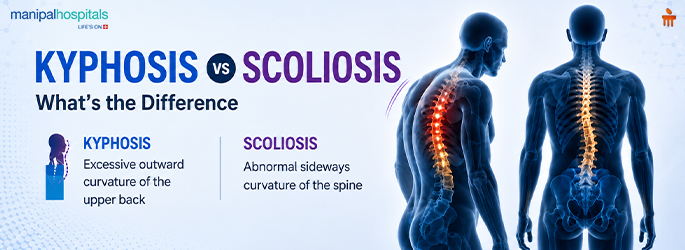
Scoliosis is when the spine curves to the side instead of going straight down your back. If you look at it from behind, the spine looks like an "S" or a "C" shape. This twist usually makes your shoulders or waist look uneven. While it commonly surfaces during the growth spurts just before puberty, adults can also develop it as spinal joints wear down over time.
It is more than just a side-to-side bend; the vertebrae often rotate or twist as they curve. This twisting pulls the ribs around, making one side of the back stick out when bending forward. Because the spine moves out of place in multiple ways, it can also tilt the hips, making one leg appear shorter than the other.
What is kyphosis?
Kyphosis is when the top of the back curves forward too much, making you look hunched over. A little curve is normal, but anything more than 50 degrees is kyphosis. It pulls your shoulders forward and usually happens from slouching, growth problems when you are a teenager, or weak bones when you get older.
There are two main types. The first type is caused by bad posture, and it is very common. Postural kyphosis often improves with posture correction exercises and physical therapy. The second type is different because the bones in the spine have actually changed shape. Because the bones are stuck that way, you cannot fix it just by trying to stand straight. Whether caused by a single fracture or a smooth curve across several bones, identifying the type is key to treatment.
Kyphosis vs Scoliosis
Although both kyphosis and scoliosis affect the shape and alignment of the spine, they are different conditions with distinct patterns of curvature, causes, and symptoms. The table below highlights the key differences between kyphosis and scoliosis:
|
Feature |
Scoliosis |
Kyphosis |
|
Direction of Curve |
Side-to-side shift (Lateral) |
Forward rounding (Sagittal) |
|
Visual Signs |
Uneven shoulders, waist, or hips |
Rounded upper back or "hump" |
|
Physical Red Flag |
One shoulder blade pokes out |
A hump when leaning forward |
|
Spine Section |
Middle (thoracic) or lower (lumbar) |
Upper back (thoracic) |
|
Typical Causes |
Growth spurts, genetics, or nerves |
Posture, fractures, or growth issues |
|
Main Risks |
Balance issues or reduced lung capacity in severe cases |
Stiffness or less breathing space |
Common Symptoms
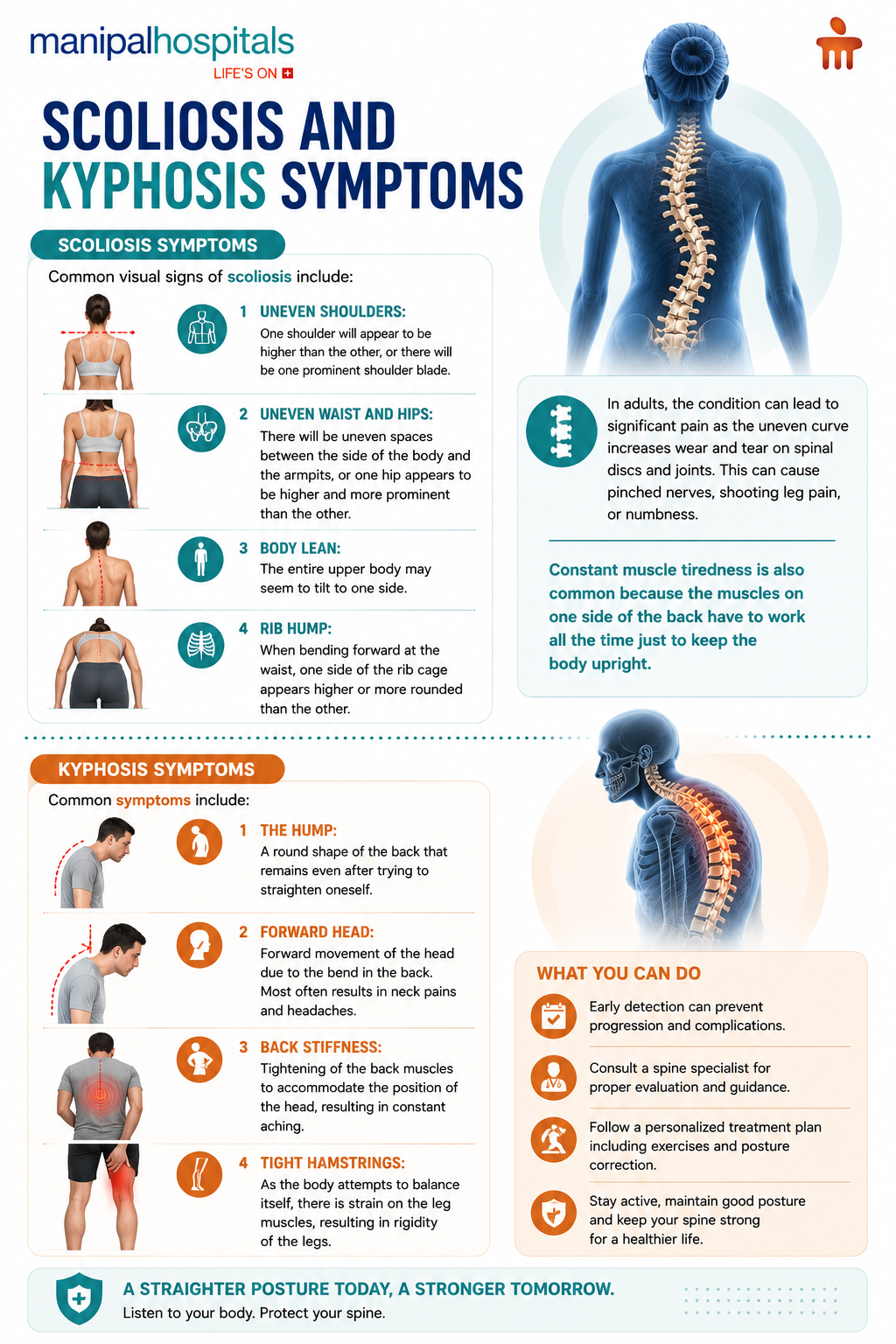
Scoliosis usually develops slowly and often causes little or no pain in children, so parents often only notice it when they see changes in how the child stands. As the body automatically adjusts to the change, the child may be perfectly balanced despite having a large curvature.
On the other hand, kyphosis changes the silhouette of the neck and back, making it most visible from a side view. While it can look like poor posture, it is often a structural issue that eventually makes daily activities uncomfortable.
Common visual signs of scoliosis include:
-
Uneven shoulders: One shoulder will appear to be higher than the other, or there will be one prominent shoulder blade.
-
Uneven waist and hips: There will be uneven spaces between the sides of the body and the armpits, or one hip appears higher and more prominent than the other.
-
Body Lean: The entire upper body may seem to tilt to one side.
-
Rib Hump: When bending forward at the waist, one side of the rib cage appears higher or more rounded than the other.
In adults, the condition can lead to significant pain as the uneven curve increases wear and tear on spinal discs and joints. This can cause pinched nerves, shooting leg pain, or numbness. Constant muscle tiredness is common because the muscles on one side of the back must work continuously to keep the body upright.
Common symptoms of kyphosis include:
-
The Hump: A round shape of the back that remains even after trying to straighten oneself.
-
Forward Head: Forward movement of the head due to the bend in the back. It most often results in neck pains and headaches.
-
Back Stiffness: Tightening of the back muscles to accommodate the position of the head, resulting in constant aching.
-
Tight Hamstrings: As the body attempts to balance itself, it strains the leg muscles, resulting in rigidity of the legs.
Older individuals with a rounded back have difficulty looking straight ahead, which can cause accidents and falls. Since the body leans forward so much, it squishes the stomach area. In severe cases, compression of the abdomen may contribute to digestive discomfort or early fullness while eating.
Scoliosis Treatment
The primary aim of scoliosis treatment is to prevent the curve from progressing to a point where it interferes with heart or lung function. Plans are customised based on the patient's age and remaining bone growth.
-
Monitoring: For minor curves under 20 degrees, doctors use X-rays every six months to observe any changes. If the spine remains stable, these check-ups eventually become less frequent.
-
Bracing: For growing children with moderate curves, a custom-fitted brace acts as a guide. It holds the spine in place during growth spurts to stop the curve from worsening.
-
Physical Therapy: Specialised exercises, like the Schroth method, help strengthen the muscles on the weaker side of the curve, improving posture and easing pain for all ages.
-
Surgery: If a curve exceeds 50 degrees, a surgeon may use metal rods to straighten the spine and fuse the vertebrae together, helping stabilise the spine and prevent further progression.
Kyphosis Treatment
The approach to kyphosis treatment depends on whether the curve is flexible or structural.
-
Posture Training: Physical therapy for postural kyphosis involves strengthening the muscles of the back and stretching the chest to move the shoulders back into place.
-
Teen Bracing: For disorders such as Scheuermann’s disease, a brace is used to regulate the growth of the vertebrae into a natural rectangular form instead of a wedge during growth spurts.
-
Bone Strengthening: In the case of a collapsed vertebra, which sometimes happens in elderly persons with osteoporosis, kyphoplasty involves injecting medical cement into the collapsed vertebra to restore the height of the vertebra and alleviate discomfort.
-
Surgery: If the curve is greater than 70 degrees or causes nerve and breathing problems, surgery is performed to straighten the spine and relieve pressure on the spinal cord.
When to Seek Medical Help
It is hard to tell if someone is just slouching or if it is a real medical issue. Catching it early often means avoiding surgery later. See a specialist if you notice:
-
Discomfort That Lingers in Your Back: Persistent discomfort that doesn’t go away even after you rest or stretch.
-
Visible Changes in Your Physical Appearance: If you observe a hump growing, unequal shoulders, or if your waist is out of balance.
-
Stiffness in the Back: Excessive tightness in your back renders you incapable of moving or feeling locked.
-
Loss of Sensation or Weakness in Arms or Legs: Tingling, numbness, or weakness in the arms or legs usually means the curvature is pressing on a nerve.
-
Trouble Breathing: If the curvature is quite severe and the chest cavity doesn't have enough room for breathing, you have difficulty taking a deep breath.
Conclusion
Understanding the difference between kyphosis vs scoliosis is the first step toward getting the right care. Whether it is a side-to-side shift needing scoliosis treatment or a forward rounding requiring kyphosis treatment, catching it early makes a significant difference. Most people find they can manage these conditions through physical therapy and bracing without ever needing surgery under the guidance of the best spine specialists in India.
If you notice any change in your posture or an unevenness in your shoulders, a quick clinical check at a top spine care hospital in India is the best way to keep your spine healthy. A straight spine is not just about looks; it is about protecting your mobility and quality of life for years to come. Catching small spinal changes early at a top spine care hospital in India stops them from turning into massive health problems later.