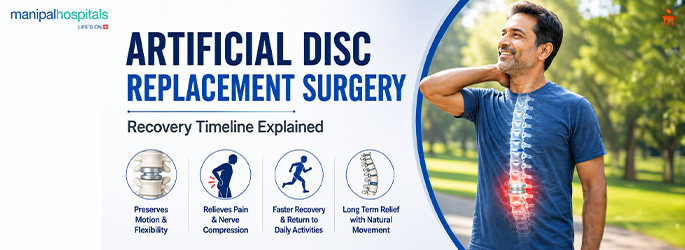
Most people only start thinking about spine surgery when they have tried everything else, and nothing has worked. Things like pain medication, fixing your posture, physiotherapy sessions, regular exercise, and injections can help for a bit, but they do not work for everyone. When constant neck or lower back pain starts messing with your sleep, work, travel, or just moving around, doctors will usually bring up surgical options. One procedure that has become much more common over the last few years is artificial disc replacement surgery.
Patients often choose this option because it keeps the spine moving, unlike fusion operations that lock the bones together. While that sounds great, actually dealing with the recovery is still the biggest worry for most people. The questions usually start long before the operation is even booked: How bad is the pain going to be? How soon can I walk comfortably? When can I get back to work? Is rehab going to be difficult?
This blog explains what patients commonly experience after artificial disc replacement surgery, including recovery timelines, rehabilitation, activity restrictions, and factors that influence healing.
Why Do Patients Choose This Procedure?
The main thing people worry about with spine surgery is the stiffness that comes after a fusion. A big reason patients prefer artificial disc replacement surgery instead is that it lets the treated part of your neck or back move naturally.
Other reasons people end up needing this surgery include:
-
The pain does not go away, even after trying physiotherapy and medication.
-
A pinched nerve is causing numbness or weakness.
-
The spine issues are making it impossible to work.
-
You are losing the ability to bend or turn properly.
-
You specifically want a treatment that does not lock your joints.
Younger and highly active people tend to look into this option because keeping their mobility is really important to them.
How Artificial Disc Replacement Surgery is Done
The exact steps depend on whether the doctor is fixing your neck or your lower back. For most neck operations, they actually reach the spine from the front of your neck rather than the back.
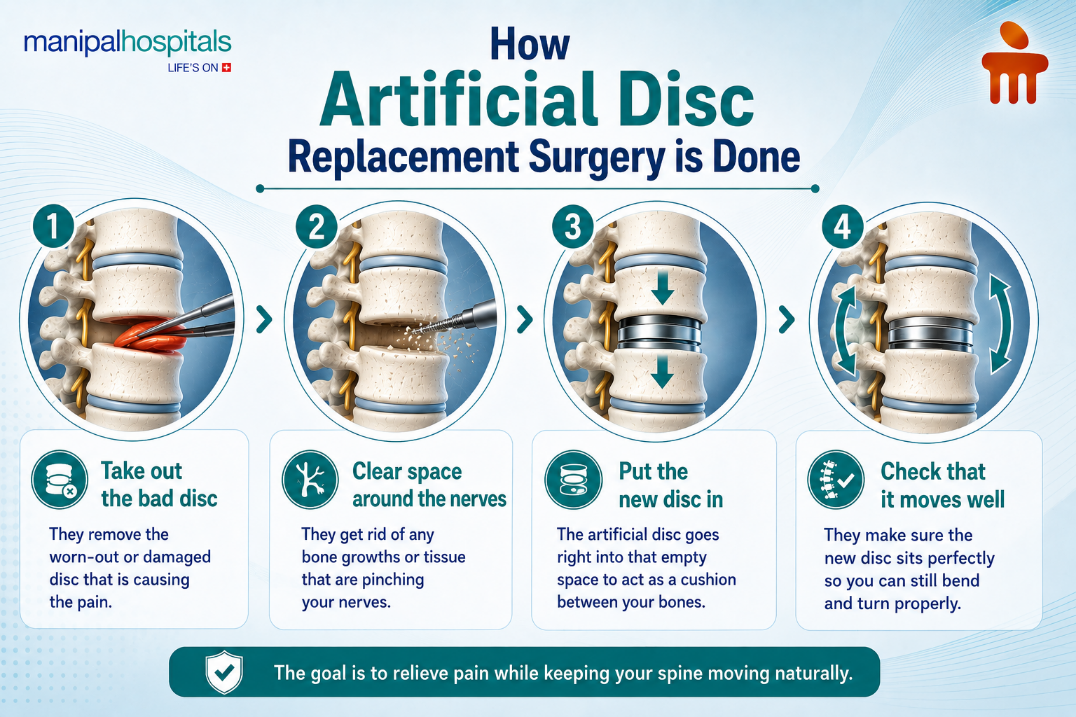
During the operation, the surgeon will:
-
Take out the bad disc: They remove the worn-out or damaged disc that is causing the pain.
-
Clear space around the nerves: They get rid of any bone growths or tissue that are pinching your nerves.
-
Put the new disc in: The artificial disc goes right into that space to act as a cushion between your bones.
-
Check that it moves well: They make sure the new disc sits perfectly so you can still bend and turn properly.
The whole thing usually takes a few hours. Surprisingly, most people are up and walking around the room almost as soon as they wake up.
First Twenty-Four Hours After Surgery
The post-surgical day one centres mostly on pain management, walking, and recovery assessment.
Some sensations patients experience are:
-
Slight tenderness at the site of the incision
-
Swallowing difficulties that subside within a short period
-
Fatigue from anesthesia
-
Stiff neck
-
Tight muscles
It is recommended that patients walk soon after surgery because it will facilitate good blood flow.
Some individuals notice immediate relief from arm pain or tingling. Others improve more gradually as irritated nerves settle. Early artificial disc replacement surgery recovery often involves balancing movement with adequate rest.
The First Week of Recovery
Many patients find the first week more manageable than expected, although fatigue and stiffness remain common. Patients are normally advised by their doctors to:
-
Walk short distances
-
Do not lift heavy objects
-
Rest after any activity
-
Maintain the incision area clean
-
Do not perform sudden head movements
It is during this phase that most people who have had an artificial cervical disc replacement are gradually getting back their confidence while walking and moving about.
Prolonged sitting might be difficult.
Recovery Timeline Explained
Healing after spinal surgery occurs gradually rather than all at once. Some improvements appear quickly, while others continue developing over months.
|
Recovery Stage |
What Patients Commonly Notice |
|
First Week |
Walking begins, soreness and fatigue continue |
|
Two to Four Weeks |
Improved mobility and easier daily movement; can work from home |
|
Six Weeks |
Reduced stiffness and increased activity tolerance |
|
Two to Three Months |
Return to heavy work and exercise depending on occupation |
|
Six Months |
Continued improvement in strength and flexibility |
Artificial disc replacement surgery recovery varies widely between individuals, so timelines should always be viewed as general guidance rather than strict deadlines.
Weeks Two to Four
By the second or third week, many patients feel more comfortable moving around independently.
This stage often includes:
-
Reduced pain medication use
-
Better walking tolerance
-
Improved sleep quality
-
Easier neck movement
-
Gradual return to light tasks and office work
Patients may still tire more easily than usual, especially after prolonged activity.
Those recovering from artificial cervical disc replacement surgery sometimes notice lingering stiffness in the morning, which gradually improves throughout the day.
Physiotherapy may begin during this stage, depending on the surgeon’s recommendations.
Why You Need Physiotherapy
Physiotherapy is a massive part of getting better after your surgery. It's not just about moving your neck or back again; it's about building the muscles that protect your spine long-term.
Your therapist will usually have you focus on a few things:
-
Gentle stretching to stop your muscles from freezing up and getting too stiff.
-
Fixing your posture so you learn how to sit and stand without putting pressure on the new disc.
-
Shoulder and neck strengthening to build up a solid support system around the joints.
-
Balance and walking routines to help you move safely and confidently on your feet again.
Your physio will also show you exactly how to move during the day so you do not accidentally strain your healing spine. The more effort you put into your rehab, the faster you will get your confidence and movement back.
Factors That Influence Recovery
Several factors affect healing speed after surgery:
-
Age: Younger individuals often recover faster because muscles and tissues heal more efficiently.
-
Smoking: Smoking reduces circulation and may slow tissue recovery after surgery.
-
Physical Fitness: Patients who remain active before surgery generally regain movement more comfortably afterwards.
-
Duration of Symptoms: Long-standing nerve compression sometimes requires more time for numbness or weakness to improve.
-
Number of Spinal Levels Treated: Recovery is often quicker after single-level procedures compared with multiple-disc surgery.
These factors help explain why recovery from artificial disc replacement surgery differs between patients.
Common Concerns During Recovery
Some symptoms during recovery can feel concerning but are often temporary. The most common postoperative complaints include:
-
Neck stiffness
-
Swallowing difficulties
-
Fatigue while working out
-
Tingling sensations while regenerating nerves
-
Soreness in the shoulder muscles
These kinds of signs will go away with time, along with physical therapy sessions. It is highly recommended to consult a surgeon if patients experience a fever, pain flare-up, or wound infection.
Long-Term Recovery Expectations
Although many people feel significantly better within weeks, complete healing continues over several months.
Long-term recovery usually focuses on:
-
Improving flexibility
-
Building muscle strength
-
Correcting posture habits
-
Preventing future spinal strain
-
Returning safely to exercise
Most individuals who undergo artificial cervical disc replacement surgery eventually return to normal daily activities, including travel, office work, and moderate exercise.
Regular movement and good posture remain important even after symptoms improve.
Artificial Disc Replacement Surgery in India
Awareness about motion-preserving spinal procedures has increased steadily over recent years. Patients seeking artificial disc replacement surgery in India now have access to specialised spine centres, advanced imaging, minimally invasive techniques, and structured rehabilitation programmes.
Treatment decisions usually depend on spinal imaging, overall health, nerve involvement, and long-term mobility goals. Many hospitals also provide supervised physiotherapy support throughout the recovery process.
Conclusion
The procedure of artificial disc replacement surgery may also be quite successful for those who wish to opt for a more active approach in treating their condition. This will usually happen gradually, considering that various developments will keep occurring weeks and months after the operation. In the case of artificial cervical disc replacement surgery, it has been observed that there are instances where patients regain their mobility more quickly than expected, provided that they follow the proper techniques regarding physical therapy and posture control under the guidance of best spine specialists in India. To know the phases of artificial disc replacement surgery recovery, visit Manipal Hospital.