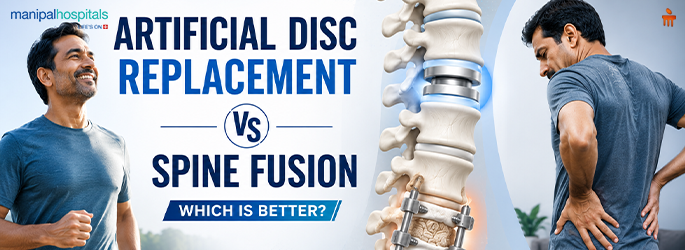
Dealing with constant back or neck pain is incredibly exhausting, and it can quickly take the joy out of normal daily life. Most of the time, things like physiotherapy, better posture, or pain medication do the trick. But if you have a degenerated disc that is pinching nerves and causing real problems like persistent numbness, weakness, or sharp pain, your spine specialist might suggest looking into surgery. If you are at this point, you will likely have to choose between two main paths: artificial disc replacement vs fusion. Both operations have the exact same goal: getting you out of pain, but they work in opposite ways. One is designed to keep your spine moving naturally, while the other prioritises stabilising the affected spinal segment to reduce painful movement.
This blog explains how artificial disc replacement surgery and spinal fusion actually stack up against each other. We will cover how each procedure works, what to expect during recovery from artificial disc replacement surgery, and how to figure out which approach makes the most sense for your spine and your lifestyle.

What Is Artificial Disc Replacement Surgery?
Artificial disc replacement surgery involves removing a damaged spinal disc and replacing it with an implant designed to preserve movement. The surgery is mainly performed in the cervical spine, although certain lower back cases may also qualify.
During the surgery, the surgeon eliminates the diseased disc, which may be pressing on nearby nerves or causing chronic pain. The artificial implant is then inserted between the vertebrae to help preserve movement at the treated level.
One important reason patients compare artificial disc replacement vs fusion is flexibility. Different from fusion surgery, the patient is not permanently fixed in place after disc replacement. The mobility preserved might allow more natural neck/back movements post-surgery.
What Is Spine Fusion Surgery?
It consists of surgically combining the vertebral column using screws, rods, cages, or bone grafting to immobilise the spine and eliminate pain.
Spinal fusion surgery has been used for years and is considered one of the most reliable surgeries performed on the spine. The surgical process can be utilised for diseases like intervertebral disc degeneration, spinal instability, spinal fracture, scoliosis, recurrent prolapsed disc, and arthritis.
The significant disparity between artificial disc replacement and spinal fusion lies in the area of spinal movement. Even though there is limited spinal movement following spinal fusion, many people benefit from reduced pain since the unstable or injured spinal segment will not move.
Artificial Disc Replacement vs Fusion: Key Differences
Patients often find it easier to understand artificial disc replacement vs fusion through a direct comparison of the procedures.
|
Feature |
Artificial Disc Replacement |
Spine Fusion |
|
Main Purpose |
Replace the damaged disc and preserve movement |
Stabilise the spine by joining the vertebrae |
|
Movement After Surgery |
Usually maintained |
Reduced at the treated level |
|
Implants Used |
Artificial disc device |
Screws, rods, bone grafts |
|
Recovery Time |
Often shorter |
Usually longer |
|
Suitability |
Selected disc problems |
Broader spinal conditions |
|
Long-Term Flexibility |
Better preserved |
Limited in fused area |
|
Stress on Nearby Discs |
Lower |
May increase gradually |
Understanding these differences allows patients to discuss realistic goals and expectations with their doctor.
Benefits of Artificial Disc Replacement Surgery
The technique of artificial disc replacement has become popular due to its attempt to retain normal spinal motion. It is a big plus for active people because of the retention of movement.
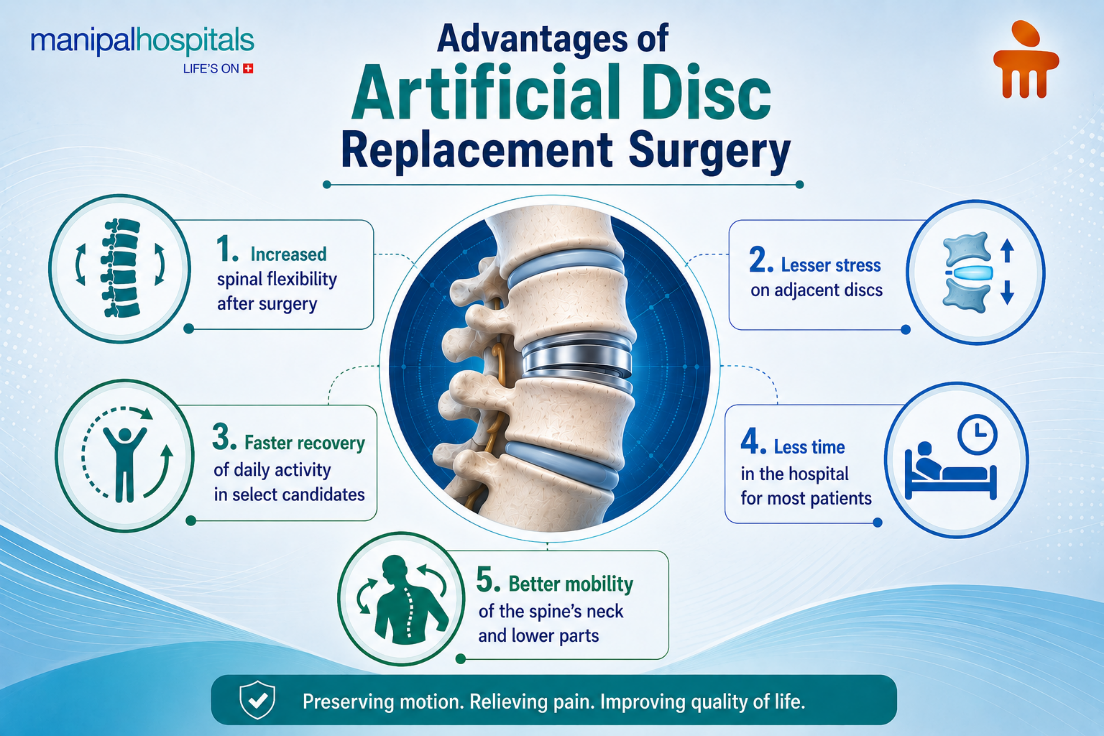
The advantages might be:
-
Increased spinal flexibility after surgery
-
Lesser stress on adjacent discs
-
Faster recovery of daily activity in select candidates
-
Less time in the hospital for most patients
-
Better mobility of the spine’s neck and lower parts
Many patients who compare artificial disc replacement with fusion surgeries opt for movement maintenance over movement restriction.
Another advantage is that artificial disc replacement surgery recovery may progress more quickly than fusion recovery because the vertebrae do not need to heal into a single bone structure.
However, successful outcomes depend greatly on proper patient selection and surgical planning.
Benefits of Spine Fusion Surgery
Despite the growing popularity of disc replacement, fusion surgery continues to remain highly effective for many spinal conditions.
Advantages of spinal fusion include:
-
Beneficial spinal stability
-
Successful treatment of severe spinal degeneration
-
Efficacious solution to spinal deformities
-
Long-lasting pain relief in many patients
-
Appropriate treatment for several spinal issues
A spinal fusion procedure is recommended whenever the spine has instability, arthritis, fractures, or deformities, making the motion-sparing surgery inappropriate.
While choosing between artificial disk replacement and fusion surgery, it is vital to recognise the benefits of fusion surgery in complicated cases.
Artificial Disc Replacement vs Spine Fusion: Which Is Better?
There is no single "winner" between artificial disc replacement vs fusion surgery; the right choice depends entirely on your specific spinal condition and lifestyle goals.
-
Artificial disc replacement may be considered more suitable if: You are younger, have a single damaged disc with no severe arthritis, and your primary goal is to preserve natural neck or back flexibility while avoiding future wear on adjacent discs.
-
Spine fusion may be more appropriate if: Your spine is structurally unstable, you suffer from severe arthritis, osteoporosis, or scoliosis, or you have multiple degenerated discs. In these cases, stability is more important than mobility.
Risks and Complications
Each surgical procedure is risky, but so is spinal surgery. One should learn about the risks involved in comparing disc replacement and fusion.
The risks of surgery with artificial disc replacement might include:
-
Implant dislocation
-
Implant wear or implant-related complications over time
-
Infection
-
Nerve irritation
-
Post-operative pain
The risks of spinal fusion may include:
-
Longer recovery time
-
Loss of mobility
-
Hardware problems
-
Bone graft failure
Most complications are uncommon, especially when surgery is performed by experienced spine specialists and followed by appropriate rehabilitation.
Who Is Suitable for Artificial Disc Replacement?
Not every patient with spinal pain qualifies for artificial disc replacement surgery. Spine surgeons evaluate imaging scans, symptoms, spinal alignment, and bone quality before recommending the procedure.
Ideal candidates generally include patients who:
-
Have one or two damaged spinal discs
-
Do not have severe spinal arthritis
-
Maintain good bone density
-
Have stable spinal alignment
-
Continue experiencing symptoms despite conservative treatment
Patients with osteoporosis, infections, fractures, spinal deformities, or major instability are usually better candidates for fusion surgery.
When deciding between artificial disc replacement vs fusion surgery, surgeons focus on selecting the safest procedure that can provide long-term symptom relief.
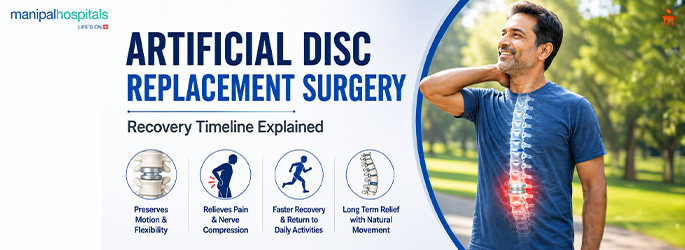
Artificial Disc Replacement Surgery Recovery
Artificial disc replacement surgery recovery often begins quickly after the operation. Many patients are encouraged to walk on the same day or within twenty-four hours after surgery.
Recovery usually involves:
-
Gradual walking programmes
-
Physiotherapy exercises
-
Temporary lifting restrictions
-
Follow-up scans and reviews
-
Muscle-strengthening exercises
Compared with fusion surgery, artificial disc replacement surgery recovery is often shorter because the vertebrae do not require months of bone healing.
Many individuals return to desk-based work within a few weeks, although physically demanding activities may take longer. Recovery speed also depends on age, fitness level, and the complexity of the procedure.
Patients comparing artificial disc replacement vs fusion should remember that recovery experiences vary from person to person.
Long-Term Lifestyle and Recovery Considerations
Successful spine surgery depends not only on the procedure itself but also on long-term spinal care and healthy lifestyle habits.
After surgery, patients are usually advised to:
-
Maintain a healthy body weight
-
Avoid smoking
-
Follow posture recommendations
-
Continue physiotherapy exercises
-
Stay physically active without overloading the spine
-
Attend regular follow-up appointments
Some individuals appreciate the flexibility preserved after artificial disc replacement surgery, while others value the stability and symptom relief achieved through fusion surgery.
Neither procedure completely prevents future age-related spinal changes, but both can significantly improve quality of life when carefully selected and properly managed.
Conclusion
Disc replacement is preferred over fusion because of various factors like the nature of the problem, patient lifestyle, and other aspects. Disc replacement helps keep spinal movements intact and also facilitates a faster recovery process for certain patients. However, there is no denying that spinal fusion surgery is quite reliable in addressing issues related to instability, serious degeneration, and various other types of spinal diseases.
Patients can familiarise themselves with all the benefits and drawbacks of the surgery, along with its rehabilitation, through the guidance of experienced spine specialists at India. For more information, kindly contact Manipal Hospital.