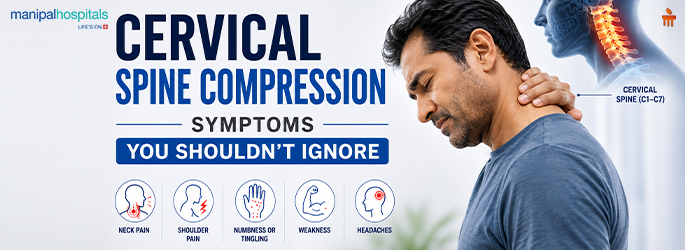
Most people have experienced neck stiffness after travelling, sleeping awkwardly, or sitting too long at a computer. Usually, a bit of rest fixes it. But if that ache starts spreading down into your shoulders, arms, or fingers, it is time to pay closer attention. It might be a sign of cervical spine compression.
People often put off seeing a doctor because the first signs are so mild. You might just feel a quick tweak in your neck or a bit of numbness while typing and try to shake it off. Leaving it untreated allows the pressure on your nerves to build up. Over time, the condition can make everyday tasks like holding a pen or buttoning up a shirt surprisingly difficult.
This blog looks at the main warning signs of cervical spine compression, what causes it, and the advanced treatments available to help you get back on track.

What Happens During Cervical Spine Compression?
The neck has seven vertebrae with discs in between them to allow movement. The spinal cord runs down through these bones, and nerves branch out through small gaps to go into the shoulders, arms, and hands.
Cervical spine compression is a term for the condition when the spaces within the neck bones (spinal canal and foramen) become narrow, putting pressure on the spinal cord or nerve roots. While aging and everyday wear and tear are the primary causes, it can also result from a herniated disc, arthritis, bone spurs, or thickened ligaments. Because these nerves lead directly to your arms, a problem in the neck often shows up further down. A pinched nerve root typically causes an ache in the shoulder, numbness in the fingers, or a weak grip when you try to pick things up.
Common Causes of Cervical Spine Nerve Compression
Several medical conditions can lead to cervical spine compression. Some progress gradually, while others appear after sudden injury or strain.
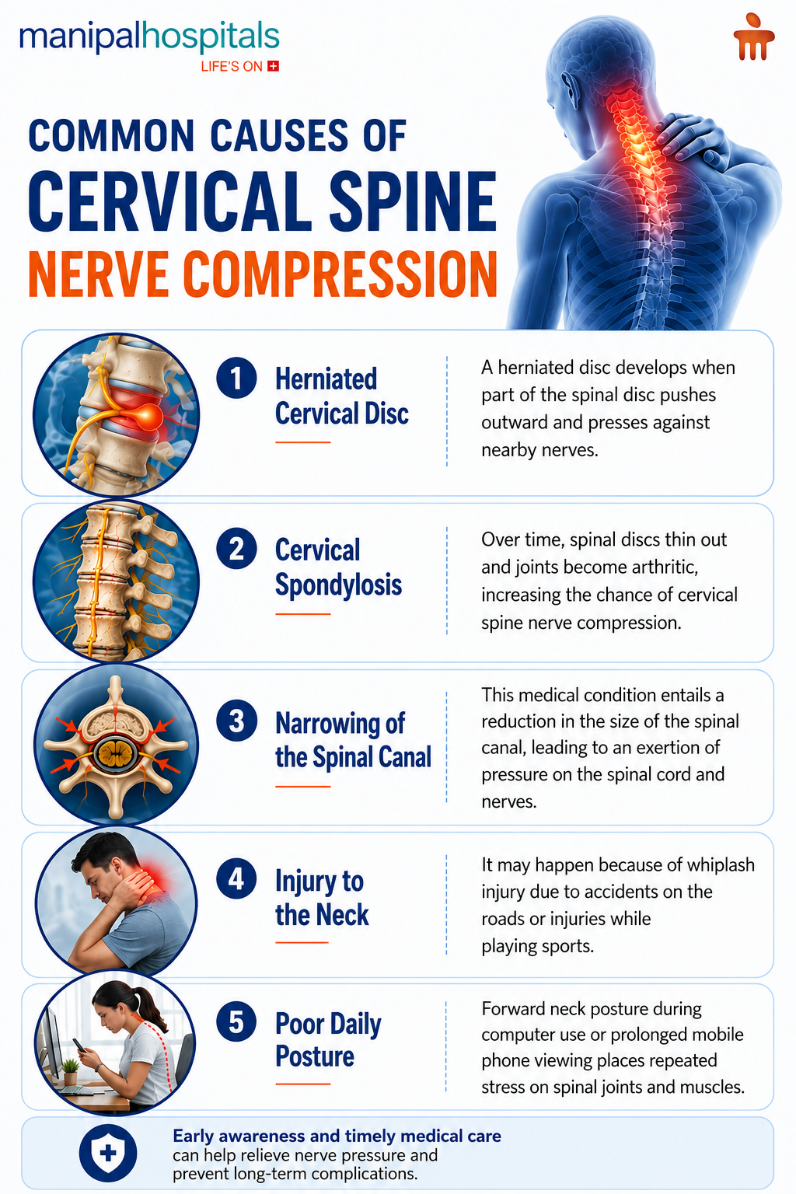
Herniated Cervical Disc
A herniated disc develops when part of the spinal disc pushes outward and presses against nearby nerves. Younger adults may experience these symptoms after lifting heavy objects or sudden neck strain.
Cervical Spondylosis
This disorder is one of the most common age-related conditions affecting the neck. Over time, spinal discs thin out and joints become arthritic, increasing the chance of cervical spine nerve compression.
Narrowing of the Spinal Canal
This medical condition entails a reduction in the size of the spinal canal, leading to an exertion of pressure on the spinal cord and nerves.
Injury to the Neck
It may happen because of a whiplash injury due to accidents on the roads or injuries while playing sports.
Poor Daily Posture
Forward neck posture during computer use or prolonged mobile phone viewing places repeated stress on spinal joints and muscles.
How Cervical Spine Compression Progresses
The symptoms of spinal pressure rarely stay the same. They typically start as minor, inconsistent inconveniences before gradually developing into more serious issues that impact your daily life.
Early Warning Signs
In the beginning, discomfort often comes and goes, usually flaring up after a long day at your desk or during extended drives. Early signs include:
Recurrent stiffness and aching in the neck
Tingling or a "pins and needles" sensation in the fingers
A burning sensation between the shoulder blades
Headaches that originate at the base of the neck
Severe Symptoms You Shouldn't Ignore
If the nerve or spinal cord compression is left unmanaged, the condition will begin to affect your motor skills and physical coordination. You should seek immediate medical advice if you notice:
-
Progressive weakness: Loss of strength in your arms or hands, causing you to unexpectedly drop everyday objects.
-
Grip issues: Struggling with fine motor skills, such as writing or fastening buttons.
-
Numbness: A persistent loss of sensation that spreads across both hands.
-
Balance problems: Unsteadiness, dizziness, or a noticeable imbalance while walking.
-
Advanced complications: In rare, severe cases, loss of bladder or bowel control due to advanced spinal cord pressure.
Catching these symptoms during the early stages makes a significant difference, as conservative treatments are highly effective before nerve damage becomes severe.
How Nerve Compression Affects Different Areas
Different cervical nerves control sensation and strength in specific parts of the arm and hand. Doctors often identify the affected nerve based on symptom location.
|
Cervical Nerve |
Symptoms Commonly Seen |
|
C5 |
Shoulder discomfort and weakness |
|
C6 |
Thumb tingling and forearm pain, wrist weakness |
|
C7 |
Middle finger numbness and arm weakness |
|
C8 |
Weak hand grip and little finger numbness |
This pattern helps doctors diagnose cervical spine nerve compression more accurately.
Why Modern Lifestyle Habits Increase Neck Problems
Spine specialists increasingly see younger adults with neck-related nerve problems. Work patterns and lifestyle habits play a major role.
Long-term Screen Exposure
Individuals have extensive exposure to screens on phones and computers on a daily basis. Such exposure will cause additional stress in the neck joint and neck muscles.
Inactivity
Inactive behaviour will lead to muscle weakness in the neck muscles.
Sleeping Without Neck Support
Failure to support or improper use of too low or too high a pillow under your neck when sleeping will cause increased strain on the neck muscles.
Repetitive Work Movements
Jobs involving lifting, overhead activity, or prolonged desk work can strain the cervical spine repeatedly.
Smoking
Smoking affects the blood supply to spinal tissues and may accelerate degeneration.
These factors often combine over several years before symptoms become noticeable.
How Doctors Diagnose Cervical Spine Compression
History and physical examination are normally done first. These include muscle power, range of motion of the neck, reflexes, and sensation in the upper limbs.
Other diagnostic procedures may also be needed.
-
X-rays: X-rays help diagnose cases of spinal misalignment, arthritis, or joint space narrowing.
-
MRI Scan: The MRI is an excellent investigation to visualise discs, nerves, ligaments, and the spinal cord.
-
CT Scan: CT scans provide clearer images of bone structures and spinal narrowing.
-
Nerve Conduction Studies: These tests help confirm whether symptoms arise from cervical spine nerve compression or another nerve condition.
Correct diagnosis is essential before deciding on cervical spine compression treatment.
Options for Cervical Spine Compression Treatment
Most patients improve without surgery, especially when treatment begins early.
-
Physiotherapy: Physiotherapy improves posture, strengthens supporting muscles, and reduces pressure on spinal nerves.
-
Medication: Doctors may prescribe anti-inflammatory medicines or nerve pain medication, depending on symptoms.
-
Heat therapy: A warm compress helps soothe stiff neck and shoulder muscles.
-
Fixing your posture: Changing how you sit at your desk and not staring down at screens keeps the ache from coming back.
-
Changing habits: Taking quick breaks to move around during the day takes the pressure off your neck.
Most people get over cervical spine compression simply by making these kinds of basic everyday changes.
When is cervical spine compression surgery necessary?
Most people do not need surgery. However, a specialist will likely suggest it if other treatments fail to help and your symptoms keep getting worse. The main goal of surgery is to relieve pressure on the pinched nerves and stabilise the neck. Common procedures include:
Discectomy and Fusion
Approaching from the front of the neck, the surgeon clears out the rogue bone spur or herniated disc causing the pinch, then locks the neighbouring vertebrae together using a graft or implant to ensure structural stability.
Artificial Disc Replacement
Rather than locking the bones permanently, the compromised disc is swapped for a mechanical joint. This relieves the nerve pressure while preserving the neck’s natural flexibility and movement.
Laminectomy
An approach from the back of the neck, where a small section of the vertebral arch (the lamina) is removed. Think of it as widening a cramped hallway so the spinal cord and nerve roots have room to breathe.
Many of these procedures now utilise minimally invasive techniques. By working through tiny incisions with specialised instruments, surgeons can navigate between muscle fibres rather than cutting through them, which translates to significantly less post-op pain and a faster return to daily life.
Recovery and Rehabilitation
Healing is an active process that scales with how long your nerves were under pressure before intervention. Most patients reclaim their mobility gradually by adopting a proactive routine:
-
Targeted physiotherapy to rebuild the deep stabilising muscles of the neck.
-
Conscious posture resets to take the mechanical strain off your joints.
-
Low-impact walking to encourage healthy systemic circulation.
-
Dedicated neck-strengthening routines designed to protect your cervical spine long-term.
-
Spine-neutral sleeping setups that maintain the natural curve of your neck overnight.
Note: If you require surgery for severe, long-standing compression, your nerves will take longer to wake up. Expect a more deliberate, extended rehabilitation timeline.
Cervical Spine Compression Treatment in India
The landscape of spinal care has evolved rapidly. Finding world-class intervention no longer requires looking abroad; major medical hubs in India now combine advanced high-resolution imaging with highly specialised neuro-rehabilitation.
Treatment strategies are highly individualised, pivoting on what your scans show, your age, and how deeply your symptoms impact your daily autonomy. The consistent rule of thumb remains: catching the compression early gives your nervous system the best possible chance to recover completely before irreversible damage sets in.
Conclusion
That occasional finger numbness or persistent neck stiffness isn't always just everyday fatigue; it can be a warning sign from your nervous system. Addressing the root cause early, whether through targeted physical therapy or precision surgical care, is what separates you from chronic mobility issues.
If you are dealing with nagging discomfort that won’t quit and want to explore advanced options for cervical spine compression treatment in India, reaching out to a dedicated institution like MIRSS Manipal to consult experienced spine specialists in India can help you map out a clear, effective path forward.