9 Min Read
Hot afternoons, crowded streets, long traffic delays, and outdoor work during peak summer can quietly push the body far beyond its natural limits. While many people assume they can simply "sweat it out", extreme heat can trigger a dangerous medical crisis. In emergency departments, doctors routinely treat patients who ignored early warning signs until they collapsed from severe overheating.
The body normally cools itself down by sweating. Extended exposure to high temperatures triggers dehydration and causes your core temperature to spike, which ultimately forces your built-in cooling system to shut down. Once the body loses its ability to regulate heat, vital organs can suffer permanent damage within a matter of minutes.
Spotting early warning signs and identifying mild symptoms is crucial to avoiding severe complications. While some people experience gradual fatigue, dizziness, or muscle spasms, others can lose consciousness or become disoriented without any warning at all. This blog covers everything you need to know about the causes, symptoms, diagnostic tests, and daily habits that protect your long-term kidney function.
Synopsis
- Recognising the Signs: From Mild Strain to Medical Emergency
- What Causes Heat Stroke?
- Who Is Most at Risk?
- Emergency First Aid for Heat Stroke
- Mistakes to Avoid During Heat Stroke
- Medical Treatment for Heat Stroke
- Heat Exhaustion vs Heat Stroke
- Recovery and Aftercare Following Heat Stroke
- Long-Term Complications of Untreated Heat Stroke
- Conclusion
Recognising the Signs: From Mild Strain to Medical Emergency
The signs of overheating can vary depending on a person's age, overall health, and how long they have been out in the sun. While some people experience a slow build-up of illness, others deteriorate rapidly. Understanding the boundary between early discomfort and a critical emergency is vital, as early indicators are incredibly easy to overlook if you are used to active outdoor habits.
Early Warning Signs Often Ignored
Before a full-blown medical crisis occurs, the body will almost always send out minor distress signals. Unfortunately, many people choose to push through this discomfort to finish a workout or an outdoor work shift. At this initial stage, symptoms usually look like the following:
-
Heavy, continuous perspiration
-
Unquenchable, frequent thirst
-
A sudden wave of deep exhaustion
-
Painful muscle cramps in the legs or abdomen
-
Growing irritability and restlessness
-
Mild light-headedness or unsteady balance
Because these early signs feel similar to ordinary physical fatigue from exercise, they are frequently dismissed. However, as fluid levels drop, a dangerous dehydration emergency takes hold, causing the body's internal thermostat to skyrocket.
Severe Heat Stroke Symptoms
If the early warning signs are neglected or if exposure to extreme heat continues, the condition can quickly escalate into heat stroke, which is an absolute medical emergency.
Typical severe signs include:
-
A dangerously high core body temperature
-
A severe, throbbing headache
-
A rapid, pounding heartbeat
-
Pronounced dizziness, disorientation, and confusion
-
Hot, flushed, and completely dry skin (as the cooling system shuts down)
-
Persistent nausea and vomiting
-
Stumbling, clumsiness, or difficulty walking straight
-
Profound muscle weakness
-
Fainting or a total loss of consciousness
If a person's dizziness worsens or if they stop sweating despite the intense heat, immediate action is required.
What Causes Heat Stroke?
Several factors contribute to dangerous overheating. Heat stroke often results from the interaction between high heat levels in the environment and dehydration. Any of the following can cause heat stroke:
-
Long hours under the sun
-
Work outdoors in very hot afternoons
-
Bad hydration practices
-
Exercising in high-humidity conditions
-
Clothing that blocks air circulation
-
Being indoors in an improperly ventilated space
Medical teams look closely at the root causes behind a high body temperature because issues like hidden infections or adverse drug reactions can easily mimic heat stroke. This makes accurate assessment vital, especially at crowded sports events or outdoor festivals where participants face a much higher risk of heat illness during extreme summer weather.
Who Is Most at Risk?
Although anyone can develop heat stroke, certain groups face greater danger during hot weather. High-risk individuals include:
-
Elderly adults
-
Infants and young children
-
Athletes
-
Construction workers
-
People with heart disease
-
Individuals with diabetes
-
Those taking diuretic medicines
Patients who ignore mild heat stroke symptoms while continuing strenuous activity are more likely to require hospital admission later.
Emergency First Aid for Heat Stroke
Immediate action is extremely important once severe overheating is suspected. Effective first aid can reduce body temperature before permanent organ damage develops. Because rapid cooling remains the absolute priority, waiting too long for professional care may worsen it.
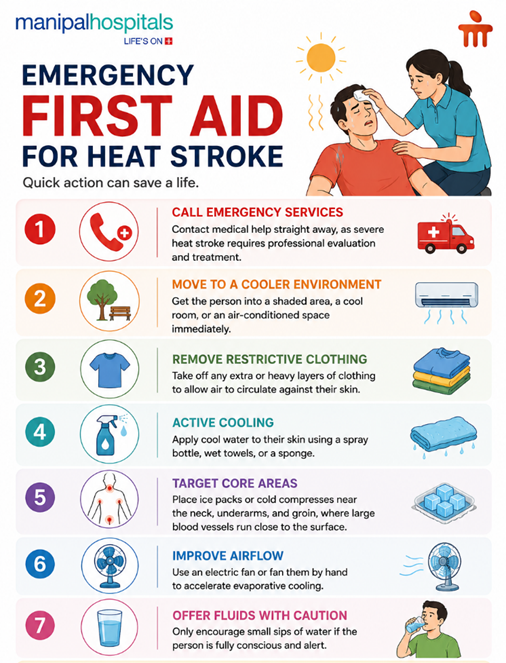
If you suspect someone is experiencing a heat-related crisis, take these steps immediately:
-
Call emergency services: Contact medical help immediately, as severe heat stroke requires professional evaluation and treatment.
-
Move to a cooler environment: Get the person into a shaded area, a cool room, or an air-conditioned space immediately.
-
Remove restrictive clothing: Take off any extra or heavy layers of clothing to allow air to circulate against their skin.
-
Active cooling: Apply cool water to their skin using a spray bottle, wet towels, or a sponge.
-
Target core areas: Place ice packs or cold compresses near the neck, underarms, and groin, where large blood vessels run close to the surface.
-
Improve airflow: Use an electric fan or fan them by hand to accelerate evaporative cooling.
-
Offer fluids with caution: Only encourage small sips of water if the person is fully conscious and alert.
Anyone who becomes confused, unconscious, or is unable to drink safely must never be given fluids, as the act poses a serious choking hazard. In these severe cases, focus entirely on lowering their body temperature externally while waiting for emergency medical support to arrive.
Mistakes to Avoid During Heat Stroke
Incorrect first aid methods may delay recovery or place the patient at additional risk. Avoid these actions:
-
Giving alcohol or energy drinks
-
Leaving the person outdoors
-
Forcing fluids into an unconscious patient
-
Ignoring persistent confusion
-
Continuing exercise after symptoms begin
Doctors specialising in emergency heat illness care often stress that severe overheating should never be treated casually at home.
Medical Treatment for Heat Stroke
Hospital treatment focuses on lowering body temperature quickly while monitoring vital organs. The doctor can offer:
-
IV fluids
-
Oxygen supply
-
Cooling pads
-
Ice water cooling process
-
Blood pressure measurement
-
Electrolyte balancing
A patient who comes to the hospital with symptoms of heat stroke is monitored in the emergency or intensive care ward. Medical teams handling sunstroke treatment also assess kidney function because dehydration may reduce blood flow to vital organs.
Heat Exhaustion vs Heat Stroke
People often confuse heat exhaustion with heat stroke, although the two conditions differ significantly in severity.
|
Condition |
Common Symptoms |
Severity |
|
Heat Exhaustion |
Sweating, weakness, cramps |
Moderate |
|
Heat Stroke |
Confusion, collapse, high temperature |
Medical emergency |
Recognising worsening heat exhaustion signs helps prevent progression into severe illness. If symptoms continue despite hydration and rest, urgent heat stroke first aid becomes necessary.
Recovery and Aftercare Following Heat Stroke
How long it takes to recover depends entirely on how quickly cooling treatment was started and whether the heat crisis caused any internal organ strain. Because a severe heat episode disrupts the body's natural ability to regulate temperature, full recovery requires patience and structured rest.
General guidelines for a safe recovery include:
-
Prioritising rest: Stay indoors in a cool, well-ventilated environment for several days following the episode.
-
Focusing on rehydration: Drink plenty of fluids consistently, opting for water and electrolyte-rich drinks to replenish lost minerals.
-
Eating light meals: Stick to easily digestible, balanced food to avoid putting unnecessary metabolic stress on your system.
-
Avoiding direct sun exposure: Stay out of direct sunlight and hot environments, as your body will be temporarily more sensitive to heat.
-
Returning to activity gradually: Only resume exercise or strenuous physical tasks slowly, ensuring you have medical clearance before pushing your limits.
It is entirely normal for patients recovering from severe heat illness to continue feeling weak, easily fatigued, or exhausted for a few weeks.
Long-Term Complications of Untreated Heat Stroke
Overheating in its advanced stage can potentially affect more than one organ in the body. Some complications of heat exhaustion include:
-
Damage to the kidneys
-
Swelling of the brain
-
Liver problems
-
Irritation of the heart rhythm
-
Muscle dysfunction
Untreated heat exhaustion signs might lead to death in some cases. This is why rapid heat stroke first aid and timely accidental emergency care remain essential during extreme weather conditions.
Conclusion
Heatstroke is an extremely serious health condition that must never be overlooked when the weather turns extremely hot. Spotting early warning signs, identifying mild symptoms, and providing prompt first aid can prevent life-threatening complications. Staying hydrated, avoiding excessive heat exposure, and acting quickly when symptoms appear are important steps for protecting overall health during the summer months. Individuals seeking expert accidental emergency support and advanced sunstroke treatment in Millers Road, Bangalore, can consult specialists at Manipal Hospital for timely diagnosis, emergency management, and recovery guidance.
FAQ's
Early heat stroke symptoms may include headache, dizziness, heavy sweating, tiredness, muscle cramps, and confusion. Quick cooling and hydration may help prevent severe complications from developing.
Yes, untreated mild heat stroke symptoms can progress rapidly into severe heat stroke, especially during prolonged heat exposure, dehydration, or continued physical activity outdoors.
The first priority during heat stroke first aid is moving the person to a cooler area and lowering body temperature using cool water, ice packs, or fans.
Older adults, outdoor workers, athletes, children, and individuals with chronic illnesses face a higher risk because their bodies may struggle to regulate heat efficiently.
Emergency care becomes necessary if heat stroke symptoms include confusion, fainting, seizures, breathing difficulty, or persistent vomiting despite cooling and hydration efforts.
Share this article on: