


 8 Min Read
.webp "Thyroid Problems in Old Age: Heart, Bone, and Memory Risks Explained")
Have you ever blamed your age for forgetfulness or tiredness and wondered if something else could be going on?
Many older adults and their families miss that these are common signs of thyroid problems in old age. The thyroid gland quietly influences metabolism, heart rate, bone turnover, and brain function. When it is out of balance, the effects show up as heart issues, bone loss, and memory problems that can easily be mistaken for normal ageing. Spotting thyroid symptoms in elderly people early lets doctors treat them and often reverse or reduce serious complications.
Synopsis
- Understanding Thyroid Disorders in Old Age
- Common Thyroid Problems in The Elderly
- Why Thyroid Issues Are Often Missed?
- How Thyroid Problems Affect the Heart?
- How Thyroid Problems Weaken Bones?
- How Thyroid Disorders Affect Memory and Brain Function
- Warning Signs of Thyroid Problems in the Elderly
- Diagnosis and Screening in Older Adults
- Treatment and Management
- Prevention and Healthy Ageing Tips
- Conclusion
Understanding Thyroid Disorders in Old Age
The thyroid is a small butterfly-shaped gland at the front of the neck. It releases hormones called T3 and T4 that help control metabolism, heart rhythm, temperature, and brain chemistry. The pituitary hormone TSH tells the thyroid how much hormone to make. Age changes in the thyroid and in how the body responds to hormones mean older adults can develop subtle but important problems.
Common Thyroid Problems in The Elderly
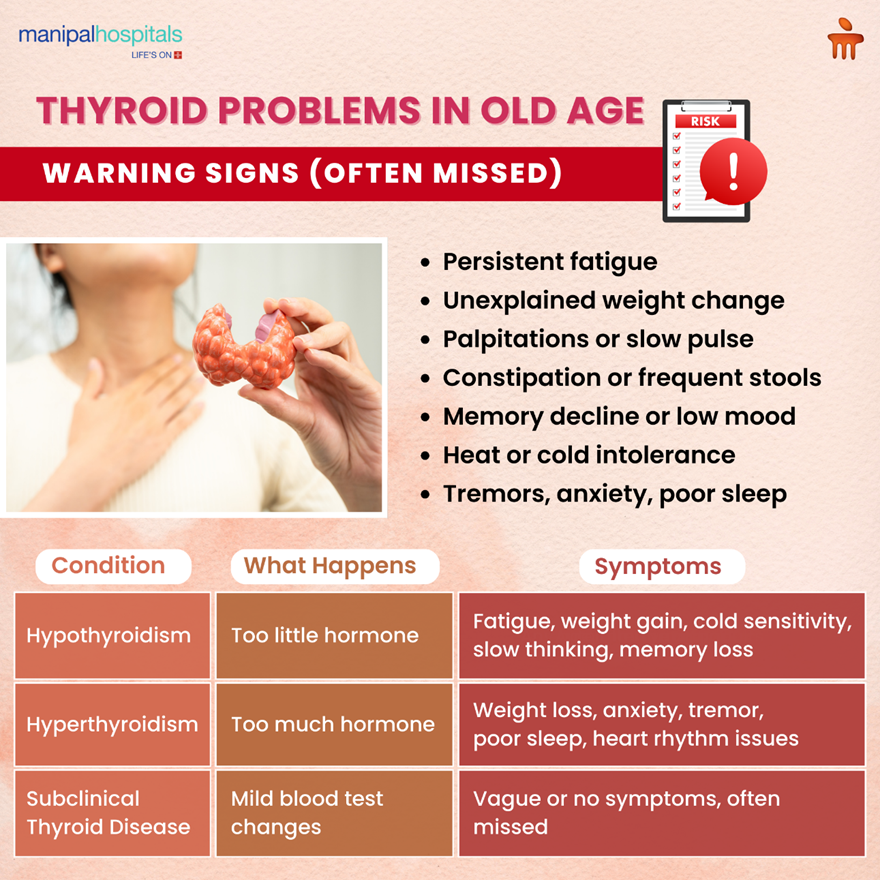
The two main disorders are underactive thyroid, known as hypothyroidism, in elderly, and overactive thyroid, known as hyperthyroidism in elderly. There are also subclinical forms where blood tests are mildly abnormal, but symptoms are not obvious. Because older people often have multiple health conditions, thyroid disease symptoms are frequently missed or assumed to be normal ageing.
|
Thyroid Condition |
What It Means |
How It Commonly Appears in Older Adults |
|
Hypothyroidism |
The thyroid produces too little hormone, slowing down body and brain functions. |
Fatigue, weight gain, cold intolerance, slowed thinking, low mood, and memory issues. Symptoms are often subtle and may be mistaken for normal ageing or depression. |
|
Hyperthyroidism |
The thyroid produces too much hormone, overstimulating the body. |
Weight loss, anxiety, sleep problems, tremors, heart rhythm changes, and reduced concentration. In frail elderly patients, confusion or agitation may be more prominent than classic symptoms. |
|
Subclinical Thyroid Disorders |
Blood tests show a mild thyroid imbalance, but clear symptoms are absent or minimal. |
Often goes unnoticed because symptoms are vague or missing. These cases are usually detected only through routine blood testing and careful monitoring. |
Why Thyroid Issues Are Often Missed?
Recognizing thyroid disease symptoms is challenging because they overlap with other age-related conditions and chronic illnesses. Also, common signs of thyroid, like tiredness, forgetfulness, or appetite changes, are often attributed to ageing or existing medication effects. As a result of these factors, we notice thyroid problems in old age progressing silently for many years before being diagnosed.
How Thyroid Problems Affect the Heart?
Hypothyroidism and the Heart
When the thyroid is underactive, the heart slows. You might notice a slow pulse or feel unusually tired. Hypothyroidism in elderly people often raises cholesterol levels and increases the risk for coronary artery disease. The heart pumps less forcefully, which can cause fluid retention and breathlessness. Over time, untreated hypothyroidism raises the chance of heart failure.
Hyperthyroidism and the Heart
An overactive thyroid raises the metabolic pace and can cause a fast or irregular heartbeat. In older adults, the most worrying result is atrial fibrillation, an irregular rhythm that increases the risk of stroke. Hyperthyroidism in elderly can also raise blood pressure and trigger heart rhythm disorders. These heart effects may be the first reason an older person comes to medical attention.
Why Elderly Hearts Are More Vulnerable?
Older adults often have existing heart disease, narrowed arteries, and reduced cardiac reserve. That means even small changes caused by thyroid imbalance can have big consequences. When someone asks can thyroid cause heart problems, the answer is yes, especially when the condition is not recognised and treated promptly.
How Thyroid Problems Weaken Bones?
Thyroid Hormones and Bone Health
Thyroid hormones affect how fast bone is broken down and rebuilt. A careful balance keeps bones healthy. Too much thyroid hormone speeds bone turnover, which can erode bone density.
Bone Effects of Hyperthyroidism
Excess hormone causes accelerated bone loss. Over time, older adults develop lower bone density and a higher risk of osteoporosis. That increases the chance of hip and spine fractures, which can be life-changing. If you are wondering if thyroid can cause bone loss, hyperthyroidism is a known contributor.
Bone Effects of Hypothyroidism
Low thyroid function does not usually cause bone loss directly, but it can cause muscle weakness and stiffness that increase fall risk. Slower metabolism may also reduce mobility and bone health indirectly.
Why Bone Damage is More Dangerous in Old Age?
Fractures heal more slowly in older adults. A single broken hip can result in long-term loss of independence and higher health risks. That is why recognising thyroid and osteoporosis links is critical in geriatric care.
How Thyroid Disorders Affect Memory and Brain Function
The Brain and Thyroid Connection
Thyroid hormones influence neurotransmitters that regulate mood, attention, and memory. When hormone levels are wrong, thinking speed, recall, and concentration can suffer.
Cognitive Effects of Hypothyroidism
An underactive thyroid often causes slowed thinking, memory lapses, and low motivation. Older adults may seem depressed, fatigued, or less alert. These signs are sometimes mistaken for early dementia. Because of this overlap, doctors check thyroid function when investigating memory decline.
Cognitive Effects of Hyperthyroidism
Too much thyroid hormone creates anxiety, restlessness, and poor sleep. In frail older patients, this can escalate to acute confusion or delirium. Attention and short-term memory can suffer.
Thyroid Problems Vs Dementia
Thyroid issues can mimic dementia symptoms, where there is a high chance of misdiagnosis. A routine blood test as part of the annual health check package can prevent this. Treating the thyroid problem can improve cognitive symptoms in many elderly patients.
Warning Signs of Thyroid Problems in the Elderly
Symptoms are often subtle and mistaken for ageing. Watch for:
-
Persistent fatigue and muscle weakness
-
Unexplained weight gain or loss
-
Heart palpitations or a slow pulse
-
Changes in bowel habits, constipation, or more frequent stools
-
Low mood, slowed thinking, or memory loss
-
Feeling cold when others are comfortable, or feeling unusually warm
-
New onset shakiness, anxiety, or poor sleep
If you notice these signs, especially when they appear together, ask for a simple thyroid check.
Diagnosis and Screening in Older Adults
A thyroid assessment is usually a blood test that measures TSH and sometimes free T4 and T3. Subclinical cases show mild TSH changes but still matter in older adults with heart disease, osteoporosis, or cognitive decline. For people with atrial fibrillation, unexplained fractures, or new memory problems, routine thyroid testing helps rule in or out a treatable cause with an endocrinologist in Malleshwaram,.
Treatment and Management
Safe Thyroid Management for Seniors
Treatment must be gentle. For underactive thyroid, doctors typically start with a low dose of levothyroxine and increase slowly while monitoring TSH levels. Older adults are more sensitive to over-treatment, which can cause heart rhythm problems or bone loss.
For an overactive thyroid, treatment options include antithyroid medication, radioactive iodine, or surgery in select cases. The choice depends on age, heart health, and other medical conditions.
Managing Interactions with Heart and Bone Medications
Thyroid treatment may interact with medicines for heart disease or osteoporosis. Close coordination between your doctor, cardiologist, and other specialists is important.
Lifestyle Support
Good diet, vitamin D, and calcium for bones, gentle strength building, and fall prevention all help. Support for sleep, mood, and memory also improves quality of life.
Prevention and Healthy Ageing Tips
-
Get routine check-ups and don’t assume fatigue is only due to age.
-
Ask for thyroid testing if you have heart problems, osteoporosis, or memory decline.
-
Keep a list of medicines and share it with your doctor since some drugs affect thyroid function.
-
Stay active, maintain a balanced diet, and take steps to prevent falls.
-
Encourage family members to report subtle changes in thinking or mood. Early detection of thyroid problems in old age makes a big difference.
Conclusion
Thyroid problems in later life affect much more than energy levels. Both underactive and overactive thyroid problems in the old age can lead to heart disease, bone loss, and cognitive symptoms that are sometimes mistaken for natural ageing. The good news is that simple blood tests, careful treatment, and coordinated care can prevent serious complications and often restore function.
If you or an older family member is experiencing unexplained fatigue, palpitations, thinning bones, or memory changes, speak to your doctor. For specialist evaluation and personalised care, consider consulting an endocrinologist at Manipal Hospital Malleshwaram.
Early thyroid management protects heart health, preserves bone strength, and supports clear thinking.
FAQ's
Yes. The risk of both hypothyroidism and hyperthyroidism increases with age. Symptoms can be subtle and are often mistaken for ageing, so screening is sensible if new symptoms appear.
Many people experience clearer thinking and better memory after thyroid hormone replacement. Improvements depend on how long the disorder has been present and on individual factors.
Treating hyperthyroidism reduces the rate of bone loss. Combined with bone protective measures such as calcium, vitamin D, and osteoporosis treatment when needed, fracture risk is lowered.
There is no single rule. If symptoms are present, test once. If you are on treatment, check TSH after dose changes and periodically as advised by your doctor, usually every 6 to 12 months once stable.
Thyroid disorders can influence blood pressure. Hyperthyroidism more commonly raises systolic pressure, while hypothyroidism may be associated with diastolic hypertension and higher cholesterol. Managing the thyroid often improves blood pressure control.
Share this article on:


