


 7 Min Read
A diagnosis of thyroid nodules can be concerning because they may bring a risk of malignancy. However, it's important to remember that most thyroid problems, including nodules, are highly treatable. In this blog, let us delve into the specifics of thyroid nodules, explaining when surgery is recommended, what it involves, and the significant benefits it offers for long-term health.
Synopsis
What Are Thyroid Nodules?
A thyroid nodule is a lump or growth of cells in the thyroid gland, a butterfly-shaped organ located at the base of your neck. These nodules are incredibly common, as studies indicate that up to 50% of people may have at least one thyroid nodule by the age of 60.
While the vast majority (over 95%) are benign (non-cancerous), some may require closer attention. The presence of thyroid nodules can sometimes lead to various thyroid problems, impacting your quality of life.
|
Asymptomatic discovery |
Often, thyroid nodules are discovered incidentally during routine medical examinations or imaging tests for other conditions. |
|
Palpable lump |
Some patients may notice a lump in their neck, or it might be felt by a healthcare professional during an examination. |
|
Symptoms of compression |
Larger nodules can press on the trachea (windpipe) or esophagus, leading to symptoms like difficulty swallowing, changes in voice, or a feeling of a lump in the throat. |
|
Hormonal imbalance |
A small percentage of thyroid nodules can produce excess thyroid hormone, leading to hyperthyroidism, characterized by symptoms such as weight loss, rapid heartbeat, tremors, and anxiety. |
When is Surgery for Thyroid Nodules Necessary?
The decision for surgical intervention for thyroid nodules is carefully considered based on several factors. Our expert endocrinologists and surgeons at Manipal Hospitals, Malleshwaram prioritize your safety and long-term health outcomes.
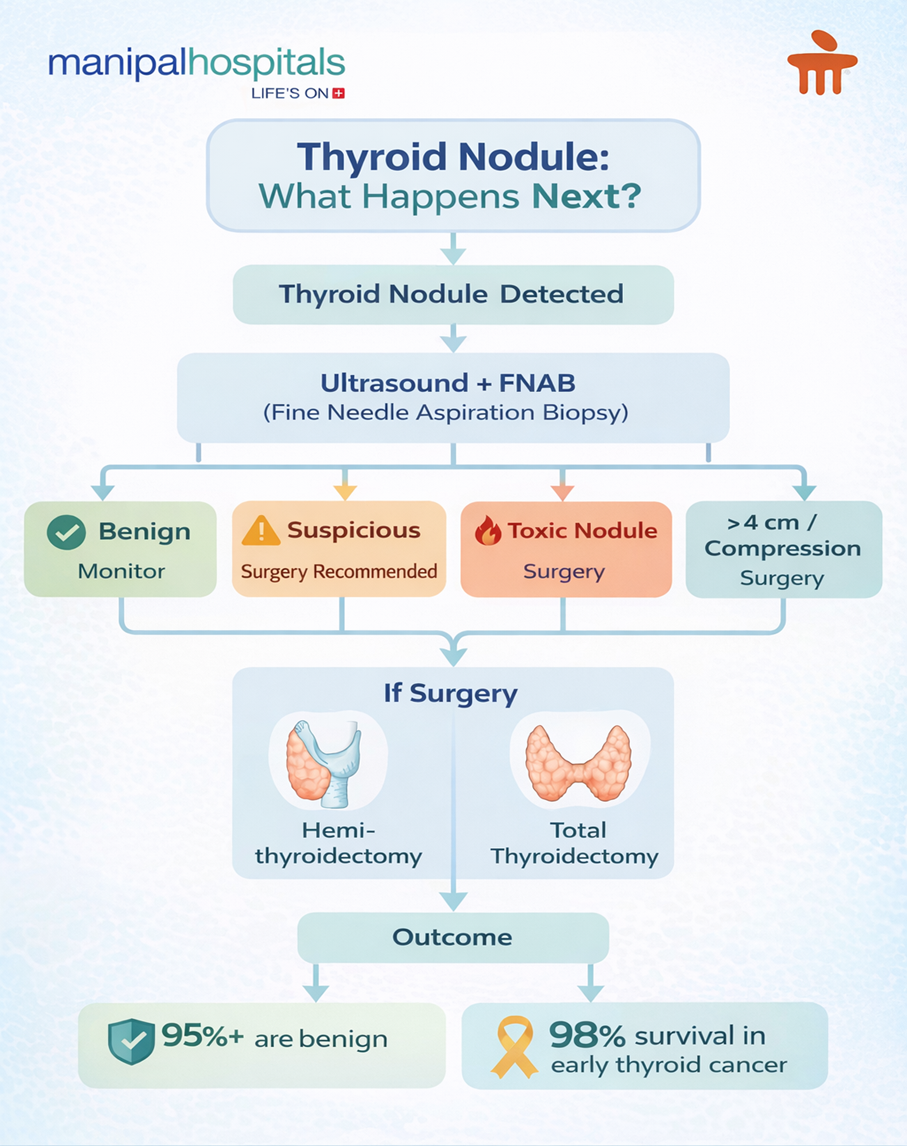
Suspicion of Malignancy: This is the most common reason for surgery. If a fine needle aspiration biopsy (FNAB) or other diagnostic tests indicate the presence of cancerous cells or suggest a high suspicion of cancer within the thyroid nodule. Early detection and treatment can lead to excellent prognoses, with an overall survival rate exceeding 98% for many forms of thyroid cancer.
Large or Growing Nodules: Even if benign, very large thyroid nodules (typically >4 cm) or those that are rapidly increasing in size may be removed to prevent obstructive symptoms or due to the small but persistent risk of them becoming cancerous over time.
Obstructive Symptoms: Nodules causing difficulty breathing, swallowing, or voice changes due to compression of the trachea or esophagus.
Hyperfunctioning Nodules (Toxic Nodules): When a thyroid nodule produces excess thyroid hormone, leading to hyperthyroidism that is not well-controlled by medication, surgery offers a definitive cure.
Cosmetic Concerns: In some cases, patients may wish to undergo surgical intervention if a visible thyroid nodule causes cosmetic distress.
Thyroidectomy: The Surgical Solution
A thyroidectomy is the surgical removal of part or all of the thyroid gland. This procedure is performed under general anaesthesia, utilizing advanced techniques to ensure precision and patient safety. With our dedicated surgical teams, success rates for thyroidectomy are consistently high, about 98% for effective nodule removal and symptom resolution.
Types of Thyroidectomy
|
Total Thyroidectomy |
The entire thyroid gland is removed. This is often recommended for large cancers, multiple thyroid nodules, or severe hyperthyroidism. |
|
Partial (Hemi) Thyroidectomy or Lobectomy |
Only one lobe of the thyroid gland containing the thyroid nodule is removed. This option is often considered for benign nodules or small, low-risk cancers, aiming to preserve some thyroid function. |
|
Isthmusectomy |
Removal of the narrow bridge of thyroid tissue connecting the two lobes, typically for nodules located in this area. |
Successful Management of a Left Thyroid Nodule
A patient recently visited us with a chief complaint of a left thyroid nodule since December 2024. Although it wasn't painful, the patient had other comorbidities, including high blood pressure and hyperthyroidism, for which he was on regular medications. Upon examination, findings included an enlarged left thyroid nodule measuring 5x5 cms close to the trachea (windpipe), pushing it to the right. While the CT scan of the neck showed infiltration of the strap muscles, the pre-operative FNA suggested a benign colloid goitre.
Given the patient's history and symptoms, a left hemithyroidectomy with intra op frozen section was planned, and the specimen was sent for frozen section, which turned out to be Papillary cancer of the thyroid. This prompted the doctors to perform a total thyroidectomy with central node dissection to address the tumor and associated hyperthyroidism. On final histopathology, the right lobe of the thyroid was also found to have malignancy. So, when malignancy is suspected, an intraoperative frozen section can be a real-time diagnostic tool to guide the course of surgical management.
During the procedure, both recurrent laryngeal nerves (which control voice) and parathyroid glands (which regulate calcium levels) were successfully preserved. The post-operative period was uneventful, with vitals closely monitored. The patient received IV fluids, antibiotics, analgesics, and supportive measures, achieving a stable condition and being discharged, paving the way for continued recovery and long-term health management.
Benefits of Thyroid Nodule Surgery
Choosing surgery for appropriate thyroid problems offers numerous advantages:
|
Cure for Thyroid Cancer |
For malignant thyroid nodules, surgery is often the primary and most effective treatment, leading to a high cure rate and excellent long-term prognosis, particularly when detected early. |
|
Relief from Obstructive Symptoms |
Removal of large thyroid nodules alleviates pressure on the trachea and esophagus, improving breathing and swallowing difficulties, and enhancing comfort. |
|
Resolution of Hyperthyroidism |
For toxic thyroid nodules, surgery offers a permanent solution to hyperthyroidism, eliminating the need for long-term anti-thyroid medication and its potential side effects. |
|
Improved Quality of Life |
By addressing underlying thyroid problems, patients often experience a significant improvement in energy levels, mood, and overall well-being, returning to a normal, active lifestyle. |
|
Minimally Invasive Options |
Depending on the case, minimally invasive techniques can lead to smaller incisions, less pain, and faster recovery times, often allowing patients to be discharged within 24-48 hours. |
Post-operative Care
Post-operative care is crucial for a smooth recovery and optimal outcomes. Following these guidelines will aid your healing journey.
-
Follow instructions for prescribed medications, including pain relievers and hormone replacement therapy (if applicable), exactly as directed by your doctor.
-
Keep incision clean and dry. Gently wash the incision area with mild soap and water, and pat it dry. Don’t scrub or use harsh chemicals. Avoid baths, swimming pools, or hot tubs until the incision is fully healed and closed to prevent infection.
-
Watch out for signs of infection (redness, swelling, pus, fever) or bleeding. Contact your medical team immediately if any concerns arise.
-
When moving or sleeping, support your neck to minimize strain on the incision site. A soft neck pillow can be helpful.
-
Slowly increase your activity level as advised. Start off with walking and then slowly progress to jogging. Avoid intense workouts, running, and heavy lifting for at least 2-4 weeks post-surgery.
-
Stay hydrated and maintain proper nutrition with a balanced diet to support the healing process.
-
Regular check-ups with your surgeon and endocrinologist can further monitor your recovery and adjust medication if needed.
-
Don't smoke or consume alcohol as they can hinder the healing process and increase the risk of complications.
-
Unless specifically advised by your doctor, avoid applying any lotions or creams to the incision site until it is healed.
Conclusion
If you are experiencing symptoms related to thyroid nodules or have been diagnosed with thyroid problems requiring evaluation for surgery, book an appointment with our best endocrinologists and general surgeons in Malleshwaram.
FAQ's
Yes, some patients experience some discomfort and soreness in the neck area after surgery, which is typically managed effectively with prescribed pain medication. Severe pain is uncommon, and many patients report that the discomfort is less than anticipated.
Most patients return to light activities within a few days and can resume normal activities within 2-3 weeks. Full recovery, including scar healing, may take several months. Individual recovery times can vary based on the extent of the surgery and personal health.
If you undergo a total thyroidectomy, you will need to take thyroid hormone replacement for the rest of your life. If only part of your thyroid is removed, your remaining thyroid gland may produce enough hormone, but close monitoring will be necessary.
While generally safe, like any surgery, there can be potential risks associated, including bleeding, infection, temporary or permanent voice changes (due to recurrent laryngeal nerve injury), and low calcium levels (due to parathyroid gland injury). However, these complications are rare, with rates often less than 1-2%.
The follow-up plan after surgery depends on your overall health and risk factors (e.g., benign nodule vs. cancer). Our expert team of general surgeons in Manipal Hospital Malleshwaram will create a personalized follow-up plan, which includes regular blood tests and clinical evaluations.
Share this article on:


