


 8 Min Read
Constipation in kids can quietly turn everyday life into a struggle, both for children who feel uncomfortable and for parents who feel helpless watching it unfold. It can be worrying and at times confusing, especially when advice from different sources seems to contradict each other.
The reassuring truth is that most cases of constipation in kids are manageable with the right combination of diet, routine, and behavioural support. Understanding why it happens, how food and habits influence bowel movements, and how toilet training plays a role can make a remarkable difference.
This blog walks you through the causes, warning signs, practical dietary strategies, structured routines, toilet training tips, medical treatment options, and when specialist care is needed, so you can approach the problem calmly, confidently, and effectively.
Synopsis
- Why Do Children Easily Get Constipation?
- Recognising the Signs of Constipation in Kids Early
- The Role of Diet in Preventing and Managing Constipation
- Establishing a Healthy Toilet Routine
- Toilet Training and Emotional Factors
- Child Constipation Home Remedies: What is Safe?
- Medical Management: When Diet Alone is Not Enough
- Toddler Constipation Treatment: Special Considerations
- When to Seek Medical Help?
- Long-Term Prevention Strategies
- Conclusion
Why Do Children Easily Get Constipation?
Children’s bowels are sensitive to change. A small shift in routine, diet, school schedule, or toilet habits can alter their natural rhythm. Unlike adults, children may also ignore the urge to defecate, especially if they are busy playing or anxious about using unfamiliar toilets.
Common contributing factors include:
-
Inadequate fibre intake
-
Low fluid consumption
-
Withholding stools after a painful bowel movement
-
Toilet training pressure or fear
-
Reduced physical activity
-
Changes in the environment, such as starting school or travelling
When a child repeatedly holds in stools, the colon absorbs more water from the stool, making it harder and drier. This leads to discomfort, which further reinforces withholding. Over time, this cycle sustains constipation in kids, even if the original trigger was minor.
Recognising the Signs of Constipation in Kids Early
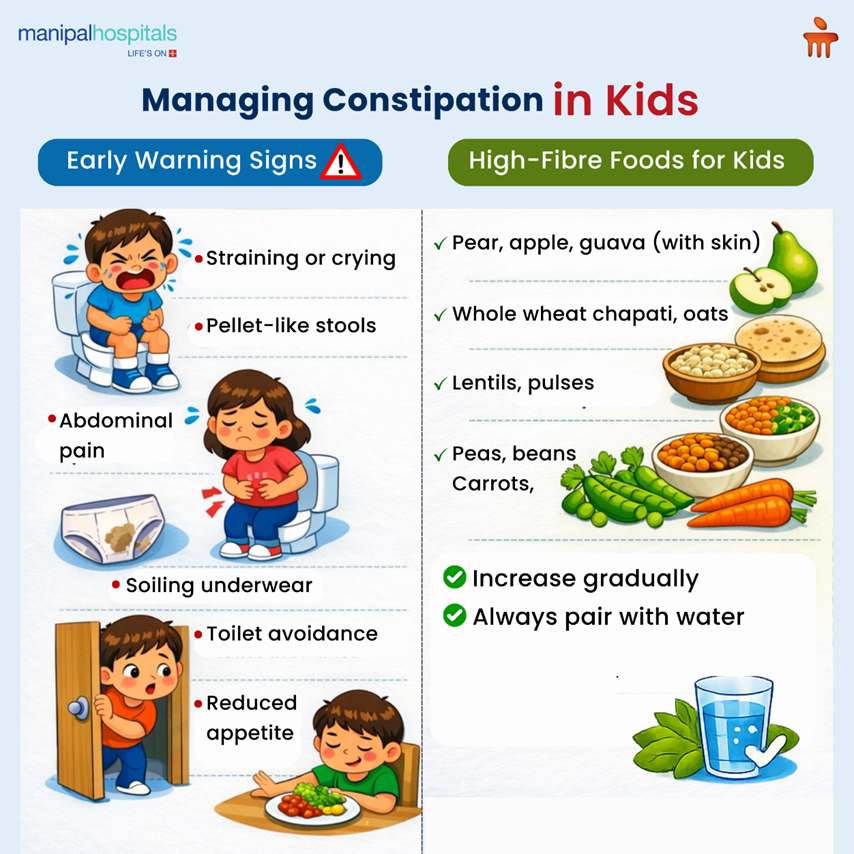
Constipation is not defined solely by frequency. Some children pass stools daily yet strain excessively or produce hard, pellet-like stools, while others may go several days without discomfort. The key is to notice changes from your child’s usual pattern. You need to watch out for:
-
Hard, dry stools
-
Straining or crying during bowel movements
-
Large stools that block the toilet
-
Complaints of abdominal pain
-
Soiling in underwear (overflow leakage)
-
Reduced appetite
-
Avoidance of the toilet
Occasional delay in passing stools is common. However, persistent symptoms lasting more than two weeks deserve attention and thoughtful planning for each step of the constipation treatment in kids.
The Role of Diet in Preventing and Managing Constipation
Food is often the first and most powerful intervention. Rather than focusing only on adding fibre, it helps to create balanced meals that support digestion naturally.
High Fibre Choices That Work
Including high fibre foods for kids supports stool bulk and easier passage. Fibre works best when paired with adequate hydration.
Helpful options include:
-
Whole fruits with skin (pear, apple, guava)
-
Vegetables such as carrots, peas, and beans
-
Whole grains like oats and whole wheat chapati
-
Lentils and pulses
-
Seeds such as flaxseed (finely ground and mixed into food)
However, you should be careful and introduce helpful fibre gradually. A sudden increase can cause bloating or discomfort. Children should also drink sufficient water throughout the day, as fibre without fluids can worsen symptoms.
Depending on the age, parents can refer to the table below to gradually introduce more fibre in their children's diets.
|
Age Group |
Recommended Daily Fibre Intake |
Recommended Daily Fluid Intake |
Practical Tip for Parents |
|
1-3 years |
10-14 grams |
1-1.3 litres |
Offer fruit at snack time and small sips of water frequently |
|
4-8 years |
14-18 grams |
1.3-1.7 litres |
Include one vegetable and one whole grain in each main meal |
|
9-13 years |
20-25 grams |
1.6-2.1 litres |
Encourage a water bottle in school and a fibre-rich breakfast |
|
14-18 years |
25-30 grams |
1.8-2.5 litres |
Limit processed snacks and prioritise balanced meals |
These values can vary slightly depending on weight and activity level, but they provide a reliable framework for dietary planning.
Establishing a Healthy Toilet Routine
A structured routine can retrain the bowel gently. The body’s natural reflex is strongest after meals, especially breakfast.
Encourage your child to:
-
Sit on the toilet for 5-10 minutes after meals
-
Use a footstool so knees are slightly higher than hips
-
Relax without distraction or pressure
-
Respond to the urge immediately
Consistency is more important than force. Over time, this routine helps restore normal bowel patterns and reduces episodes of constipation in kids.
Toilet Training and Emotional Factors
For some children, constipation begins during toilet training. Fear of flushing sounds, unfamiliar bathrooms, or previous painful stools can create anxiety. Children may not verbalise this fear; instead, they avoid the toilet.
Helpful strategies include:
-
Avoiding punishment or scolding
-
Using positive reinforcement
-
Making the bathroom environment comfortable
-
Allowing time and patience during training
-
Avoiding prolonged sitting
When a child associates the toilet with stress, withholding becomes habitual. Gentle reassurance and consistency rebuild confidence and support recovery.
Child Constipation Home Remedies: What is Safe?
Parents often look for child constipation home remedies before considering medication. While some methods are safe, others should be avoided without medical advice.
Generally safe approaches include:
-
Warm fluids in the morning
-
Soaked raisins (for older children)
-
Light abdominal massage
-
Regular physical activity
Avoid herbal laxatives or unverified remedies. These may irritate the bowel or cause dependency. If simple measures do not improve symptoms within a few weeks, a medical assessment is appropriate.
Medical Management: When Diet Alone is Not Enough
Sometimes dietary changes and routine adjustments are insufficient. In such cases, a doctor may recommend medication as part of the constipation in kids treatment plan.
A commonly prescribed option is a stool softener for kids, typically osmotic agents such as polyethene glycol. These draw water into the stool, making it easier to pass. They are generally safe when used under medical supervision and do not create dependency when appropriately managed.
Treatment often continues for several months, even after symptoms improve. Stopping too early can lead to recurrence. The aim is to break the cycle of withholding and pain.
Toddler Constipation Treatment: Special Considerations
Toddlers require a slightly different approach. Their diet may be limited, and behavioural factors are stronger.
Key considerations in toddler constipation treatment include:
-
Ensuring adequate fat intake (healthy fats aid bowel movement)
-
Limiting excessive milk consumption
-
Encouraging active play
-
Avoiding forced toilet training
Toddlers also respond strongly to parental emotion. Staying calm, patient, and consistent can significantly influence recovery.
When to Seek Medical Help?
While most cases are functional, certain signs need prompt medical evaluation:
-
Blood mixed within stools (not just streaks from fissures)
-
Severe abdominal distension
-
Vomiting with constipation
-
Poor weight gain
-
Constipation beginning in infancy
-
Neurological symptoms
Early evaluation ensures that rare but important conditions, such as Hirschsprung’s disease or metabolic disorders, are identified.
Long-Term Prevention Strategies
Preventing recurrence requires sustained habits rather than short-term fixes.
Focus on:
-
Daily fibre-rich meals
-
Regular hydration
-
Predictable toilet times
-
Physical activity
-
Avoiding excessive processed snacks
Children often relapse during school changes, travel, or stress. Recognising these triggers early allows parents to reinforce supportive routines.
Conclusion
Constipation in kids is usually not a reflection of poor parenting or serious illness. It is usually a combination of diet, habits, emotions, and routine. With thoughtful planning, patience, and medical guidance when needed, most children regain comfortable, regular bowel movements and confidence in using the toilet.
If symptoms persist despite structured dietary changes and behavioural strategies, it is best to consult a paediatric specialist. For personalised constipation treatment for kids in Malleshwaram, Bangalore, Manipal Hospital Malleshwaram ensures you get access to safe, effective, and child-centred care.
FAQ's
Prolonged and untreated constipation can reduce appetite and cause abdominal discomfort, indirectly affecting nutritional intake. Over time, inadequate calorie and nutrient consumption may influence weight gain. However, constipation itself does not directly stunt growth unless associated with an underlying medical condition.
Yes, many children hesitate to use school toilets due to a lack of privacy, hygiene concerns, or embarrassment. Repeated avoidance can contribute to stool withholding. Open communication and discussing practical solutions, such as using the toilet before school, can help.
Certain food intolerances, including cow’s milk protein intolerance in some children, may present with constipation rather than loose stools. If constipation is persistent and associated with eczema or abdominal bloating, medical assessment is advised.
Improvement may begin within a few days of medication or routine changes, but full recovery often takes several weeks to months. The bowel needs time to regain tone and normal sensation after prolonged withholding.
Some studies suggest certain probiotic strains may improve stool frequency and consistency, but evidence remains mixed. They may be considered as an adjunct under medical guidance, particularly when diet optimisation alone does not produce sufficient improvement.
Share this article on:


