


 8 Min Read
A cancer diagnosis changes the rhythm of life in an instant. Along with fear comes a flood of unfamiliar terms: surgery, chemotherapy, radiation, immunotherapy, and the pressing need to understand what lies ahead. The truth is, cancer treatment today is far more advanced and personalised than it was even a decade ago. Outcomes have improved, side effects are better managed, and treatment plans are carefully tailored rather than one-size-fits-all.
Knowing how each approach works, when it is used, and what it aims to achieve helps you move from uncertainty to informed decision-making. This blog explains the main cancer treatment options, how doctors decide between them, what to expect during recovery, and how newer therapies are changing survival rates, even in advanced stages.
Synopsis
- How Doctors Decide on Cancer Treatment?
- Surgery: Removing the Disease at Its Source
- Chemotherapy: Targeting Rapidly Dividing Cells
- Radiation Therapy: Precision Treatment with High-Energy Beams
- Immunotherapy and Targeted Therapy: Harnessing the Body’s Biology
- Hormonal Therapy and Other Specialised Approaches
- Stage 4 Cancer Treatment Options
- Comparative Overview of Major Treatment Modalities
- Are There Alternative Methods of Cancer Treatment?
- What is the Best Cancer Treatment Method?
- Conclusion
How Doctors Decide on Cancer Treatment?
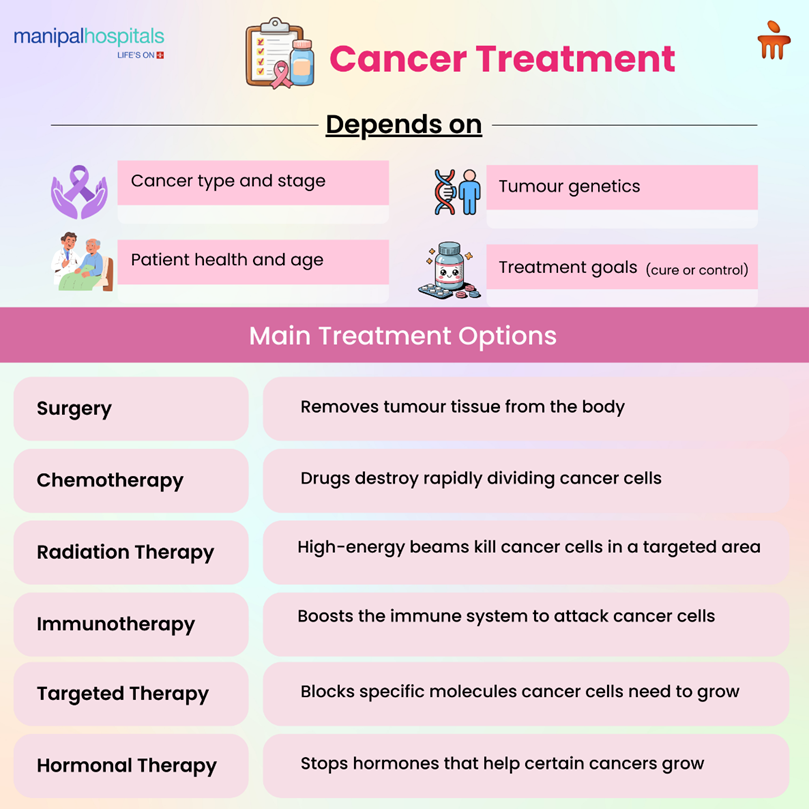
No two cancers behave exactly the same way, even if they arise in the same organ. Treatment planning depends on tumour type, stage, genetic features, overall health, and personal priorities.
A multidisciplinary team, often including surgeons, medical oncologists, radiation oncologists, and pathologists, reviews biopsy findings and imaging before recommending a plan. In many cases, more than one of the different cancer treatment methods are combined to improve outcomes.
Key factors influencing decisions include:
-
Stage of the cancer (localised, regional, metastatic)
-
Tumour biology (hormone receptors, genetic mutations)
-
Patient’s age and general fitness
-
Likelihood of cure versus disease control
-
Potential side effects and long-term impact
The goal may be curative, life-prolonging, or focused on symptom relief. Each approach is valid and meaningful depending on the situation.
Surgery: Removing the Disease at Its Source
Surgery remains one of the oldest yet most effective forms of cancer care. When cancer is confined to one area, removing the tumour completely can offer a cure.
Modern surgical techniques are far more refined than in the past. Minimally invasive procedures, robotic-assisted operations, and precise tumour mapping allow surgeons to remove cancer while preserving healthy tissue. This technique is particularly important in breast and prostate cancer treatment, where organ preservation affects long-term quality of life.
It may also be used:
-
To confirm the suspected diagnosis by biopsy
-
To reduce the size of the tumour before chemotherapy or radiation treatment
-
To relieve symptoms such as obstruction or bleeding
Recovery time will vary depending on the complexity of the operation, but enhanced recovery protocols are now reducing hospital stays and accelerating the healing process.
Chemotherapy: Targeting Rapidly Dividing Cells
Chemotherapy works by attacking cells that divide quickly, a hallmark of cancer. It circulates throughout the bloodstream, making it especially useful when cancer cells may have spread beyond the primary site.
In blood cancer treatment, chemotherapy is often the backbone of therapy because these cancers involve circulating cells. It is also commonly used to treat colon and lung cancer, either alone or alongside surgery.
While side effects such as hair loss, fatigue, and nausea are well known, supportive medications today significantly reduce their intensity. Dosing schedules are carefully calculated to maximise effectiveness while allowing the body to recover between cycles.
Radiation Therapy: Precision Treatment with High-Energy Beams
Radiation therapy uses targeted energy beams to destroy cancer cells. Unlike chemotherapy, it works locally, focusing on a specific area of the body.
Advances such as image-guided radiotherapy and intensity-modulated radiation therapy have made this approach highly precise. In oral and mouth cancer treatment, radiation can eliminate microscopic disease after surgery. In cervical cancer treatment, it may be combined with chemotherapy for better control. There are various uses of radiation therapy.
To cure early-stage cancers:
-
To reduce the chance of cancer recurring following surgery
-
To relieve symptoms such as pain or bleeding in advanced cancers
Treatment is typically delivered over several sessions to protect surrounding tissues.
Immunotherapy and Targeted Therapy: Harnessing the Body’s Biology
One of the most exciting developments in cancer treatment is immunotherapy. Instead of attacking cancer directly, it strengthens the immune system’s ability to recognise and destroy tumour cells.
Certain lung, liver, and melanoma cancers respond dramatically to immune checkpoint inhibitors. In selected cases, this approach is considered the best method in cancer immunotherapy treatment because of its potential for long-lasting remission.
Targeted therapy, on the other hand, blocks specific molecular pathways that cancer cells rely on. For example, HER2-targeted drugs have transformed outcomes in certain breast cancers. These treatments are chosen only after detailed molecular testing.
Hormonal Therapy and Other Specialised Approaches
Some cancers grow in response to hormones. Prostate cancer treatment and many breast cancer treatment plans include hormonal therapy to block these signals. This approach can slow disease progression for years in appropriate patients.
Other specialised treatments include:
-
Stem cell transplantation in selected blood cancer treatment cases
-
Ablation techniques for liver cancer treatment
-
Intraperitoneal chemotherapy in certain advanced abdominal cancers
Each is selected based on tumour behaviour and patient suitability.
Stage 4 Cancer Treatment Options
When cancer spreads to distant organs, treatment goals shift. A cure may not always be possible, but control and quality of life become central.
Stage 4 cancer treatment options often combine systemic therapies, chemotherapy, targeted therapy, or immunotherapy to shrink tumours and relieve symptoms. In some cases, surgery or radiation may still be used to manage specific complications.
Many patients live meaningful, active lives for years with well-planned advanced-stage therapy. The focus is no longer just survival but living well during treatment.
Comparative Overview of Major Treatment Modalities
Below is a detailed comparison designed to help patients understand how major treatments differ in practical terms. This table presents insights not discussed elsewhere in this blog.
|
Treatment Modality |
Typical Duration |
Monitoring Requirements |
Impact on Fertility |
Hospital Stay Needed |
Long-Term Surveillance |
|
Surgery |
Procedure with recovery period |
Post-operative wound checks, imaging |
May affect fertility depending on the organ removed |
Often required (varies by complexity) |
Periodic imaging and clinical exams |
|
Chemotherapy |
Cycles over 3-6 months or longer |
Regular blood tests to monitor counts and organ function |
Can temporarily or permanently affect fertility |
Usually outpatient |
Long-term monitoring for cardiac or nerve effects |
|
Radiation Therapy |
Daily sessions over several weeks |
Imaging to ensure precision, skin assessment |
Rarely affects fertility unless the pelvis is treated |
Outpatient |
Monitoring for tissue scarring or late radiation effects |
|
Immunotherapy |
Months to years, depending on response |
blood tests to monitor immune-related side effects |
Typically minimal effect |
Outpatient infusion |
Monitoring for delayed immune reactions |
|
Hormonal Therapy |
5-10 years in some cancers |
Bone density scans, metabolic monitoring |
May impact reproductive function |
No hospital stay |
Ongoing endocrine follow-up |
Are There Alternative Methods of Cancer Treatment?
Patients often explore complementary therapies alongside medical care. Nutrition support, yoga, meditation, and acupuncture can help manage stress, fatigue, and pain.
However, alternative methods of cancer treatment should not replace scientifically proven therapy. Delaying standard treatment in favour of unproven remedies can allow cancer to progress. Always discuss any complementary approach with your oncology team to ensure safety and coordination.
What is the Best Cancer Treatment Method?
There is no universal “best cancer treatment method." The most effective approach depends entirely on tumour type and individual factors. For example:
-
Early-stage colon cancer treatment may rely primarily on surgery.
-
Advanced lung cancer treatment might prioritise immunotherapy.
-
Localised prostate cancer treatment could involve surgery, radiation, or active surveillance.
Personalisation rather than generalisation is the foundation of modern oncology.
Conclusion
Cancer care today is no longer limited to one or two approaches. From surgery and chemotherapy to precision radiation and immunotherapy, cancer treatment options are broader, safer, and more personalised than ever before. Even in advanced stages, carefully selected therapies can extend life and preserve dignity.
If you are exploring options for cancer treatment in Malleshwaram, visit our expert cancer specialists at Manipal Hospital Malleshwaram, Bangalore for evidence-based and personalised care.
FAQ's
Yes. Some patients experience “chemo brain," a temporary difficulty with memory or focus during or after chemotherapy. It usually improves over time. Cognitive exercises, adequate sleep, and structured routines can help with recovery.
Many patients continue working part-time or remotely, depending on treatment intensity and side effects. Fatigue is common, so flexible scheduling and employer communication are important.
Good nutrition supports immune strength, wound healing, and tolerance to therapy. Weight loss during treatment can affect recovery, so dietitian-guided meal planning is often recommended.
Yes, recurrence is possible. Regular follow-up appointments and surveillance imaging help detect recurrence early, when further treatment is often more effective.
Timing depends on the type of cancer and therapy received. Some treatments affect fertility temporarily, others permanently. Fertility counselling before starting treatment is strongly advised for patients of reproductive age.
Share this article on:


