7 Min Read
--Mood,-Pain-and-Bloating-Relief.webp "Premenstrual Syndrome (PMS)")
Premenstrual Syndrome (PMS) is a common health concern experienced by many women during their reproductive years. It refers to a group of physical, emotional, and behavioural symptoms that occur in the days or weeks before menstruation begins. While mild discomfort is common, some women experience symptoms that significantly affect their daily life, relationships, and productivity.
Understanding Premenstrual Syndrome (PMS), recognising the symptoms early, and adopting the right lifestyle habits can help manage discomfort effectively. At Manipal Hospital Kharadi, specialists emphasise early awareness, proper diagnosis, and personalised care to help women manage PMS symptoms and maintain overall well-being.
Synopsis
What is Premenstrual Syndrome (PMS)?
Premenstrual Syndrome (PMS) is a condition that occurs due to hormonal fluctuations during the menstrual cycle, typically in the luteal phase (the time between ovulation and the start of the period). The symptoms usually appear 5–10 days before menstruation and improve once the period begins.
The severity of PMS can vary from mild discomfort to symptoms that disrupt daily life. In some cases, severe PMS may lead to a condition called Premenstrual Dysphoric Disorder (PMDD), which requires medical attention.
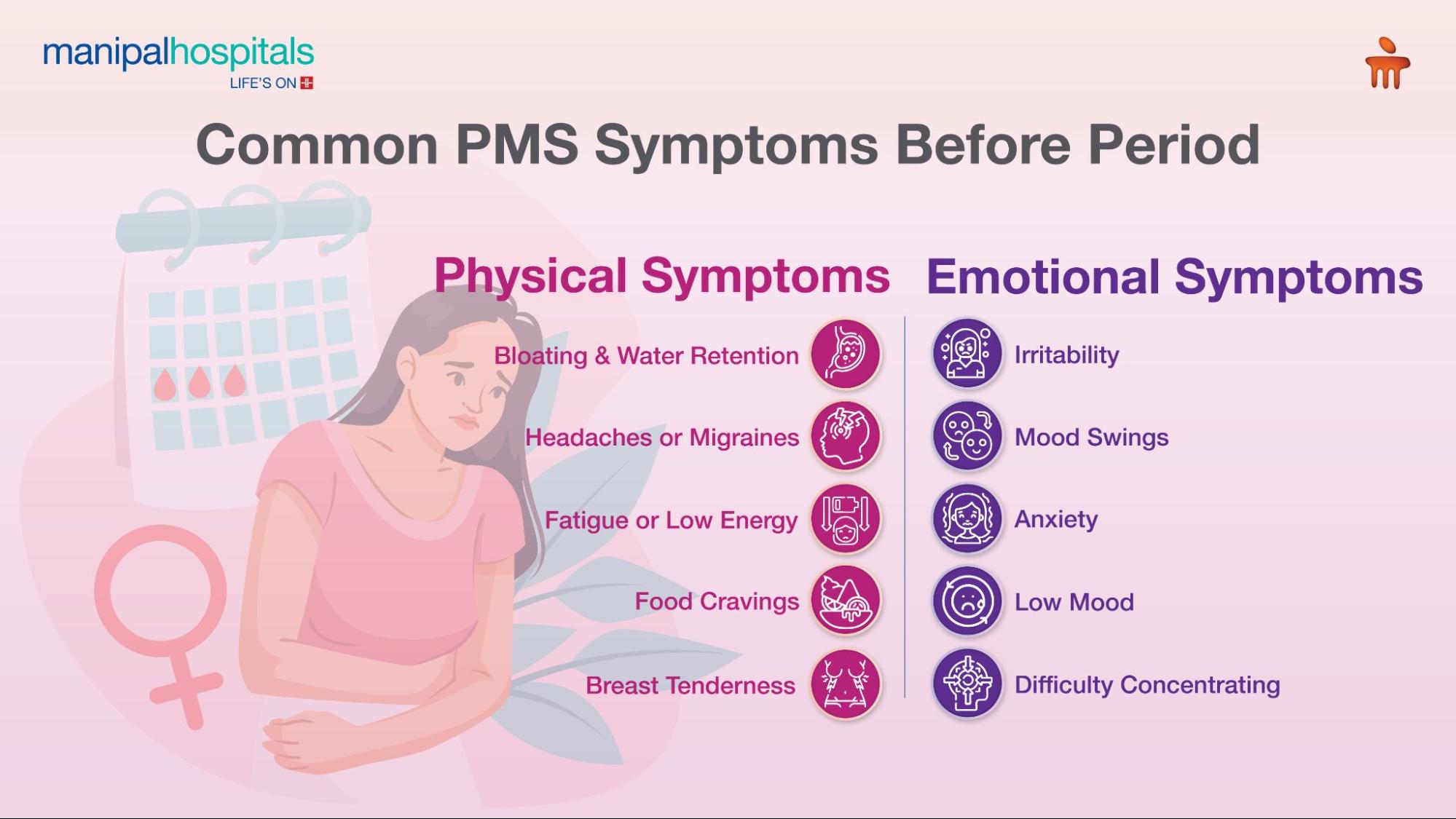
Common PMS Symptoms Before Period
The PMS symptoms before period can differ from person to person. Some women mainly experience physical symptoms, while others notice emotional or psychological changes.
Physical Symptoms
-
PMS bloating relief concerns such as abdominal swelling and water retention
-
Breast tenderness or swelling
-
Headaches or migraines
-
Fatigue or low energy levels
-
Acne breakouts
-
Changes in appetite or food cravings
-
Joint or muscle pain
Emotional and Behavioural Symptoms
-
PMS mood swings or sudden emotional changes
-
Irritability or anger
-
Anxiety or restlessness
-
Difficulty concentrating
-
Feeling overwhelmed or sad
-
Sleep disturbances
These symptoms typically disappear once menstruation begins but may return in the next cycle.
Why Does PMS Occur?
The exact cause of Premenstrual Syndrome (PMS) is not fully understood, but several factors may contribute:
1. Hormonal Changes
Fluctuations in oestrogen and progesterone levels during the menstrual cycle can affect mood and physical health.
2. Brain Chemical Changes
Changes in serotonin, a neurotransmitter responsible for mood regulation, may contribute to PMS mood swings, irritability, and depression.
3. Lifestyle Factors
-
Poor diet
-
Lack of exercise
-
Excess caffeine or alcohol
-
Stress and inadequate sleep
4. Nutritional Deficiencies
Low levels of calcium, magnesium, and vitamin B6 may worsen PMS symptoms.
How to Reduce PMS Naturally
Many women look for ways to reduce PMS naturally before considering medical treatments. Lifestyle modifications and natural remedies can significantly improve symptoms.
1. Maintain a Balanced Diet
Eating nutrient-rich foods can help regulate hormonal balance and reduce PMS discomfort.
Recommended foods include:
-
Whole grains
-
Fresh fruits and vegetables
-
Nuts and seeds
-
Lean proteins
-
Calcium-rich foods such as yoghurt and milk
Limiting salt, caffeine, and processed foods can also help prevent PMS bloating and water retention.
2. Regular Exercise
Physical activity helps improve blood circulation, reduce stress hormones, and boost serotonin levels.
Effective exercises include:
-
Walking
-
Yoga
-
Cycling
-
Light strength training
Even 30 minutes of moderate exercise daily can reduce fatigue, mood swings, and cramps.
3. Manage Stress
Stress can worsen PMS mood swings and emotional symptoms.
Helpful stress management techniques include:
-
Deep breathing exercises
-
Meditation
-
Journaling
-
Spending time outdoors
-
Listening to relaxing music
Mind-body practices like yoga can also improve hormonal balance.
4. Stay Hydrated
Drinking adequate water helps reduce PMS bloating relief issues caused by water retention. Hydration supports digestion and reduces fatigue.
Aim for 7–8 glasses of water daily.
5. Improve Sleep Quality
Poor sleep can worsen irritability and fatigue.
Healthy sleep habits include:
-
Maintaining a consistent sleep schedule
-
Avoiding screen time before bed
-
Practising relaxation techniques
Good sleep helps regulate mood and energy levels.
6. Herbal and Natural Remedies
Some natural remedies may help relieve PMS symptoms, including:
-
Ginger tea to reduce bloating
-
Chamomile tea for relaxation
-
Evening primrose oil for breast tenderness
-
Magnesium supplements for mood support
However, it is always advisable to consult a doctor before starting supplements.
PMS Treatment Options
When lifestyle changes are not enough, medical PMS treatment may be recommended.
Treatment options may include:
1. Pain Relievers
Over-the-counter medications can help manage headaches, cramps, and muscle pain.
2. Hormonal Treatments
Hormonal birth control may regulate hormone fluctuations and reduce PMS symptoms.
3. Antidepressants
For severe PMS mood swings, doctors may prescribe medications that regulate serotonin levels.
4. Nutritional Supplements
Doctors may recommend:
-
Calcium
-
Vitamin B6
-
Magnesium
At Manipal Hospital Kharadi, gynaecologists evaluate each patient carefully to create a personalised treatment plan.
While mild Premenstrual Syndrome (PMS) is common, medical attention may be necessary if symptoms interfere with daily life.
Consult a doctor if you experience:
-
Severe PMS mood swings or depression
-
Intense abdominal pain or cramps
-
Symptoms that disrupt work or relationships
-
Persistent PMS bloating relief issues despite lifestyle changes
-
Difficulty managing emotional symptoms
Early consultation can help identify underlying hormonal or health conditions.
At Manipal Hospital, experienced gynaecologists in kharadi, pune provide comprehensive evaluation, accurate diagnosis, and advanced care for women experiencing severe PMS symptoms.
Expert Women’s Health Care at Manipal Hospital Kharadi
Women’s health concerns such as Premenstrual Syndrome (PMS) require compassionate care and expert guidance. At Manipal Hospital Kharadi, the obstetrics and gynaecology team provides:
-
Advanced diagnostic evaluation
-
Personalised PMS treatment plans
-
Hormonal health assessment
-
Lifestyle and nutrition counselling
-
Comprehensive women’s wellness care
If PMS symptoms are affecting your daily life, seeking timely medical advice can help restore comfort and balance.
FAQ's
Common PMS symptoms before the period include bloating, breast tenderness, fatigue, irritability, headaches, and PMS mood swings.
You can reduce PMS naturally by maintaining a healthy diet, exercising regularly, managing stress, staying hydrated, and getting enough sleep.
Reducing salt intake, drinking enough water, exercising, and eating potassium-rich foods can help with PMS bloating relief.
You should seek PMS treatment if symptoms become severe, affect daily activities, or cause significant emotional distress.
Yes, PMS mood swings can be managed with lifestyle changes, stress management, counselling, and medications if required.
Share this article on: