6 Min Read
Ageing is a natural part of life, but feeling foggy, forgetful or mentally sluggish doesn’t have to be. Many people worry that growing older automatically means losing the ability to think clearly, but science shows that your brain can stay sharp, adaptable and strong well into later years. With the right habits, you can turn your aging mind around and preserve long-term mental agility.
In this guide, we’ll explore practical ways to boost mental acuity, protect your memory, and support healthy cognitive ageing.
Synopsis
What Is Mental Acuity?
Mental acuity refers to how efficiently your brain functions. It includes your ability to think clearly, process information quickly, focus, solve problems, and remember details. When your mental acuity is high, tasks like decision-making, learning new things, and staying organised feel effortless.
As we age, it is normal for mental acuity to fluctuate. But a decline isn’t inevitable; the brain is remarkably resilient and can grow new neural connections throughout life. The key is giving it the right training and nourishment.
Real-Life Story: A 62-Year-Old Who Turned His Aging Mind Around
Mr Ramesh, a 62-year-old retired teacher, noticed he was forgetting names, misplacing items, and struggling to focus while reading. Instead of ignoring it, he decided to make small lifestyle changes: 20-minute morning walks, weekly Sudoku, and a consistent sleep schedule.
Within three months, he felt more alert, confident, and mentally energised. His family noticed the difference, too. His story is a gentle reminder that it’s never too late to turn your aging mind around and reclaim mental sharpness.
How to Keep Your Brain Sharp as You Age
Here are science-backed ways to strengthen cognitive skills and protect your brain for the long term.
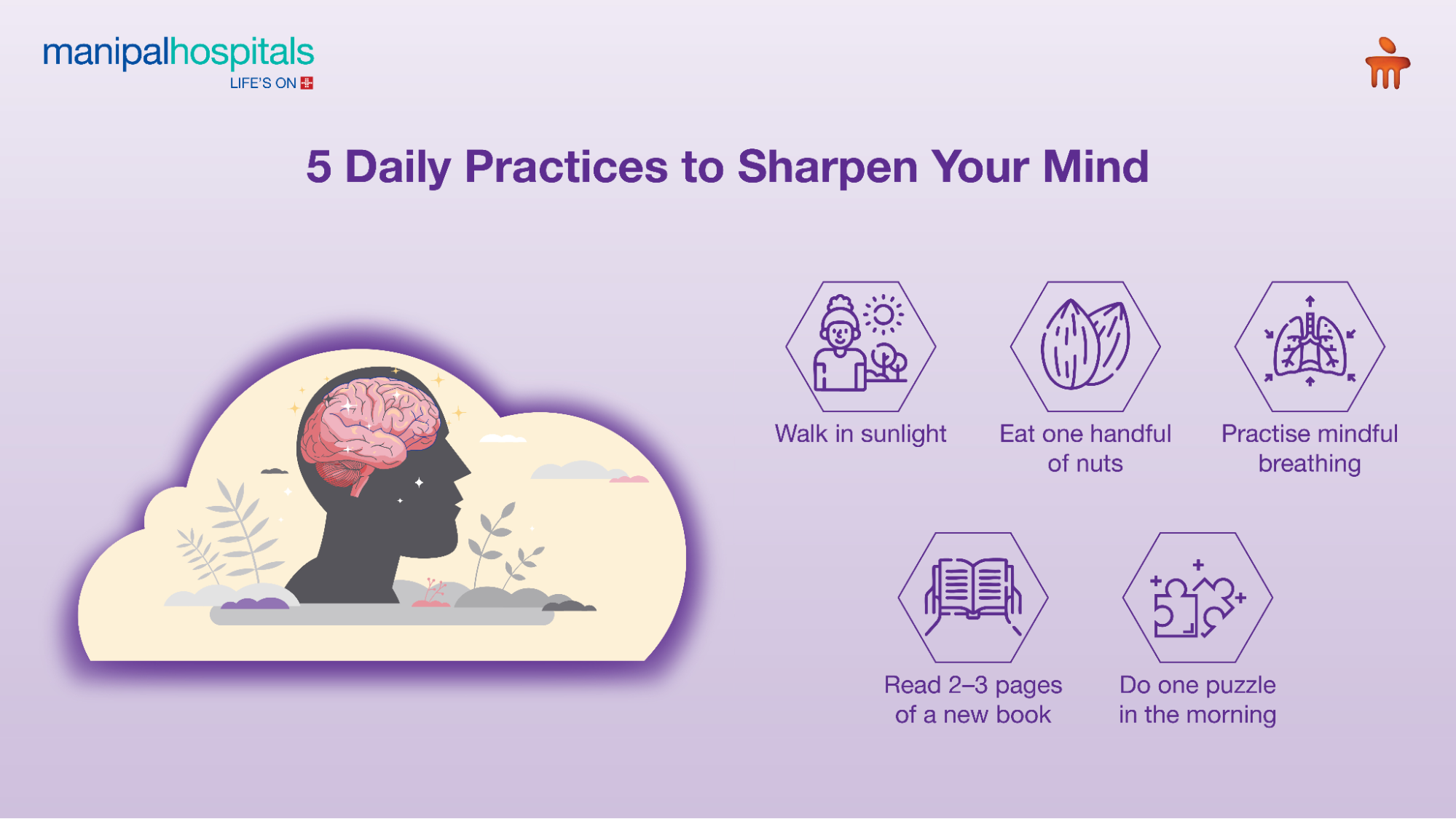
1. Challenge Your Brain Daily
Your brain thrives on novelty. Just like muscles, it grows stronger when challenged.
Try:
-
Solving puzzles (crosswords, Sudoku, word games)
-
Playing strategy-based games or chess
-
Learning a new language or musical instrument
-
Taking a short online course
-
Switching daily routines to create new neural pathways
Mental workouts stimulate areas of the brain responsible for memory and focus, helping you stay sharp with age.
2. Stay Physically Active: Movement Protects the Brain
Physical activity increases blood flow to the brain, boosts oxygen supply, and reduces inflammation.
Aim for:
-
30–45 minutes of walking, cycling, or swimming
-
2–3 days of strength training
-
Balance exercises like yoga or tai chi
Studies show regular exercise slows age-related cognitive decline and reduces the risk of dementia.
3. Eat for Brain Health
A well-balanced diet rich in nutrients supports cognitive function.
Include:
-
Omega-3 fatty acids (salmon, walnuts, flaxseeds)
-
Antioxidants (berries, dark chocolate, spinach)
-
Whole grains (oats, millets, brown rice)
-
Lean proteins
-
Healthy fats (olive oil, nuts)
The Mediterranean-style diet is proven to improve memory and mental performance.
4. Prioritise High-Quality Sleep
Good sleep allows your brain to repair, clear toxins, and store new information.
Improve sleep by:
-
Maintaining a fixed sleep schedule
-
Avoiding screen time before bed
-
Keeping your room cool and dark
-
Reducing caffeine after 4 pm
Most adults need 7–8 hours of restful sleep for optimal mental function.
5. Manage Stress to Protect Cognitive Health
Chronic stress shrinks areas of the brain related to memory and learning.
Try:
-
Deep breathing
-
Meditation or mindfulness
-
Nature walks
-
Listening to calming music
-
Journaling
Taking 10–15 minutes a day to relax helps you sharpen your mind and maintain focus.
6. Stay Socially Connected
Meaningful social interactions stimulate emotional and cognitive centres of the brain.
Strengthen connections through:
-
Regular calls or visits to friends/family
-
Joining hobby clubs or community groups
-
Volunteering
-
Participating in group activities
Socialising keeps your mood stable and your mind active.
7. Train Your Memory Intentionally
Memory is a skill; the more you use it, the stronger it becomes.
Try techniques like:
-
Repetition
-
Association (connecting new information to something familiar)
-
Visualisation
-
Using reminders or planners smartly
Even simple daily memory exercises can significantly enhance mental sharpness.
8. Stay Hydrated
Even mild dehydration affects concentration and mental performance.
Recommended:
Drink 6–8 glasses of water daily. Include herbal teas and fruits with high water content.
9. Limit Alcohol & Avoid Smoking
Both can impair cognitive function and speed up ageing of the brain.
Reduce alcohol intake and seek support if quitting smoking feels challenging — your brain health will thank you.
10. Regular Health Check-ups Matter
Conditions like diabetes, thyroid issues, hypertension, vitamin deficiencies, and hearing loss can quietly affect brain health.
Timely evaluations help detect issues early and prevent long-term cognitive decline.
How to Sharpen Your Mind: Daily Exercises
Here are three simple daily exercises you can start today:
The 5-Minute Recall Test
At the start of the day, read a short paragraph. Try recalling it after five minutes.
The “Use Your Non-Dominant Hand” Trick
Brush your teeth, hold your cup, or write a few words using your weaker hand to activate new neural circuits.
The Brain Pause
Spend 3 minutes focusing on your breath to improve clarity and reduce mental clutter.
Age may naturally slow the body, but your mind can remain bright, active, and powerful with the right habits. Strengthening mental acuity isn’t about drastic changes — it’s about small, consistent choices that nurture your brain daily.Whether you choose to move more, learn something new, sleep better, or stay socially active, each step helps your brain stay sharp and resilient. Start today. Your future self will thank you.
If you’ve noticed memory lapses, confusion, or mental fatigue, schedule a consultation at Manipal Hospital’s Neurology department. Our experts provide personalised guidance, assessments, and strategies to keep your mind healthy and sharp.
FAQ's
Mental acuity refers to your brain’s sharpness how well you think, process information, remember details, solve problems, and stay focused. High mental acuity means quick thinking and clearer decision-making.
As we age, blood flow to the brain decreases, connections between brain cells weaken, and stress or lifestyle factors may affect memory. However, with good habits, you can slow or even reverse many of these changes.
Do simple daily activities such as puzzles, brisk walking, practising mindfulness, learning something new, and eating brain-boosting foods. These habits stimulate new neural connections and protect memory.
Omega-3 rich fish, berries, nuts, seeds, olive oil, whole grains, leafy vegetables, green tea, and dark chocolate help improve attention, recall, and overall brain function.
Yes. Poor sleep reduces focus, slows reaction time, affects memory, and worsens mood. Aim for 7–8 hours of good-quality sleep to keep your brain active and alert.
Absolutely. Games like Sudoku, crosswords, memory games, and strategic board games challenge your brain and help improve processing speed and cognitive flexibility.
Chronic stress releases hormones that damage the brain’s memory and learning centres. Managing stress through breathing exercises, meditation, or simple breaks can protect mental health.
Yes. The brain can grow new connections even in later years. With consistent habits—exercise, social engagement, good sleep, and mental stimulation—you can improve clarity, memory, and mental sharpness.
Definitely. Social interaction strengthens emotional health, reduces loneliness, improves mood, and stimulates cognitive centres that support long-term brain vitality.
Share this article on: