7 Min Read

When an acute brain stroke happens, every single minute counts. A stroke occurs when blood flow to a portion of the brain is suddenly cut off by a clot, or when a blood vessel weakens and bursts open. Without constant circulation, the brain tissue in that area cannot receive oxygen, causing millions of neural cells to suffer damage each minute.
The biggest challenge in treating a stroke is often the time taken to reach a medical facility that is actually equipped to treat it immediately. Not every clinic or general nursing home has the specialised infrastructure required to handle acute neurological emergencies. Taking a patient to an emergency room that lacks round-the-clock brain imaging or neuro-interventional experts often leads to delays, as the patient has to be transferred elsewhere.
Choosing an accredited Stroke Ready Hospital in Kanakapura Road ensures that from the moment an ambulance pulls up, an organised clinical pathway is activated to preserve brain function. Manipal Hospital Kanakapura Road has specialised stroke care facilities, with doctors and diagnostic support to assess and manage stroke emergencies.
Synopsis
- What Makes a Hospital Stroke-Ready?
- Advanced diagnostic facilities
- Specialist treatment and critical care
- Advanced Stroke Treatment in Kanakapura Road: From Diagnosis to Emergency Intervention
- Rapid diagnosis and brain imaging
- Treatment for ischaemic stroke
- Treatment for haemorrhagic stroke
- Comprehensive Stroke Care Centre in South Bangalore
- Monitoring and rehabilitation after a stroke
- Long-term stroke management
- Conclusion
What Makes a Hospital Stroke-Ready?
When a patient arrives with stroke symptoms, several things need to happen in quick succession. The emergency team has to assess the patient, brain imaging needs to be carried out, and specialists have to decide on the appropriate treatment. A stroke-ready hospital should have the people, equipment and clinical support to handle each of these steps.
A coordinated emergency response
The emergency department should be equipped to recognise stroke symptoms and begin an immediate assessment. This involves coordination between different specialists, including:
-
Emergency physicians who conduct the initial assessment and stabilise the patient.
-
Neurologists who assess the extent of neurological damage.
-
Radiologists who examine and interpret brain scans.
Interventional neuroradiologists and neurosurgeons who manage cases requiring specialised procedures or surgery.
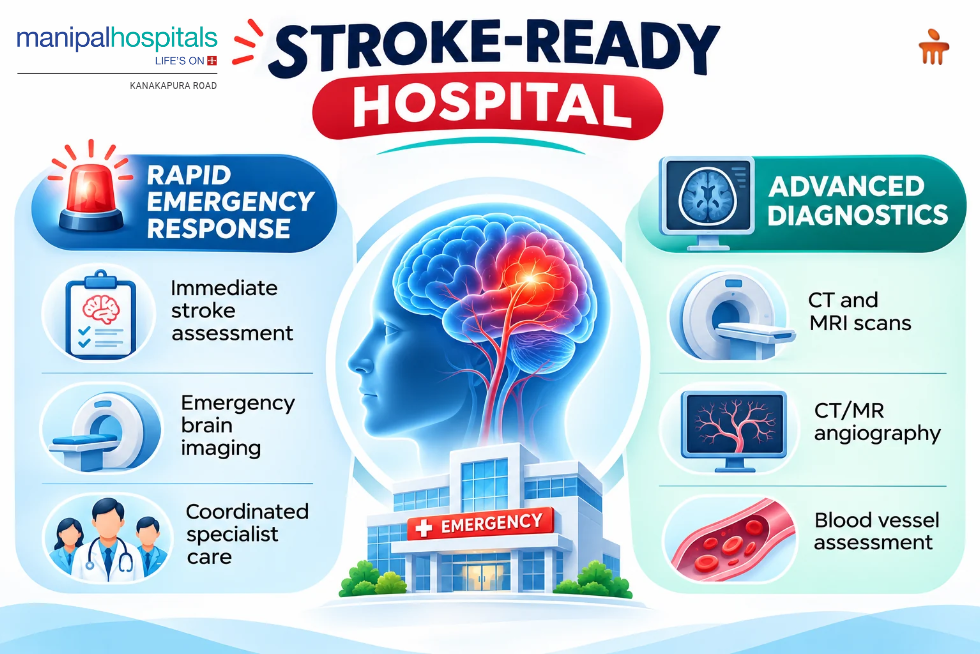
Advanced diagnostic facilities
Brain imaging helps doctors identify the type of stroke and understand which blood vessels are affected. A stroke-ready hospital should have access to:
-
CT and MRI scans to detect bleeding, blocked vessels and brain tissue damage.
-
CT or MR angiography to examine blood vessels and locate blockages.
-
Doppler studies to assess blood flow through the carotid arteries.
Specialist treatment and critical care
Treatment facilities are equally important. These include neurocritical care units for close monitoring, catheterisation laboratories for procedures such as mechanical thrombectomy, and neurosurgical operating theatres for patients who require surgical intervention. Together, these services allow the medical team to manage different stroke presentations and complications under one coordinated care pathway.
Advanced Stroke Treatment on Kanakapura Road: From Diagnosis to Emergency Intervention
When a patient arrives with suspected stroke, the first step is to find out what has happened inside the brain. Doctors need to establish whether a blood clot has blocked an artery or a blood vessel has ruptured and caused bleeding. This distinction is important because the treatment for each type of stroke is different.
Rapid diagnosis and brain imaging
The medical team uses different investigations to understand the location and extent of the damage.
|
Investigation |
What it helps doctors identify |
|
Non-contrast CT scan |
Bleeding in the brain |
|
MRI brain |
Location and extent of brain tissue damage |
|
CT angiography |
Blocked or narrowed blood vessels |
|
MR angiography |
Blood vessel abnormalities and blockages |
|
Blood investigations |
Blood glucose, clotting problems and other factors affecting treatment decisions |
Treatment for ischaemic stroke
An ischaemic stroke occurs when a blood clot blocks blood flow to part of the brain. Treatment focuses on restoring circulation and limiting further damage.
Two important treatment options include:
-
Intravenous thrombolysis: Clot-dissolving medication is administered through a vein to break down the clot. Eligible patients are generally treated within 4.5 hours of symptom onset. Selected patients may qualify for an extended treatment window based on advanced imaging.
-
Mechanical thrombectomy: Here, an interventional specialist passes a catheter through a blood vessel to reach and remove the clot. Selected patients with large-vessel blockages may benefit from this procedure up to 24 hours after they were last known to be well.
Treatment for haemorrhagic stroke
A haemorrhagic stroke involves bleeding within or around the brain. Treatment focuses on controlling the bleeding and managing pressure inside the skull. Depending on the patient's condition, it may involve:
-
Blood pressure control and measures to manage bleeding.
-
Neurocritical care to monitor brain pressure and neurological changes.
-
Neurosurgical procedures such as haematoma evacuation or decompressive surgery, where indicated.
Treatment depends on the stroke type, imaging findings, and the patient's clinical condition. With 24/7 Stroke Emergency Care in Kanakapura Road, Bangalore, access to emergency imaging, specialist evaluation and interventional facilities becomes particularly important in managing these cases.
Manipal Hospital Kanakapura Road is equipped to provide comprehensive care for people seeking Advanced Stroke Treatment in Kanakapura Road, with facilities to support the diagnosis and management of different types of stroke.
Comprehensive Stroke Care Centre in South Bangalore
Stroke can be a challenging period for the patient and families. Many patients may have experienced difficulty walking, speaking, or swallowing food. Others may have trouble with memory and focus. Recovery is an individual process, as it takes time to return to the routine of daily life.
Monitoring and rehabilitation after a stroke
After treatment, the patients are monitored regularly. The doctors monitor blood pressure, overall health, and any changes in symptoms. Some patients experience difficulty swallowing; some can't eat or drink without choking.
Therapy is tailored to the patient's issues. This can include:
-
Physical therapy to improve walking, balance, and strength.
-
Speech therapy to assist with swallowing and speech.
-
Occupational therapy to assist patients with daily living (dressing and eating).
-
Cognitive and memory exercises if a change in thinking or memory is detected.
Long-term stroke management
Recovery does not end with the patient's discharge from the hospital. It's still important to keep monitoring and prescribing medication for diabetes, high blood pressure, high cholesterol, etc. They also reduce the risk of a repeat stroke. A stroke care centre in South Bangalore, such as Manipal, helps patients during this recovery phase by providing follow-up care for the patient's progress or changing needs.
Conclusion
During a stroke, every minute counts. Timely diagnosis, the right medical team, and access to appropriate treatment can affect a patient's recovery. For those looking for Emergency brain stroke treatment near Kanakapura Road, Manipal Hospital Kanakapura Road offers emergency stroke care, specialist support and rehabilitation services. Having these services under one roof gives patients access to care at different stages of their recovery.
FAQ's
Intravenous clot-dissolving medications (thrombolysis) must be given within 4.5 hours from the exact moment symptoms began, or from when the patient was last seen completely normal. If this window is missed, the risk of bleeding into damaged brain tissue increases, which is why reaching the hospital immediately is so vital.
Ambulance paramedics cannot administer clot-busting drugs in transit because a brain scan is required first to confirm whether the stroke is caused by a clot or a bleed. However, emergency medical teams stabilize breathing, monitor heart rhythms, check blood sugar levels, and alert the hospital's stroke team in advance so the CT scanner is cleared before the ambulance arrives.
Do not give the person anything to eat or drink, including water or oral medicines, because throat muscles are often weakened during a stroke, creating a severe choking hazard. You should also never give aspirin before a doctor has reviewed a brain scan, as aspirin can worsen bleeding if the stroke is haemorrhagic.
While clot-busting injections are effective for small clots in smaller blood vessels, they often struggle to dissolve large blood clots lodged in major brain arteries. Mechanical thrombectomy allows specialists to physically pull these large clots out, restoring blood flow to large sections of brain tissue quickly.
The length of a hospital stay depends on the severity of the stroke and the treatment received. Patients with minor strokes who received prompt clot-busting therapy might be discharged within three to five days, whereas individuals who experienced severe strokes or required surgical interventions may need one to two weeks of inpatient care followed by structured rehabilitation.
Share this article on: