10 Min Read
It often starts with changes that don’t seem serious at first, such as feeling unusually restless, losing weight without trying, or noticing your heart racing even at rest. Many men tend to brush these off as stress, fatigue, or lifestyle-related issues. But sometimes, these signs point to something deeper. Often perceived as a condition predominantly affecting women, hyperthyroidism can significantly impact men's health, presenting unique challenges in diagnosis and management. Thyroid disorders can present differently across populations, and recognising these variations is important for accurate diagnosis and treatment.
While hyperthyroidism is indeed more common in women (approximately 5-10 times more likely), men are not immune, and when affected, symptoms can sometimes be overlooked or misattributed to other conditions, leading to delayed diagnosis. However, with timely intervention, over 85% of patients with hyperthyroidism can achieve excellent symptom control and long-term health, highlighting the critical importance of awareness and early medical consultation. This blog post aims to shed light on hyperthyroidism in men, exploring its causes, varied symptoms, and the effective hyperthyroidism treatment options available to ensure a better quality of life.
Synopsis
- What is Hyperthyroidism?
- Hyperthyroidism in Men: A Closer Look
- Symptoms of Hyperthyroidism in Men
- Why Men Might Delay Diagnosis
- Understanding the Causes of Hyperthyroidism in Men
- Diagnosis: Taking the First Step
- Effective Hyperthyroidism Treatment Options
- Care Essentials: Do's and Don'ts
- Living with Hyperthyroidism: Diet and Lifestyle
- Conclusion
What is Hyperthyroidism?
Hyperthyroidism is a condition where the thyroid gland, a small, butterfly-shaped gland located at the base of your neck, produces too much thyroid hormone. These hormones, primarily thyroxine (T4) and triiodothyronine (T3), regulate various bodily functions, including metabolism, heart rate, and body temperature. An overactive thyroid accelerates these functions, leading to a wide range of symptoms that can affect nearly every system in the body.
Hyperthyroidism in Men: A Closer Look
While the underlying mechanisms of hyperthyroidism are similar in men and women, some symptoms may present differently or have a greater impact in men. Data suggests that men with hyperthyroidism often present with more severe cardiovascular symptoms or experience notable changes in reproductive health.
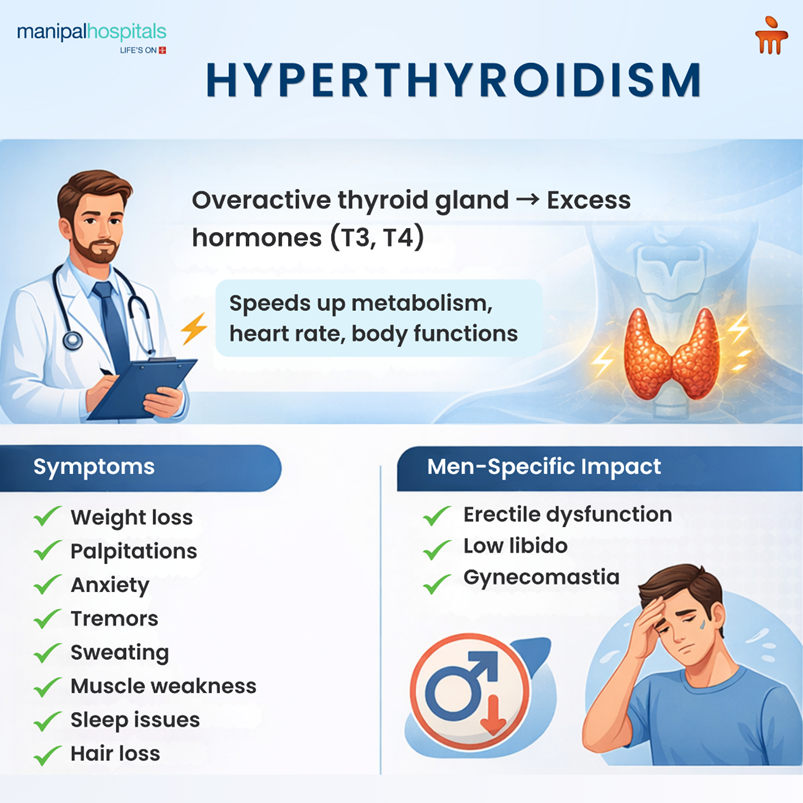
Symptoms of Hyperthyroidism in Men
Recognising the signs is the first step towards diagnosis. Men might experience a combination of the following symptoms:
-
Unexplained Weight Loss: Despite maintaining usual eating habits or even increased appetite, significant weight loss can occur due to an accelerated metabolism.
-
Increased Heart Rate and Palpitations: A rapid, irregular heartbeat (tachycardia) or a sensation of your heart pounding.
-
Nervousness, Anxiety, and Irritability: Feeling restless, agitated, or easily annoyed.
-
Tremors: Involuntary shaking, often noticeable in the hands.
-
Heat Intolerance and Increased Sweating: Feeling uncomfortably warm even in cool environments, and sweating excessively.
-
Muscle Weakness and Fatigue: Despite an overactive metabolism, muscle weakness, particularly in the upper arms and thighs, and general fatigue can be prominent.
-
Changes in Bowel Habits: More frequent bowel movements or diarrhoea.
-
Erectile Dysfunction (ED) and Decreased Libido: Thyroid hormones play a crucial role in reproductive health, and an imbalance can lead to issues with sexual function and desire in men. Studies indicate that up to 60% of men with untreated hyperthyroidism may experience some form of sexual dysfunction.
-
Gynecomastia: Enlargement of breast tissue, a less common but distressing symptom for some men.
-
Hair Loss: Thinning hair or hair loss, sometimes affecting the scalp and body.
-
Sleep Disturbances: Difficulty falling asleep or staying asleep.
-
Eye Changes (Graves' Ophthalmopathy): Although less common in men, it can cause bulging eyes, redness, irritation, or vision problems, particularly if Graves' disease is the cause.
Why Men Might Delay Diagnosis
Societal norms often encourage men to downplay symptoms or attribute them to stress, ageing, or lifestyle factors. Symptoms like fatigue, irritability, and decreased libido might be dismissed, leading to a delay in seeking medical attention. It's crucial for men to be aware of these signs and not hesitate to consult a doctor, especially if multiple symptoms persist.
Understanding the Causes of Hyperthyroidism in Men
Understanding the hyperthyroidism causes is vital for effective management. The most common causes include:
-
Graves' Disease: This is an autoimmune disorder where the body's immune system mistakenly attacks the thyroid gland, causing it to produce excessive hormones. It is the most common cause of hyperthyroidism, accounting for about 60-80% of cases.
-
Toxic Multinodular Goitre: In this condition, several nodules (lumps) develop in the thyroid gland and begin to produce excess thyroid hormones independently.
-
Solitary Toxic Adenoma: Similar to a toxic multinodular goitre, but only one nodule becomes overactive.
-
Thyroiditis: Inflammation of the thyroid gland can cause stored thyroid hormones to leak into the bloodstream. This can be temporary and may be followed by a period of hypothyroidism before resolving.
-
Excessive Iodine Intake: Consuming too much iodine, either through diet, medications, or contrast dyes used in medical tests, can sometimes trigger hyperthyroidism in susceptible individuals.
Diagnosis: Taking the First Step
Accurate diagnosis is paramount. Diagnosis typically involves a systematic approach:
-
Physical Examination and Medical History: Your doctor will assess your symptoms, check for an enlarged thyroid gland (goitre), rapid pulse, and signs like hand tremors or eye changes.
-
Blood Tests: The most definitive tests involve measuring levels of Thyroid Stimulating Hormone (TSH), free T4, and free T3. Low TSH levels and high T4/T3 levels usually indicate hyperthyroidism.
-
Further Investigations: Depending on blood test results, a thyroid scan (radioactive iodine uptake test) may be performed to determine the cause of hyperthyroidism. An ultrasound of the thyroid can also help detect nodules or inflammation.
Effective Hyperthyroidism Treatment Options
The goal of hyperthyroidism treatment is to bring thyroid hormone levels back to normal, alleviate symptoms, and prevent long-term complications. Treatment plans are based on your age, overall health, severity of the condition, and underlying cause. Here are the primary treatment approaches:
-
Antithyroid Medications: These medications work by reducing the thyroid gland's ability to produce hormones. They are often the first line of treatment, providing relief from symptoms within weeks. Approximately 30-50% of patients treated with antithyroid medications achieve long-term remission after 12-18 months of therapy, particularly in cases of Graves' disease.
-
Radioactive Iodine Therapy (RAI): This involves taking a single dose of radioactive iodine (I-131) orally. The thyroid gland absorbs the iodine, which then destroys the overactive thyroid cells, reducing hormone production. This is a highly effective treatment, with success rates often exceeding 90% in bringing thyroid function back to normal.
-
Surgery (Thyroidectomy): In certain cases, such as very large goitres, severe symptoms that don't respond to other treatments, or suspicion of malignancy, surgical removal of part or all of the thyroid gland may be recommended. This procedure is generally very effective in resolving hyperthyroidism.
Care Essentials: Do's and Don'ts
Managing hyperthyroidism involves active participation in your care journey.
Do's:
-
Follow Medication Schedule: Take your prescribed medications exactly as directed by your doctor.
-
Attend Regular Check-ups: Consistent monitoring of thyroid hormone levels is crucial for adjusting treatment.
-
Adopt a Balanced Diet: Focus on a healthy, balanced diet. Discuss with your doctor or a dietitian about specific dietary considerations, especially regarding iodine intake.
-
Manage Stress: Practice relaxation techniques such as yoga, meditation, or deep breathing, as stress can exacerbate symptoms.
-
Stay Hydrated: Drink plenty of water to combat increased sweating and maintain overall health.
-
Prioritise Sleep: Aim for 7-9 hours of quality sleep to help your body recover and manage fatigue.
Don'ts:
-
Self-Medicate: Never adjust your medication dosage or stop treatment without consulting your doctor.
-
Ignore Symptoms: Do not dismiss new or worsening symptoms; report them to your healthcare provider immediately.
-
Consume Excessive Iodine: Avoid iodine-rich foods (e.g., kelp, seaweed) or supplements unless advised by your doctor, as excess iodine can worsen hyperthyroidism.
-
Smoke: Smoking can worsen Graves' ophthalmopathy and impact the effectiveness of some treatments.
-
Overexert Yourself: While exercise is important, avoid intense physical activity during periods of severe symptoms.
Living with Hyperthyroidism: Diet and Lifestyle
While diet alone cannot cure hyperthyroidism, certain nutritional choices and lifestyle adjustments can complement medical treatment and help manage symptoms effectively.
Hyperthyroidism Diet
A balanced and mindful diet can support your overall health while managing hyperthyroidism:
-
Low-Iodine Foods: Since iodine is used by the thyroid to produce hormones, a low-iodine diet can be beneficial, especially before radioactive iodine therapy. Examples include non-iodised salt, fresh fruits, vegetables (except seaweed/kelp), and lean meats.d
-
Cruciferous Vegetables: Foods like broccoli, cauliflower, cabbage, and kale may have antithyroid properties, though more research is needed.
-
Selenium-Rich Foods: Selenium plays a role in thyroid hormone metabolism. Good sources include Brazil nuts, sunflower seeds, and whole grains.
-
Vitamin D and Calcium: Hyperthyroidism can affect bone density. Ensure adequate intake of Vitamin D (sunlight exposure, fortified foods) and calcium (dairy products, leafy greens) to support bone health.
-
Avoid Processed Foods and Excessive Caffeine: These can exacerbate symptoms like anxiety and palpitations.
Lifestyle Adjustments
-
Regular Exercise: Moderate exercise, once symptoms are controlled, can help improve muscle strength, reduce stress, and boost mood.
-
Stress Management: Chronic stress can impact hormone balance. Incorporate stress-reducing activities into your daily routine.
-
Adequate Rest: Prioritise sufficient sleep to aid recovery and manage fatigue.
Conclusion
Hyperthyroidism in men can often go unnoticed, especially when symptoms are subtle or mistaken for everyday stress. However, an untreated thyroid imbalance can affect the heart, metabolism, and overall quality of life. Early recognition, accurate diagnosis, and the right treatment approach play a crucial role in preventing complications and restoring normal health. If there are ongoing symptoms such as unexplained weight loss, palpitations, or fatigue, it is important to seek medical evaluation.
For those seeking comprehensive care in the region, Manipal Hospital Kanakapura Road offers advanced facilities and expert endocrinologists for comprehensive hyperthyroidism treatment in Kanakapura Road, ensuring you receive the best possible care close to home.
FAQ's
Yes, hyperthyroidism can lead to decreased sperm count, reduced sperm motility, and erectile dysfunction, all of which can impact male fertility. Effective treatment often restores fertility.
While hyperthyroidism itself is not directly inherited, a predisposition to autoimmune thyroid diseases like Graves' disease can run in families. If a family member has a thyroid condition, your risk might be slightly higher.
The duration of treatment varies. Antithyroid medications are typically taken for 12-18 months, though some individuals may require longer courses. Radioactive iodine therapy is a single treatment, with effects taking weeks to months to fully manifest. Surgical recovery is generally a few weeks.
While symptoms are severe, intense exercise should be avoided. Once hormone levels are controlled with treatment, moderate exercise is generally encouraged to improve overall well-being, muscle strength, and bone density.
Iodine is essential for thyroid hormone production. However, in hyperthyroidism, excessive iodine intake can worsen the condition, especially in those with certain types of hyperthyroidism, like toxic multinodular goitre or iodine-induced hyperthyroidism. A low-iodine diet might be recommended during treatment.
Untreated hyperthyroidism can put significant strain on the heart, leading to complications like atrial fibrillation (an irregular and often rapid heart rate), heart failure, and other cardiovascular issues. Early diagnosis and hyperthyroidism treatment are crucial to prevent these complications.
Share this article on: