7 Min Read
Most of us have experienced those moments when we feel inexplicably 'off,' perhaps a persistent muscle twitch in our eyelid that won't stop, a sudden, sharp cramp in our calf during a walk, or a sense of mental fogginess that a cup of coffee can’t seem to fix. We often tell ourselves we are just tired or need more water, but beneath the surface, your body may be struggling with a specific chemical disruption. A delicate internal grid of minerals effectively powers our hearts, brains, and muscles. When the levels of these minerals shift even slightly, they can have an immediate and widespread physical impact.
This disruption is known as an electrolyte imbalance. Because these minerals govern the electrical signals in our cells, an imbalance doesn't just affect one area; it can change how your heart beats and how your nerves communicate. In this blog, you will learn what an electrolyte imbalance is, the early warning signs, and why you need to deal with it immediately.
Synopsis
- What is an electrolyte imbalance?
- Electrolytes Are More Important Than You Think!
- Common Signs of Electrolyte Imbalance
- What Causes Electrolyte Imbalance?
- Who Is at Risk of Electrolyte Imbalance
- How Fluid and Electrolyte Imbalance Affects the Body
- When Should You Pay Attention?
- Identifying Electrolyte Imbalance
- How to Treat an Electrolyte Imbalance Problem?
- When to Seek Immediate Medical Care?
- Conclusion
What is an electrolyte imbalance?
It is a condition where the concentration of specific minerals in your blood is either too high or too low. These minerals, known as electrolytes, are chemicals that conduct electricity when dissolved in water. They are essential for various bodily functions, including maintaining the balance of fluids inside and outside your cells.
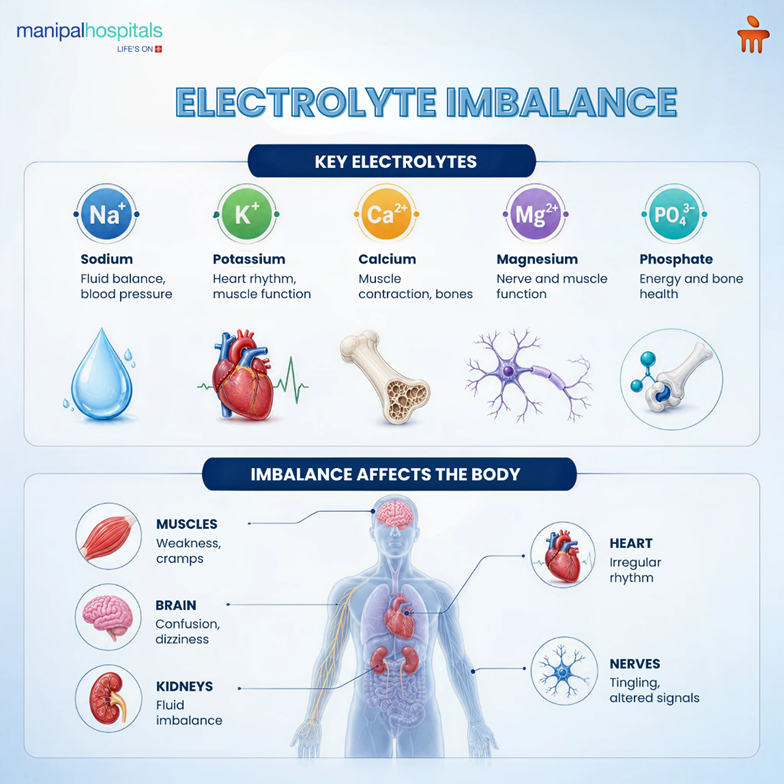
The primary electrolytes monitored in a clinical setting include:
-
Sodium: Controls blood pressure and the volume of fluids in the body.
-
Potassium: Critical for the electrical signals that regulate the heart and muscle contractions.
-
Calcium: Necessary for blood clotting, bone structure, and nerve signalling.
-
Magnesium: Assists in muscle relaxation and supports a healthy immune system.
-
Phosphate: Vital for energy production and bone health.
When a shift occurs, it is referred to as an electrolyte imbalance. Because the body requires these minerals to stay within a very narrow range, even a minor deviation can lead to significant physical symptoms.
Electrolytes Are More Important Than You Think!
Electrolytes constantly support your body, even when you are not aware of it. For example:
-
Sodium helps control the amount of fluids in your body.
-
Potassium helps keep your heart beating normally.
-
Calcium is responsible for muscle contraction.
-
Magnesium is involved in nerve impulses.
In cases where these levels are disrupted, it becomes difficult for the body to function effectively. This stage is where the symptoms become noticeable.
Common Signs of Electrolyte Imbalance
The symptoms may be different depending on which electrolyte is affected, but there are some common patterns. You may notice the following electrolyte imbalance symptoms:
-
Weakness or cramping in your muscles
-
Extreme tiredness, which is not relieved by resting
-
Feeling dizzy and light-headed
-
Palpitations or irregular beating of your heart
-
Nausea or vomiting
-
The feeling of ‘pins and needles’ or a tingling sensation
-
In more extreme situations, you might feel confused or even experience seizures.
People often think these symptoms are signs of stress or dehydration. Most people ignore these signs, and that’s where the problem starts.
What Causes Electrolyte Imbalance?
An electrolyte imbalance is typically a symptom of another issue rather than a standalone disease. Understanding the cause is essential for effective treatment and keeping it from happening again.
Some common triggers include:
-
Dehydration could be caused by a lack of adequate fluid intake or sweating too much.
-
If you have any kidney issues, that could affect how the body maintains fluid balance.
-
Vomiting or diarrhoea causes the loss of electrolytes from the body.
-
Some drugs, such as diuretics, can affect fluid balance in the body.
-
It could also be because of a hormonal imbalance.
-
Some illnesses, like diabetes, can alter the balance of fluids and electrolytes in the body.
These imbalances often happen because of several factors working together.
Who Is at Risk of Electrolyte Imbalance
Some people are more likely to develop this condition, especially when fluid balance is easily disturbed.
-
Older adults and young children
-
People with kidney disease
-
Individuals with diabetes
-
Those taking medicines like diuretics
-
People who sweat a lot or do intense physical activity
-
Anyone who is not drinking enough fluids
Being aware of these risk factors can help you act early and prevent complications.
How Fluid and Electrolyte Imbalance Affects the Body
When fluid levels and electrolytes are not balanced, they affect multiple systems.
|
Body Function |
Impact of Imbalance |
|
Muscles |
Weakness, cramps |
|
Brain |
Confusion, dizziness |
|
Heart |
Irregular rhythm |
|
Kidneys |
Difficulty regulating fluids |
|
Nerves |
Tingling, altered signals |
This is why a fluid and electrolyte imbalance is taken seriously, especially in vulnerable individuals.
When Should You Pay Attention?
If you have any of the following symptoms, you should consider consulting a medical professional immediately:
-
Symptoms are present even after fluid replacement
-
You experience frequent muscle cramps or weakness
-
Confusion or excessive fatigue is present
-
Persistent heart palpitations
Early detection will ensure early electrolyte balance correction in Kanakapura Road.
Identifying Electrolyte Imbalance
The procedure for the diagnosis of this condition involves the assessment of the symptoms and medical history of the patient, as there are certain similarities between this disease and others.
-
Blood tests to check levels of sodium, potassium, calcium, and other electrolytes
-
Urine tests to understand fluid balance in some cases
-
Assessment of underlying conditions, such as kidney function or hormonal issues
Early diagnosis helps guide appropriate treatment and prevent the condition from worsening.
How to Treat an Electrolyte Imbalance Problem?
Treatment will depend on the severity of the condition and its cause.
1. Rehydration
Mild cases may be managed with:
-
Oral rehydration solutions
-
Taking more fluids
The above remedies are helpful if the problem involves dehydration and electrolyte imbalance.
2. Medicines and supplements
-
Electrolyte supplements such as sodium, potassium, and magnesium
-
Medication used to treat abnormalities in the body
Most of the time, these therapies are prescribed by doctors as part of therapy programs.
3. Intravenous therapy
If the case is moderately or severely affected, then try intravenous therapy.
The above method is essential since intravenous fluid administration may fix the problem.
It is usually carried out in hospitals.
4. Treating the underlying cause
-
Treating kidney problems
-
Modification of the medications
-
Infection and hormonal imbalance
A long-lasting solution to such an imbalance requires treatment of the underlying problem.
When to Seek Immediate Medical Care?
Some symptoms should not be ignored and need urgent medical attention.
-
Severe weakness or trouble moving
-
Confusion, unusual behaviour, or difficulty staying alert
-
Chest pain or a noticeably irregular heartbeat
-
Seizures
These signs may point to a serious electrolyte imbalance. Getting medical help quickly can prevent complications and help stabilise the condition.
Conclusion
To prevent or treat an electrolyte imbalance, it helps to understand what it is. By knowing the symptoms, identifying the cause of the imbalance, and getting treated, you will prevent complications from arising. This problem is treatable by doctors and is often manageable with timely treatment. At Manipal Hospital Kanakapura Road, we focus on safe, personalised treatment for each patient.
Visit us to receive electrolyte imbalance treatment in Kanakapura Road.
FAQ's
It occurs when key minerals like sodium, potassium, and calcium are at incorrect levels. This affects how your nerves, muscles, and organs function.
Muscle cramps, tiredness, dizziness, or an irregular heartbeat can signal that your body's electrical signals are not working properly.
Dehydration, kidney issues, some medicines, vomiting, or chronic illnesses can disrupt your fluid balance and alter important electrolytes.
Yes, treatment includes fluids, electrolyte supplements, diet changes, and medical supervision to restore balance and protect the heart, brain, and muscles.
Manipal Hospital Kanakapura Road offers specialised care, where expert doctors diagnose patients, provide IV fluids, and plan their electrolyte management.
Share this article on: