8 Min Read
We have all experienced that specific afternoon slump during an Indian summer. You step outside for a few minutes, and the air feels like a physical weight. By the time you get back indoors, your head is throbbing, your energy has vanished, and no amount of cold water seems to truly ‘cool you down’ from the inside out. While it may seem like a normal part of the season, these changes often reflect how the body is responding to rising temperatures and heat waves. If ignored, they can gradually lead to more serious heat-related problems.
This blog looks at what a heat wave means, how it affects the body, and simple ways to stay safe. It also covers practical steps on how to reduce body heat in summer and manage symptoms before they become more severe.
Synopsis
What Is a Heat Wave?
If you ask ten people what a heat wave is, you will likely get different answers. Clinically, the heat wave definition is quite clear. It refers to a period of unusually high temperatures lasting for several consecutive days, often along with increased humidity.
The problem is not just the temperature but also how long it lasts. The body does not always get enough time to recover. Normally, sweating helps regulate temperature, but during intense heat, especially with humidity, this becomes less effective, increasing the risk of heat-related stress.
It's also important to note that not everyone responds to heat in the same way. Children may not recognise early symptoms. Older adults may not feel thirsty even when dehydrated. Patients with chronic conditions may struggle more during a heat wave. Asphalt, concrete, and sand can reach extreme temperatures, causing severe contact burns to feet, especially for children.
This is exactly why we emphasise simple but practical health tips for summer heat. They are not precautions for extreme cases alone. They are for everyday prevention.
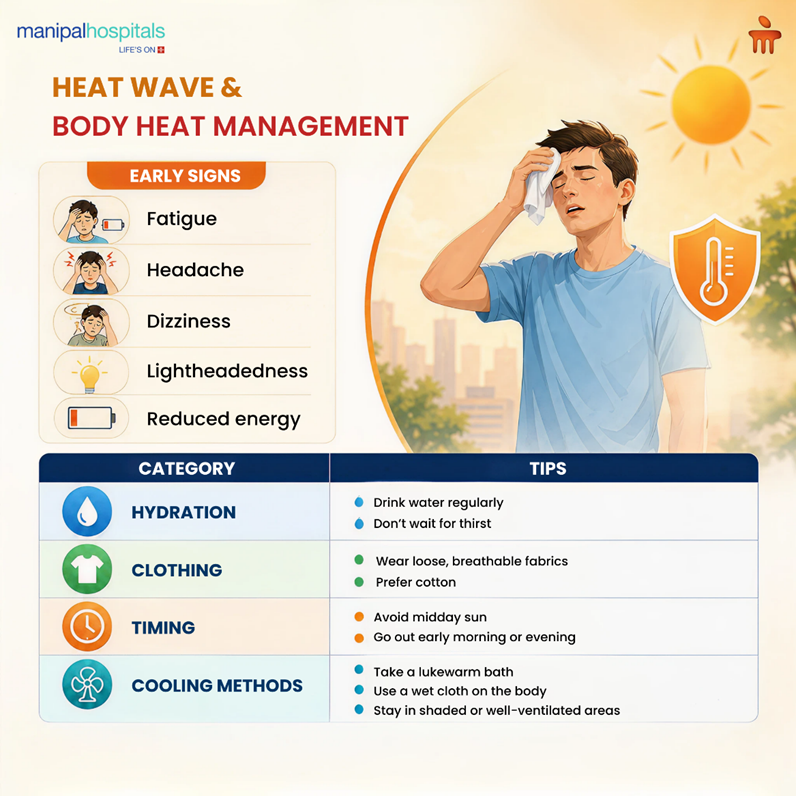
How Does Your Body Respond to Heat?
When exposed to high temperatures, the body tries to adapt. Blood vessels widen, sweating increases, and the skin feels warmer.
But this adjustment has limits. During a prolonged heat wave, fluid loss increases, and the body begins to struggle. In many patients, the early symptoms often appear mild:
-
“I feel unusually tired.”
-
“I get a headache by afternoon.”
-
“I feel light-headed when I stand up.”
Common Heat-Related Problems
In real emergency settings, heat-related illness rarely appears all at once. Generally, the condition progresses in stages, beginning with slight discomfort that gets progressively worse if not addressed during a period of heat.
Heat Exhaustion
This is often the early stage. People may feel very tired, sweat a lot, and have a general sense of weakness. Some may also feel nauseous or unwell without a clear reason.
Heat Stroke
This is an extremely serious course of events, and immediate medical help is needed. A rise in body temperature (above 104°F or 40°C) takes place, and one might have symptoms of confusion/agitation, slurred speech, unconsciousness, or seizures. Inability to sweat is an early warning sign prior to heatstroke, as it prevents the body’s natural cooling mechanism. At this stage, the condition can become life-threatening without immediate treatment.
Dehydration
Dehydration is common during hot weather and should not be ignored. Even mild dehydration can lead to tiredness, dizziness, and reduced concentration.
Heat Cramps
These are painful muscle cramps, usually happening after exercise in hot conditions. They are often linked to fluid and electrolyte loss.
These conditions are common during a heat wave, but with early care, they are largely preventable.
Comparison of Heat Conditions and Response
|
Condition |
What You May Notice |
What Helps Immediately |
|
Heat Exhaustion |
Sweating, weakness |
Rest, fluids, shade |
|
Heatstroke |
Confusion, high temperature |
Urgent medical care |
|
Dehydration |
Thirst, dizziness |
Oral fluids |
|
Heat Cramps |
Muscle pain |
Hydration, gentle rest |
This kind of quick reference is useful because symptoms often overlap, and early action matters.
Heat Wave Tips to Reduce Body Heat
When people ask how to reduce body heat in summer, the answer is usually simple, but it works only if followed regularly. Small daily habits often make a bigger difference than occasional effort.
Below are a few practical health tips for summer heat that are easy to follow and effective over time.
Hydration
Drink water throughout the day, not just when you feel thirsty. Thirst is often a late signal, and by then the body may already be slightly dehydrated during intense summer heat.
Clothing
Choose loose, breathable fabrics such as cotton. Materials that are tight-fitting and artificial can retain heat in the body and increase discomfort.
Timing
Make sure you schedule your outdoor activities for either the early hours of the day or late in the evening, since midday is when heat exposure is highest.
Cooling Measures
Simple actions like bathing in a lukewarm bath, applying a wet cloth to the body, or taking shade will naturally cause cooling of the body.
Food Choices That Help Reduce Body Heat
Food plays a bigger role than most people realise. Heavy meals tend to increase internal heat because digestion requires energy. On the other hand, lighter meals are easier on the body during hot weather.
Patients who include fruits with high water content often report feeling better. It is a small change, but it supports hydration naturally. If you are trying to understand how to reduce body heat in summer, your diet is a good place to start.
Simple Ways to Cool Your Body Naturally
Many traditional habits still work well, especially during intense summer heat when the body needs steady cooling support.
-
Drinking buttermilk or coconut water helps maintain hydration and replaces lost electrolytes, which is useful during a heat wave.
-
If body temperature begins to rise, a damp cloth on the forehead will help quickly.
-
Taking a lukewarm shower instead of a very cold one helps the body cool down gradually without shock.
-
Resting in a well-ventilated space allows air circulation and reduces discomfort caused by summer heat.
These simple steps may not seem significant, but they significantly help reduce body heat during summer when followed regularly. Along with cooling methods, it is equally important to follow basic safety precautions during a heat wave.
Safety Guide During a Heat Wave
During a heat wave, safety becomes important, especially to avoid serious heat-related problems.
-
Try to avoid going out during peak afternoon hours when the heat is at its highest.
-
Wear light, loose clothing that allows your body to breathe.
-
Use wide-brimmed hats or umbrellas to offer shade.
-
Take breaks if you are outdoors or doing any physical activity.
-
Never leave children or pets in parked vehicles, even for a few minutes.
-
Pay attention to signs like dizziness, weakness, or unusual tiredness and don’t ignore them.
These steps are simple, but they can help prevent heat-related complications if followed consistently.
When to Seek Medical Help?
During a heat wave, some signs should not be ignored, even if they seem mild at first:
-
Feeling confused or not thinking clearly
-
Vomiting again and again
-
Body feeling unusually hot
-
Feeling faint or about to pass out
If any of these happen, it is better not to wait. Seeking help early is an important part of health tips for summer heat and can prevent the condition from getting worse.
Conclusion
Summer heat can affect the body in ways that are easy to overlook at first. A heat wave is not just about feeling uncomfortable. It can put stress on the body and lead to health issues if not managed properly. Recognising early signs and following simple, practical steps can help prevent complications. If symptoms become frequent or difficult to manage, it may be necessary to seek medical advice.
Visit Manipal Hospital Kanakapura Road and meet our experienced specialists for heatstroke and related concerns.
FAQ's
A heat wave definition refers to a prolonged period of unusually high temperatures, often combined with humidity, which can affect the body’s natural cooling mechanisms.
To understand how to reduce body heat in summer, maintain hydration, avoid peak heat hours, wear breathable clothing, and consistently follow simple cooling practices.
Health tips for summer heat include staying hydrated, limiting outdoor exposure during peak hours, eating light meals, and recognising early symptoms of heat-related conditions.
Children, the elderly, and people with chronic health conditions are more vulnerable during a heatwave and need closer monitoring and preventive care.
For guidance on how to reduce body heat in summer in Kanakapura Road, visit specialised healthcare centres like Manipal Hospital Kanakapura Road for evaluation and treatment for heat-related illnesses and dehydration.
Share this article on: