7 Min Read
Living with severe obesity can affect far more than body weight. It can make day-to-day life harder, reduce mobility, disturb sleep, and increase the risk of conditions such as diabetes, high blood pressure, acid reflux, and joint pain. For some people, diet and exercise alone may not lead to enough long-term weight loss, especially when the body has already developed strong metabolic resistance. That is where gastric bypass surgery may be considered. It is a well-established weight-loss procedure that changes how the stomach and small intestine handle food. The surgery helps people feel full sooner and also reduces the amount of calories the body absorbs. In the right patient, it can be an effective step toward better health, improved energy, and greater confidence.
This blog explains gastric bypass surgery, the different types, the reasons it may be recommended, and the treatment options doctors usually discuss before and after the procedure. You will also learn how laparoscopic gastric bypass is done, what gastrojejunostomy means, and when specialist care may be helpful.
Synopsis
- What is Gastric Bypass Surgery?
- Why is Gastric Bypass Surgery Needed?
- What Happens During Gastric Bypass Surgery?
- Types of Gastric Bypass Surgery
- Is GBS Different from Other Weight Loss Surgeries?
- Advantages of Gastric Bypass Surgery
- What to Expect Before Surgery?
- Who is an Ideal Candidate?
- Recovery After Gastric Bypass Surgery
- Possible Risks and Considerations
- Lifestyle Changes Post-Surgery
- Conclusion
What is Gastric Bypass Surgery?
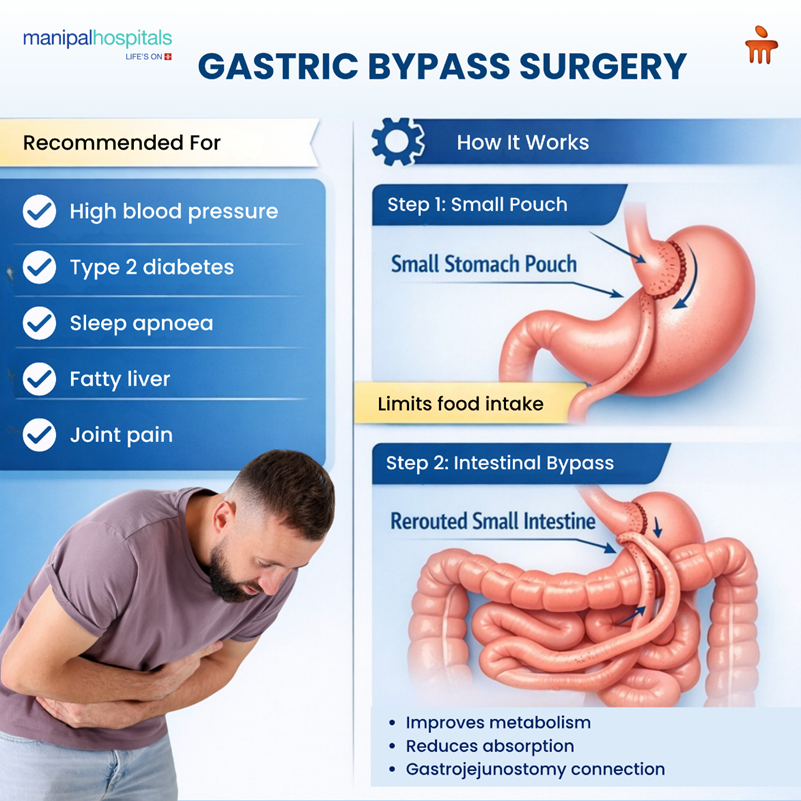
Gastric bypass surgery, a type of bariatric surgery, is an effective way to lose weight. It changes the size of the stomach and the way food moves through the body. The most common approach creates a small pouch in the stomach and connects it to part of the small intestine, called a gastrojejunostomy. The procedure reroutes food to bypass a portion of the stomach and upper intestine. As a result, the following things happen:
-
Food intake is reduced
-
Calorie absorption decreases
-
Hormonal changes help control hunger
These combined effects make bariatric surgery highly effective for weight loss and for improving health conditions linked to obesity.
Why is Gastric Bypass Surgery Needed?
While lifestyle changes are the first line of treatment, some individuals may not achieve adequate results; your doctor might recommend bariatric surgery. Some health issues associated with this condition include:
-
Type 2 diabetes
-
High blood pressure
-
Obstructive sleep apnoea
-
Fatty liver disease
-
Joint problems due to excess weight
Most people find that diet and exercise work best for losing weight. Still, some people with genetic or metabolic conditions may not see the same results. For them, procedures like laparoscopic gastric bypass can be a helpful option.
What Happens During Gastric Bypass Surgery?
Before gastric bypass surgery, the patient usually undergoes medical tests, nutritional counselling, and an assessment to make sure surgery is safe and appropriate. The procedure generally follows these steps:
-
Creating a Small Stomach Pouch
-
A small part of the stomach is separated to form a pouch that holds less food, helping you feel full sooner.
-
-
Changing the Path of the Intestine
-
A gastrojejunostomy connects the small intestine to the new pouch, allowing food to bypass part of the digestive tract. This leads to reduced calorie absorption, better blood sugar control, and changes in gut hormones that make you less hungry.
-
Types of Gastric Bypass Surgery
Not every procedure is the same. The type of gastric bypass surgery you receive depends on your health needs and what your doctor advises.
|
Type of Surgery |
Key Feature |
Benefit |
|
Roux-en-Y Gastric Bypass |
The most common method using Gastrojejunostomy |
Balanced weight loss and metabolic improvement |
|
Mini Gastric Bypass |
Also called One Anastomosis Gastric Bypass (OAGB), is a simpler version with one connection |
Shorter surgery time |
|
Laparoscopic gastric bypass |
Minimally invasive technique |
Faster recovery, smaller scars |
Is GBS Different from Other Weight Loss Surgeries?
Gastric bypass surgery is different from purely restrictive procedures because it combines restriction (smaller stomach) and malabsorption (reduced calorie absorption). This combination is often more effective for metabolic disorders like diabetes than some other treatments.
Research indicates that patients may lose 60–70% of extra body weight within 1–2 years. More importantly, this surgery helps people maintain their weight loss over the long term, especially when combined with lifestyle changes.
Advantages of Gastric Bypass Surgery
-
Many people who have gastric bypass surgery see improvements in both their physical health and metabolism. The most important benefits include the following:
-
Significant and sustained weight loss
-
Improvement or remission of type 2 diabetes
-
Better blood pressure control
-
Reduced risk of heart disease
-
Improved mobility and energy levels
Patients often notice a noticeable improvement in their quality of life within a few months post-surgery.
Laparoscopic gastric bypass is usually preferred because it uses smaller incisions and modern technology and equipment to do the following:
-
Reduced pain, quicker healing process
-
Shorter hospital stay, faster discharge
-
Rapid return to normal activities
What to Expect Before Surgery?
Before surgery, doctors perform a detailed evaluation, including:
-
Detailed medical assessment
-
Nutritional counselling
-
Psychological evaluation
-
Blood tests and imaging
Before undergoing gastric bypass surgery, doctors evaluate the overall health condition of the patient and explain the procedure in detail.
Who is an Ideal Candidate?
Doctors usually suggest gastric bypass surgery for people who have:
-
A Body Mass Index (BMI) ≥ 40
-
A BMI ≥ 35 with obesity-related conditions
-
Not achieved results with lifestyle changes
Each case is reviewed individually to ensure the best possible outcome.
Recovery After Gastric Bypass Surgery
Recovery varies for each person, but most patients follow a structured plan. Normal timeline for recovery:
-
First few days: Hospital monitoring and liquid diet
-
First few weeks: Gradual introduction of soft foods
-
After 4-6 weeks: Transition to regular healthy meals
Following these steps helps ensure long-term success after the procedure.
Possible Risks and Considerations
Like any major surgery, gastric bypass surgery involves certain risks. However, complications are less common when performed by experienced surgical teams. Some possible risks include the following:
-
Infection
-
Nutritional deficiencies
-
Dumping syndrome (rapid gastric emptying)
-
Bowel obstruction (very rare!!)
Regular check-ups and following medical advice can greatly reduce these risks.
Lifestyle Changes Post-Surgery
Staying consistent is essential for success after surgery. Some of the effective everyday routines that can help are as follows:
-
Eat slowly and mindfully
-
Avoid high-sugar foods
-
Regular physical activity
-
Stay hydrated
-
Follow prescribed supplements
-
Attend regular medical reviews
These habits help you make the most of your laparoscopic gastric bypass and support your long-term health.
Conclusion
Choosing bariatric surgery is a major step toward better health and quality of life. It is more than a weight loss method; it also addresses underlying metabolic issues. Advances such as laparoscopic gastric bypass and skilled surgical care make the procedure safer and more effective. Gastric bypass surgery at Manipal Hospital Kanakapura Road offers structured and patient-focused care with expert evaluation and personalised care.
FAQ's
Not at all. Younger people often recover more quickly, but older patients can do well too if they receive the right medical care and regular check-ups.
Yes, the surgery changes how food is digested. This can affect how medicines are absorbed. Your doctor will keep an eye on this and change medications if necessary.
Losing weight after surgery can help balance your hormones and make it easier to become pregnant. However, it is advised to start planning only after the weight is stabilised.
To maintain your results over time, eat enough protein, stay away from sugary foods, keep your portions small, and stick to a regular meal routine.
Following bariatric surgery, it is important to attend follow-up consultations. It helps monitor nutritional intake, spot any issues early, and maintain long-term well-being.
Share this article on: