8 Min Read
Do you wake up after a full night’s sleep and still feel exhausted during the day?
Persistent low energy in women often has clear, testable causes, not just stress or busy schedules. Low iron from heavy periods, inadequate vitamin B12 in restrictive diets, and low vitamin D from indoor lifestyles are common culprits. Even when sleep, work, and stress levels seem reasonable, an underlying nutrient deficiency can make you feel tired all the time. This blog explains the most common causes, clear tests to ask your doctor, practical fixes, and when to seek specialist care.
Synopsis
- Why Women Often Report Feeling Low on Energy
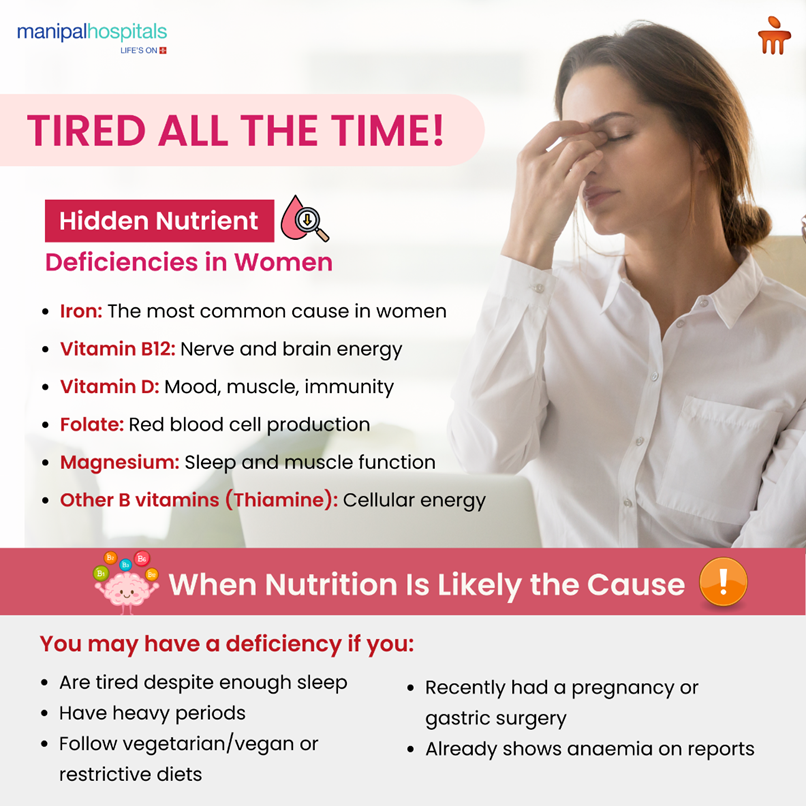
- Nutrient Deficiencies in Women That Cause Tiredness
- Deficiency, Typical Signs, and Recommended Tests
- How to Recognise When Nutrition is the Main Problem
- Practical Steps to Improve Energy Fast
- When to Seek Specialist Evaluation
- Lifestyle Changes That Support Long-Term Energy
- Conclusion
Why Women Often Report Feeling Low on Energy
Women face several biological and lifestyle factors that increase the risk of being tired all the time. Monthly menstrual blood loss, pregnancy, breastfeeding, and perimenopause alter nutrient needs. Work pressures, irregular meals, and limited time for exercise worsen the situation. Certain medications and medical conditions also contribute. When energy does not improve after sleep or rest, consider nutritional causes rather than simply blaming stress.
Nutrient Deficiencies in Women That Cause Tiredness
Persistent tiredness is strongly linked to several nutrient shortfalls. Below are the key ones to know.
-
Iron: Low iron is a leading cause of fatigue in women with heavy periods.
-
Vitamin B12: Low B12 causes weakness, memory problems, and numbness.
-
Vitamin D: Low vitamin D levels are associated with low mood and low energy.
-
Folate: Folate deficiency leads to anaemia and poor energy levels.
-
Magnesium: Low magnesium causes muscle cramps and poor sleep quality.
-
Thiamine and other B vitamins: Important for energy production in cells.
If you are persistently tired, testing these nutrients is a practical first step.
Deficiency, Typical Signs, and Recommended Tests
Micronutrient deficiencies often cause general, non-specific symptoms that can be mistaken for everyday fatigue or stress. The given table links common signs with the most appropriate tests, helping ensure deficiencies are identified accurately and treated effectively.
|
Nutrient |
Common Signs |
Recommended Test |
|
Iron |
Fatigue, paleness, fast heartbeat |
CBC and serum ferritin |
|
Vitamin B12 |
Tiredness, numbness, poor memory |
Serum B12, methylmalonic acid, if unclear |
|
Vitamin D |
Low mood, muscle aches, fatigue |
Serum 25(OH)D |
|
Folate |
Weakness, mouth ulcers, anaemia |
Serum folate or RBC folate |
|
Magnesium |
Muscle cramps, poor sleep, anxiety |
Serum magnesium (note limitations) |
|
B Vitamins (thiamine) |
Low energy, poor appetite |
Specific B vitamin assays, if indicated |
How to Recognise When Nutrition is the Main Problem
You are more likely to have a nutrient deficiency as the cause of being tired all the time if:
-
Symptoms started slowly and persist despite rest.
-
You have a restricted diet, for example, vegetarian or vegan, without fortified foods.
-
Heavy menstrual bleeding, recent pregnancy, or gastric surgery is a part of your history.
-
You are on medications that affect absorption, such as metformin or proton pump inhibitors.
-
Initial basic tests show anaemia or abnormal liver or thyroid results that suggest follow-up tests.
If multiple risk factors fit you, ask your clinician for targeted blood tests rather than a broad panel.
Practical Steps to Improve Energy Fast
These actions help most women who are feeling tired all the time due to nutritional causes:
-
Get targeted tests: CBC, ferritin, B12, 25(OH)D, folate, and magnesium if symptoms suggest.
-
Correct deficiencies under medical supervision: iron replacement, B12 injections or oral therapy, and vitamin D supplements according to levels.
-
Improve diet quality: Include iron-rich foods, fortified cereals, dairy or fortified plant milk, leafy greens, and lean proteins.
-
Small, regular meals: To stabilise blood sugar and reduce energy dips.
-
Moderate daily activity: Short walks and strength exercises improve energy and sleep.
-
Review medications with your clinician to identify those that may impair absorption.
Most women notice measurable improvement within weeks of correcting a documented deficiency.
When to Seek Specialist Evaluation
See a specialist if you remain tired despite correcting nutritional gaps or if you have:
-
New neurological symptoms such as numbness, tingling, or balance problems.
-
Significant weight loss, fevers, or persistent night sweats.
-
Sudden onset of severe fatigue that limits daily activities.
-
Suspected thyroid dysfunction or chronic illnesses such as autoimmune diseases.
Specialist at Jayanagar can look beyond nutritional causes to conditions like sleep disorders, chronic infections, or hormonal disorders.
Lifestyle Changes That Support Long-Term Energy
Beyond supplements and tests, sustainable habits help you stop feeling tired all the time:
-
Prioritise regular sleep times and a 7- to 8-hour sleep window.
-
Choose whole foods with a balance of protein, healthy fats, and complex carbohydrates.
-
Avoid excessive caffeine late in the day.
-
Manage stress with brief daily practices such as walking or breathing exercises.
-
Keep routine follow-ups to monitor nutrient levels after treatment.
Small, consistent steps produce durable energy gains.
Conclusion
Persistent fatigue in women is common but not inevitable. When you find yourself tired all the time, check for a treatable nutrient deficiency first. Targeted testing and guided supplementation, along with suitable diet and lifestyle modifications, often restore energy and improve focus. If symptoms persist despite correction, specialist evaluation is the next step.
For reliable testing, personalised nutrition plans, and follow-up care, contact Manipal Hospital Jayanagar. Our clinical nutrition and women’s health teams offer focused assessment, evidence-based treatment, and practical support to help you regain energy and well-being. Book an assessment at Manipal Hospital Jayanagar today and start a clear plan to stop feeling tired all the time.
FAQ's
Start with a CBC and serum ferritin to check for iron deficiency, plus serum B12 and vitamin D. Your clinician may add folate or thyroid tests based on symptoms.
Yes. Without planned sources of vitamin B12, iron, and sometimes zinc, a vegetarian diet can lead to nutrient deficiency. Fortified foods and supplements help prevent shortages.
Many women notice improvements within two to four weeks of appropriate iron therapy. Full correction of stores may take months, so follow-up testing is important.
Stress contributes to fatigue, but if you are consistently exhausted, test for nutritional causes. Treating a deficiency often improves resilience to stress.
Multivitamins can help fill gaps, but targeted treatment based on test results is more effective. Speak to a clinician before starting supplements to ensure the right dose and prevent interactions.
Share this article on: