8 Min Read
-Surgery-for-Knee-and-Shoulder-Pain.webp "Keyhole Surgery for Knee and Shoulder Pain: Benefits, Procedure, and Recovery Guide")
Joint pain can significantly affect mobility, independence, and quality of life. Persistent knee or shoulder discomfort often limits daily activities, work performance, and even sleep. In recent years, keyhole surgery has transformed the way joint problems are treated, offering effective relief with minimal tissue damage and faster recovery. With advancements in orthopaedic care, keyhole surgery, also known as arthroscopic surgery, has become a preferred option for managing both knee and shoulder pain. Our orthopaedics in Gurugram regularly recommend this approach for suitable patients to ensure precision-driven outcomes and quicker rehabilitation.
This comprehensive guide explains how keyhole surgery works, its role in knee pain treatment and shoulder pain treatment, and why it has become a cornerstone of modern orthopaedic practice.
Synopsis
- What Is Keyhole Surgery?
- Why Arthroscopic Surgery Is Preferred for Joint Pain
- Keyhole Surgery for Knee Pain Treatment
- Keyhole Surgery for Shoulder Pain Treatment
- Arthroscopic Knee Surgery vs Arthroscopic Shoulder Surgery
- Who Is an Ideal Candidate for Keyhole Surgery?
- Recovery After Keyhole Surgery
- Risks and Limitations of Keyhole Surgery
- Role of Physiotherapy After Arthroscopic Surgery
- When to Seek Medical Advice
- Conclusion
What Is Keyhole Surgery?
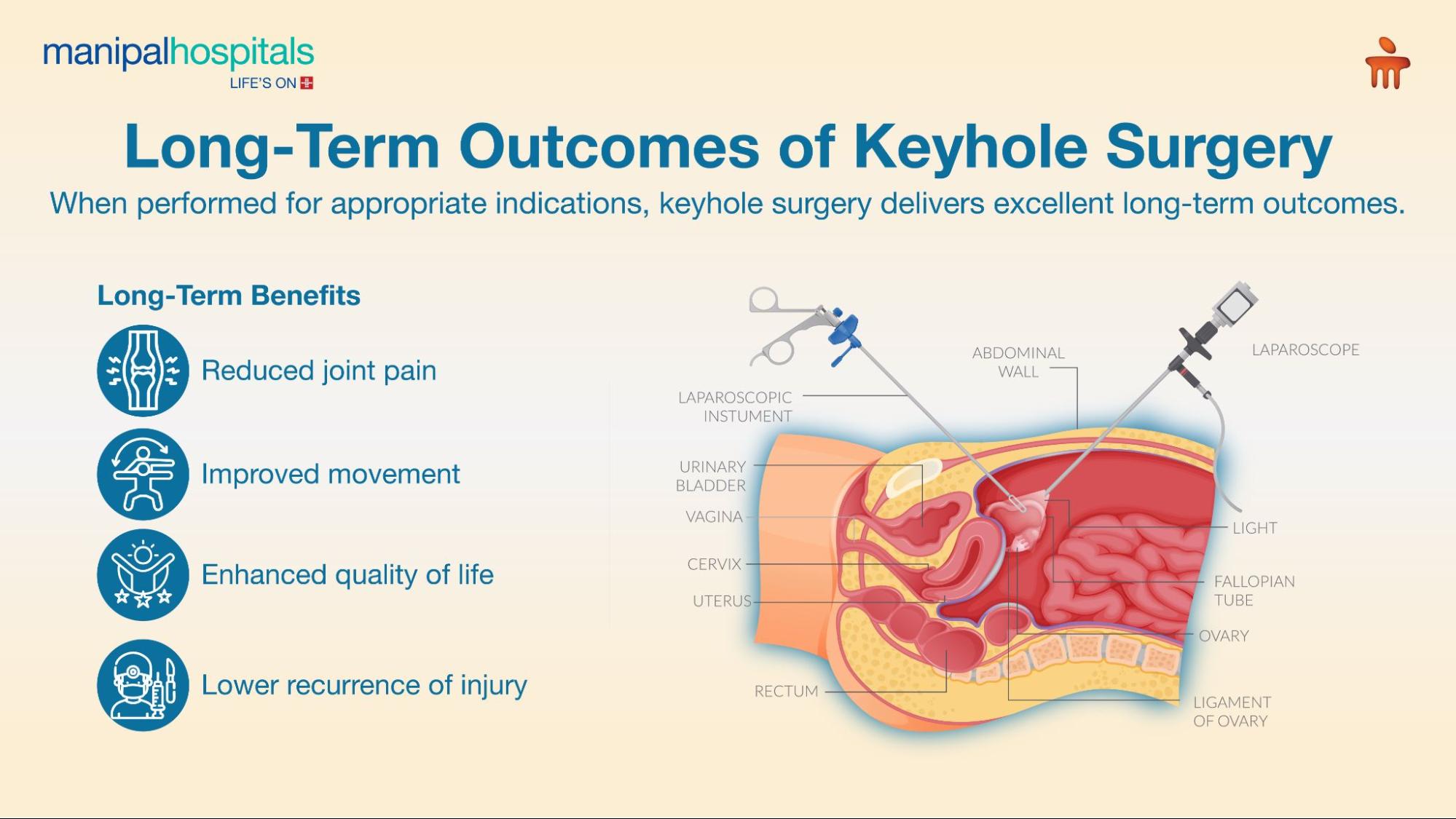
Keyhole surgery is a minimally invasive surgical technique where surgeons use a small camera (arthroscope) and specialised instruments inserted through tiny incisions. This allows direct visualisation and treatment of joint problems without large surgical cuts.
Key Features of Keyhole Surgery
-
Small incisions instead of large cuts
-
Reduced muscle and tissue damage
-
Faster healing and rehabilitation
-
Lower risk of complications
Because of these benefits, keyhole surgery is widely used in arthroscopic knee surgery and arthroscopic shoulder surgery.
Why Arthroscopic Surgery Is Preferred for Joint Pain
Traditional open surgery often involves longer hospital stays and extended recovery. Arthroscopic surgery, however, focuses on targeted treatment with minimal disruption to surrounding tissues.
Advantages of Arthroscopic Surgery
-
Less postoperative pain
-
Shorter hospitalisation
-
Faster return to daily activities
-
Improved cosmetic outcomes
For both knee pain treatment and shoulder pain treatment, keyhole surgery offers a balance between effectiveness and safety.
Keyhole Surgery for Knee Pain Treatment
The knee is one of the most commonly affected joints due to ageing, sports injuries, and repetitive stress. Keyhole surgery plays a crucial role in diagnosing and treating various knee conditions.
Conditions Treated with Knee Arthroscopy
-
Meniscus tears
-
Ligament injuries
-
Cartilage damage
-
Loose bone or cartilage fragments
Knee arthroscopy allows surgeons to repair or remove damaged tissue with precision, making it a cornerstone of arthroscopic knee surgery.
Benefits of Arthroscopic Knee Surgery
|
Benefit |
Impact |
|
Smaller incisions |
Less scarring |
|
Precision repair |
Better joint stability |
|
Faster recovery |
Early mobility |
|
Reduced pain |
Improved comfort |
Our orthopaedicians in Gurugram often recommend keyhole surgery for patients with persistent knee pain not responding to conservative care.
Keyhole Surgery for Shoulder Pain Treatment
Shoulder pain can result from injuries, overuse, or degenerative changes. Shoulder arthroscopy provides an effective solution when physiotherapy and medications fail.
Common Shoulder Conditions Treated
-
Rotator cuff tears
-
Shoulder impingement
-
Labral tears
-
Frozen shoulder
Using arthroscopic shoulder surgery, surgeons can address these issues while preserving joint integrity.
Why Shoulder Arthroscopy Is Effective
Shoulder arthroscopy offers enhanced visual clarity inside the joint, allowing accurate repair of soft tissues. This makes keyhole surgery a preferred option for long-term pain relief and functional restoration.
Arthroscopic Knee Surgery vs Arthroscopic Shoulder Surgery
Although both procedures use similar techniques, their goals and recovery timelines may differ.
|
Aspect |
Knee Arthroscopy |
Shoulder Arthroscopy |
|
Common indications |
Meniscus, ligament injuries |
Rotator cuff, impingement |
|
Mobility after surgery |
Early weight-bearing |
Gradual arm movement |
|
Rehabilitation focus |
Strength and balance |
Range of motion |
|
Recovery duration |
Weeks to months |
Months |
Both procedures highlight the versatility of keyhole surgery in orthopaedic care.
Who Is an Ideal Candidate for Keyhole Surgery?
Not all joint pain requires surgery. However, keyhole surgery may be recommended if:
-
Pain persists despite non-surgical treatment
-
Joint movement is restricted
-
Imaging confirms structural damage
-
Daily activities are affected
A thorough evaluation by specialists ensures the right treatment choice.
Recovery After Keyhole Surgery
Recovery from arthroscopic surgery is generally faster than traditional surgery, but rehabilitation is still essential.
General Recovery Timeline
-
First few days: Pain control and gentle movement
-
First few weeks: Physiotherapy begins
-
1–3 months: Gradual return to normal activities
Commitment to rehabilitation plays a critical role in long-term success after arthroscopic knee surgery or arthroscopic shoulder surgery.
Risks and Limitations of Keyhole Surgery
While keyhole surgery is safe, it is still a surgical procedure.
Possible Risks
-
Infection
-
Bleeding
-
Stiffness
-
Incomplete symptom relief
Discussing expectations and risks with specialists helps ensure realistic outcomes.
Role of Physiotherapy After Arthroscopic Surgery
Physiotherapy is integral to recovery following keyhole surgery.
Goals of Rehabilitation
-
Restore joint mobility
-
Strengthen surrounding muscles
-
Prevent stiffness
-
Improve functional performance
Structured rehabilitation enhances the benefits of knee pain treatment and shoulder pain treatment through arthroscopy.
When to Seek Medical Advice
You should consult an orthopaedic specialist if:
-
Joint pain persists beyond weeks
Ongoing pain lasting several weeks may indicate underlying joint damage requiring proper evaluation, imaging, and timely medical intervention.
-
Swelling or locking occurs
Recurrent swelling or joint locking can suggest cartilage injury or internal derangement that needs specialist assessment and targeted treatment.
-
Movement becomes restricted
Difficulty bending, straightening, or rotating the joint may signal structural problems that can worsen without early orthopaedic care.
-
Pain interferes with sleep or work
Pain disrupting rest or daily productivity often reflects a significant condition that should be addressed to prevent long-term complications.
Early evaluation can prevent further joint damage and improve surgical outcomes.
Conclusion
Keyhole surgery has revolutionised the management of joint pain by offering a minimally invasive, precise, and effective solution. Whether addressing knee injuries through knee arthroscopy or shoulder problems via shoulder arthroscopy, arthroscopic surgery enables faster recovery with excellent functional outcomes. As a cornerstone of modern knee pain treatment and shoulder pain treatment, keyhole surgery continues to improve lives through innovation and expertise. Guided by specialists such as our orthopaedics in Gurugram, patients can achieve lasting relief and restored mobility with confidence.
FAQ's
Keyhole surgery is a minimally invasive procedure using small incisions and a camera to treat joint problems.
Pain is usually mild to moderate and significantly less than traditional open surgery.
Most patients recover within weeks, though full strength may take a few months.
Yes, arthroscopic shoulder surgery is commonly used to repair rotator cuff injuries.
Not always. Suitability depends on the type and severity of joint damage and overall health.
Share this article on:


.webp "Dr. Salil Yadav | Robotic & Laparoscopic Surgery Specialist in Gurugram | Manipal Hospitals")