7 Min Read
Appendix surgery is one of the most commonly performed emergency surgical procedures worldwide. Often triggered by sudden inflammation of the appendix, this condition can escalate quickly if not addressed on time. Understanding appendix surgery, recognising early warning signs, and knowing when to seek emergency care can significantly reduce complications and support faster recovery. In such situations, timely evaluation by our experienced general surgeons in Gurugram plays a crucial role in ensuring accurate diagnosis and prompt intervention.
This detailed guide explains appendix surgery in depth, outlines appendicitis symptoms, discusses diagnosis and emergency care, and walks readers through treatment options and recovery. This blog aims to help patients make informed decisions during a potentially urgent situation.
Synopsis
- What Is Appendix Surgery?
- Understanding Appendicitis and Its Causes
- Early Signs of Appendicitis You Should Not Ignore
- Key Appendicitis Symptoms That Indicate Emergency Care
- Why Lower Right Abdominal Pain Is a Red Flag
- Appendicitis Diagnosis: How Doctors Confirm the Condition
- Appendicitis Treatment Options
- Types of Appendix Surgery
- Emergency Care and Timing of Appendix Surgery
- Appendectomy Recovery Time and Aftercare Appendectomy recovery time varies based on surgical method and patient health.
- Possible Risks and Complications
- When to Seek Immediate Medical Attention
- Conclusion
What Is Appendix Surgery?
Appendix surgery, medically referred to as appendix removal surgery or appendectomy, involves the surgical removal of the appendix — a small, finger-like pouch attached to the large intestine. Appendix surgery is typically performed when the appendix becomes inflamed or infected, a condition known as acute appendicitis.
If acute appendicitis is left untreated, the appendix may rupture, leading to severe infection and life-threatening complications. For this reason, appendix surgery is considered a medical emergency in most cases.
Understanding Appendicitis and Its Causes
Appendicitis occurs when the appendix becomes blocked due to stool, infection, or swelling of lymphatic tissue. This blockage allows bacteria to multiply rapidly, leading to inflammation and infection.
-
Common Causes of Acute Appendicitis
-
Blockage by hardened stool
-
Gastrointestinal infections
-
Enlarged lymph nodes
-
Trauma to the abdomen
Once inflammation starts, pressure builds inside the appendix, resulting in pain and an increased risk of rupture. Prompt appendix surgery is the definitive treatment.
Early Signs of Appendicitis You Should Not Ignore
Recognising early signs of appendicitis can help prevent complications and reduce the need for complex appendix surgery.
Early Signs of Appendicitis
-
Mild abdominal discomfort near the navel
-
Nausea or vomiting
-
Low-grade fever
These early signs of appendicitis may progress quickly, making medical evaluation essential.
Key Appendicitis Symptoms That Indicate Emergency Care
As inflammation worsens, appendicitis symptoms become more pronounced and alarming.
Common Appendicitis Symptoms
-
Severe lower right abdominal pain
-
Pain worsening with movement or coughing
-
High fever
-
Persistent vomiting
-
Abdominal tenderness
Lower right abdominal pain is the most classic symptom and often signals the need for immediate appendix surgery.
Why Lower Right Abdominal Pain Is a Red Flag
Lower right abdominal pain is strongly associated with acute appendicitis. This pain typically starts near the belly button and shifts to the lower right abdomen as inflammation increases.
Characteristics of Appendicitis-Related Pain
-
Sharp and persistent
-
Worsens over several hours
-
Increases with walking or pressure
-
Does not improve with rest
Any persistent lower right abdominal pain should be evaluated urgently to determine whether appendix surgery is required.
Appendicitis Diagnosis: How Doctors Confirm the Condition
Accurate appendicitis diagnosis is crucial to avoid unnecessary surgery and prevent complications.
Diagnostic Tools Used
|
Test |
Purpose |
|
Physical examination |
Identifies tenderness and rebound pain |
|
Blood tests |
Detects infection and inflammation |
|
CT scan for appendicitis |
Confirms appendix inflammation |
|
Ultrasound |
Useful in children and pregnant patients |
A CT scan for appendicitis is considered the gold standard for confirming the diagnosis before proceeding with appendix surgery.
Appendicitis Treatment Options
Appendicitis treatment depends on the severity of inflammation and whether complications have developed.
Appendicitis Treatment Approaches
-
Antibiotics (in selected early cases)
-
Emergency appendix surgery
-
Supportive care and monitoring
In most cases, especially acute appendicitis, appendix surgery remains the safest and most effective treatment.
Types of Appendix Surgery
There are two primary methods used for appendix removal surgery.
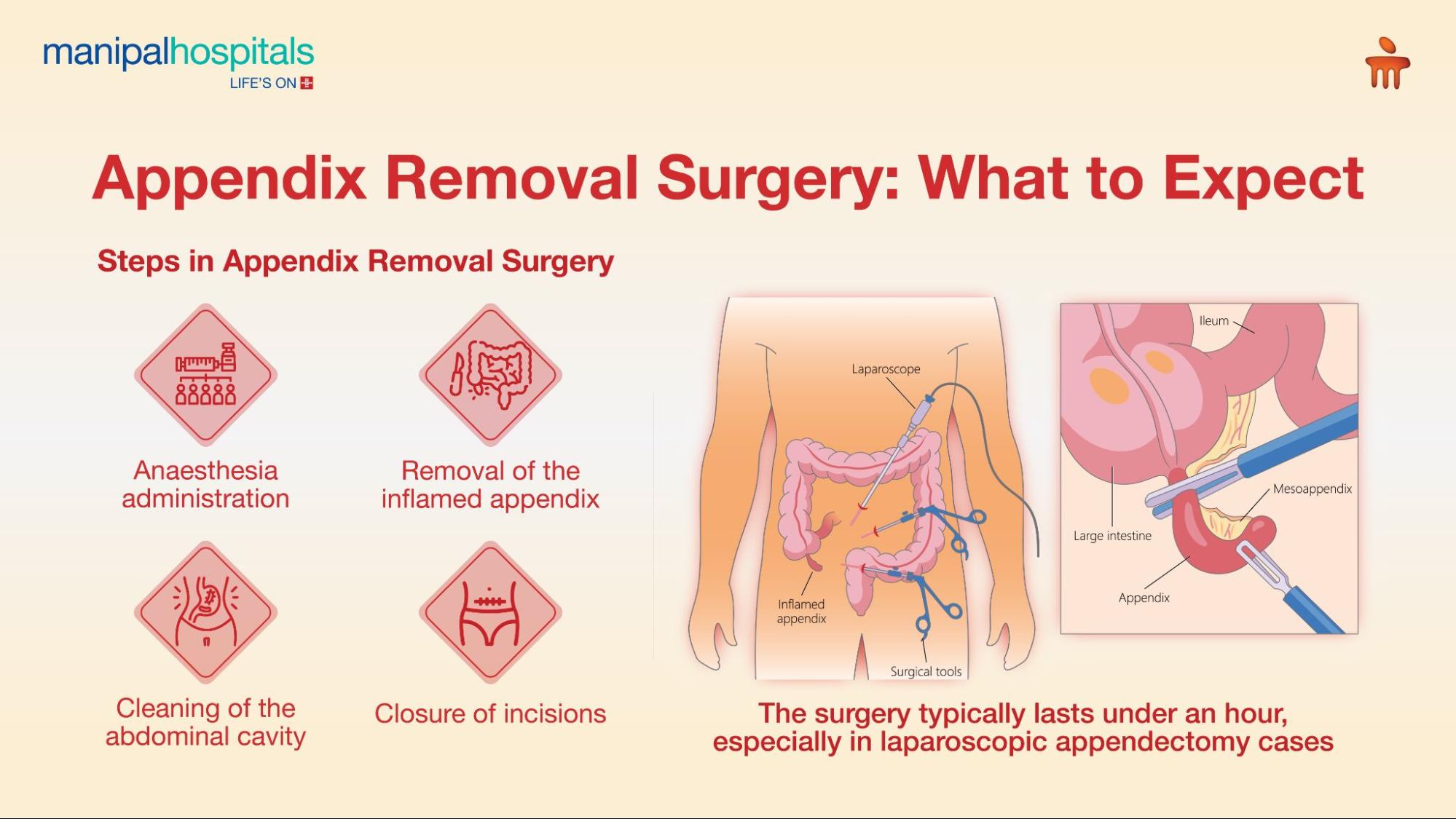
Laparoscopic Appendectomy
Laparoscopic appendectomy is a minimally invasive approach using small incisions and a camera.
Benefits
-
Smaller scars
-
Less pain
-
Faster recovery
-
Shorter hospital stay
Open Appendix Surgery
Open appendectomy surgery may be required if the appendix has ruptured or if infection has spread.
Benefits
-
Better access in complicated cases
-
Effective infection control
-
Our general surgeons in Gurugram often recommend laparoscopic appendectomy when clinically appropriate due to its faster healing time.
Emergency Care and Timing of Appendix Surgery
Appendix surgery is usually performed within hours of diagnosis to prevent rupture.
When Emergency Appendix Surgery Is Needed
-
Severe lower right abdominal pain
-
Signs of rupture
-
High fever and sepsis
-
Worsening appendicitis symptoms
Delaying appendix surgery increases the risk of abscess formation and prolonged hospitalisation.
Appendectomy Recovery Time and Aftercare
Appendectomy recovery time varies based on surgical method and patient health.
Average Appendectomy Recovery Time
|
Surgery Type |
Recovery Duration |
|
Laparoscopic appendectomy |
1–3 weeks |
|
Open appendix surgery |
4–6 weeks |
Post-Surgery Care Tips
-
Avoid heavy lifting
-
Follow dietary advice
-
Monitor for infection signs
-
Attend follow-up visits
Our general surgeons in Gurugram emphasise early mobilisation and proper wound care to speed up appendectomy recovery time.
Possible Risks and Complications
While appendix surgery is generally safe, potential risks include:
-
Infection
-
Bleeding
-
Bowel obstruction
-
Delayed healing
Prompt diagnosis and timely appendix surgery significantly reduce complication rates.
When to Seek Immediate Medical Attention
Seek emergency care if you experience:
-
Sudden severe lower right abdominal pain
-
Persistent vomiting
-
High fever
-
Abdominal rigidity
Early evaluation can prevent appendix rupture and complex appendicitis treatment.
Conclusion
Appendix surgery is a life-saving intervention when appendicitis strikes. Recognising early signs of appendicitis, understanding appendicitis symptoms, and acting quickly in the presence of lower right abdominal pain can prevent serious complications. With modern techniques like laparoscopic appendectomy, appendix removal surgery is safer, quicker, and associated with shorter appendectomy recovery time. Timely appendicitis diagnosis using tools such as a CT scan for appendicitis ensures accurate treatment decisions. Guided by experienced teams like our general surgeons in Gurugram, patients can expect effective care and smooth recovery.
FAQ's
Yes, most cases of acute appendicitis require urgent appendix surgery to prevent rupture.
Early signs of appendicitis include mild abdominal pain, nausea, and loss of appetite.
Appendectomy recovery time is usually 1–3 weeks after a laparoscopic appendectomy.
A CT scan for appendicitis is commonly used to confirm diagnosis, especially in adults.
In select cases, antibiotics may help, but appendix surgery remains the definitive appendicitis treatment.
Share this article on:


.webp "Dr. Salil Yadav | Robotic & Laparoscopic Surgery Specialist in Gurugram | Manipal Hospitals")


-Surgery-for-Knee-and-Shoulder-Pain.webp "Keyhole Surgery for Knee and Shoulder Pain: Benefits, Procedure, and Recovery Guide")